

The United States and Iran have agreed to stand down following an exchange of fire near the Strait of Hormuz, with a Trump administration official saying on Sunday that both sides will pause hostilities and that vessels can move freely through the strategically vital waterway.
Technical talks between the two countries remain “on track,” a senior US administration official confirmed, adding that nothing had been cancelled. “Technical talks regarding the implementation of MoU are on track for the coming days as planned, and deconfliction channels are up and running after the Lake Lucerne Summit,” the official said.
Iran’s position on the stand-down, however, remains unclear. 
The agreement to pause came after several days of escalating military exchanges that threatened to unravel a memorandum of understanding signed earlier this month. That agreement had established a 60-day window to negotiate a final deal, including provisions for reopening the Strait of Hormuz, easing financial restrictions on Iran, and addressing Tehran’s nuclear programme.
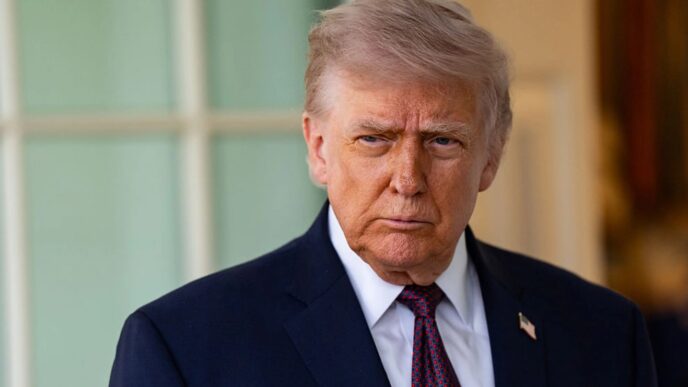
The recent escalation began on Thursday when Iran’s Islamic Revolutionary Guard Corps targeted a Singapore-flagged container ship near the strait. US President Donald Trump called the move a “foolish violation” of the initial agreement. The US military struck back on Friday, targeting Iranian missile and drone storage locations and coastal radar sites. Further exchanges followed over the weekend, with Iran launching missiles and drones at US facilities in Kuwait and Bahrain. No US casualties or major damage to the facilities were reported.
Bahrain and Kuwait confirmed they were targeted, with a residential building in Bahrain heavily damaged. Qatar’s Interior Ministry said a Qatari citizen on a vessel was killed after sustaining injuries from shrapnel resulting from the military operations in the area.
The two sides have agreed to meet in Doha, Qatar, on Tuesday for further discussions.
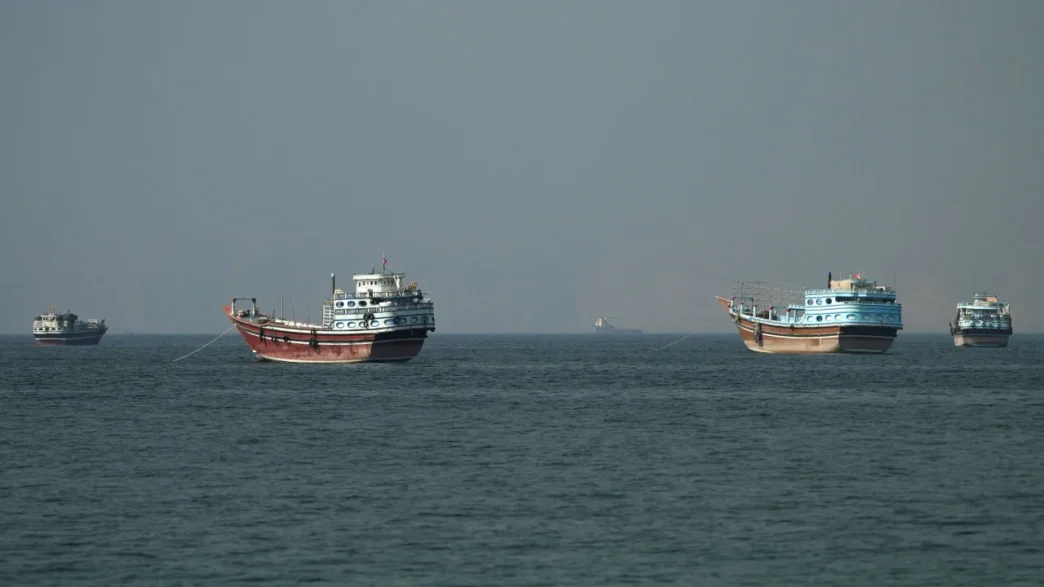
Despite the stand-down announcement, shipping traffic through the Strait of Hormuz remains well below pre-war levels. Data from maritime intelligence firm Kpler showed that only 124 commodity vessels transited the strait in four days since Thursday, compared to over 100 ships that used to pass through daily before the war.
Three competing transit routes have emerged through the waterway, with different authorities vying to organise the passage of vessels. One southern route passes through waters off Oman, a second follows the pre-war path through the middle of the strait, and a third route further north is controlled by Iran. Operators using the non-Iranian routes risk attack, while those using the Iranian-controlled route face potential Western sanctions if the broader agreement collapses.
Meanwhile, fighting in Lebanon continued to strain the fragile agreement. Iran demanded a full withdrawal of Israeli forces from Lebanon as part of any final deal with the United States. “The withdrawal of occupiers from all occupied Lebanese areas is necessary for reaching a final and lasting agreement to establish regional stability,” Iranian Foreign Ministry spokesman Esmaeil Baghaei said.
Iran’s chief negotiator Mohammad Bagher Ghalibaf added: “Our objective is to end the war in Lebanon, enable displaced people to return to their homes, end the occupation, and secure the withdrawal of the Zionist regime from Lebanese territory. We are pursuing this matter with determination.”
Israel has consistently refused to withdraw its forces from southern Lebanon, citing the continued threat posed by Iranian-backed Hezbollah to communities in northern Israel. On Friday, Israel and Lebanon agreed a process under which the Lebanese military would gradually take control of zones in southern Lebanon, though Lebanese forces have so far been unable to disarm or compel Hezbollah fighters to withdraw.
Oil futures edged higher on Sunday following the days of strikes. Brent crude had settled at around $72 and US crude at around $69 on Friday, their lowest levels since the war began.