

WINDHOEK, Namibia: Vice President Lucia Witbooi has called on Namibia to ensure that its emerging oil industry creates lasting economic benefits for citizens instead of remaining focused only on exploration and production.
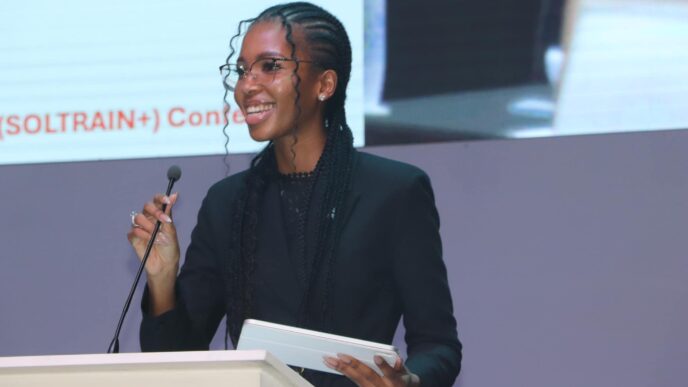
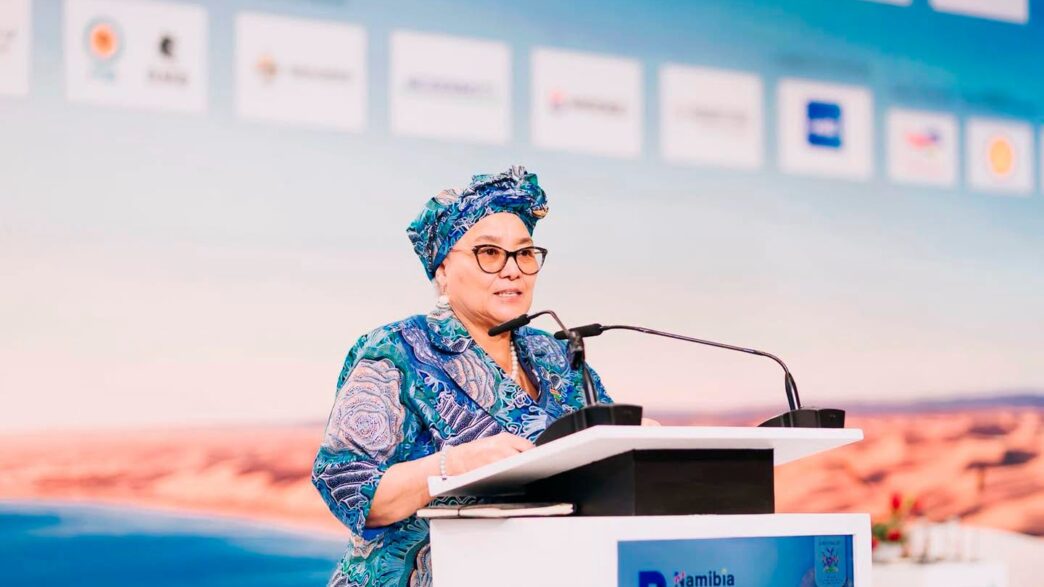
Witbooi officially opened the fourth Namibia Oil and Gas Conference and Exhibition in Windhoek on Wednesday, 19 August 2026, on behalf of President Netumbo Nandi Ndaitwah, who was unable to attend because of other national duties.
The conference is being held under the theme “From Decision to Dividend: Making Namibia’s Oil Work for Namibians.” 
Witbooi said Namibia had reached an important stage in its economic history following major discoveries in the Orange Basin.
The Venus and Mopane discoveries have shifted the country’s petroleum sector from an industry centred mainly on exploration towards development and production.
She also referred to continued exploration activity in Shell’s PEL 0039, including the Merlin 1X well, saying the results showed that the basin still had considerable geological potential.
The Vice President said the discoveries were only the beginning and that the real measure of success would be whether petroleum resources improved the lives of Namibians.
“Discovery is not the destination,” Witbooi said.
She said the industry should produce jobs, business opportunities, skills, infrastructure, technology, government revenue and savings for future generations.
“It must become employment for Namibians, opportunities for our enterprises, skills for our young people, technology for our institutions, infrastructure for our economy, revenues for national development and savings for future generations.”
Local participation
Witbooi said the development of the oil and gas sector would require cooperation between government, international investors, operators, financiers, entrepreneurs, communities, academic institutions and civil society.
She said Namibia needed capable institutions, clear regulations, suitable infrastructure, efficient logistics, local suppliers and a workforce prepared for the technical requirements of the industry.
A major part of her address dealt with local content and the need for Namibians to participate meaningfully in the petroleum value chain.
She identified the National Upstream Petroleum Local Content Policy as a key tool for increasing local participation, building Namibian capacity, creating jobs, encouraging supplier development and supporting the transfer of technology and knowledge.
The Vice President called on oil companies and contractors to treat local content as part of their business responsibilities rather than merely a regulatory requirement.
She urged them to identify procurement opportunities early, use transparent contracting processes, provide training and mentorship, offer secondment opportunities, transfer technology and support local suppliers.
Namibian businesses and young professionals, she said, would need to invest in quality, certification, financial management, health and safety, technical competence and international competitiveness to take advantage of opportunities in the sector.
President Nandi Ndaitwah also called on operators and contractors to make local content a strategic business responsibility.
Managing petroleum revenue
Witbooi said Namibia would need to manage petroleum revenue responsibly and transparently.
She said the country’s sovereign wealth framework should help preserve part of the income from finite resources for future generations.
The aim, she said, should be to use oil revenue to build lasting national assets rather than increasing short term consumption.
She also outlined a vision for Namibia to become a regional energy and services hub.
Opportunities could extend beyond offshore production to ports, logistics, marine services, fabrication, engineering, finance, environmental services, training, research and manufacturing.
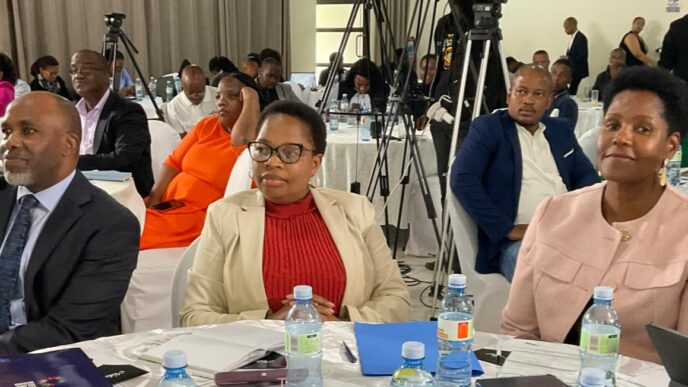
The conference has attracted more than 1,500 delegates and over 70 exhibitors, compared with 885 delegates two years ago.
Witbooi challenged participants to measure the success of the conference by what follows after the event.
She said the real test would be whether partnerships were formed, investment secured, local businesses accessed contracts, young people gained entry into the industry and policy discussions resulted in practical action.
Namibia is approaching important development decisions, with Venus currently regarded as the country’s most advanced offshore development project.
Public project plans envisage a floating production, storage and offloading facility, production of about 150,000 barrels of oil equivalent per day and first oil around 2030, subject to final investment approval and the completion of regulatory, fiscal and environmental processes.
Witbooi said project implementation must be balanced with sound governance, environmental protection, fair returns and Namibia’s long term national interests.
She said Namibia’s petroleum opportunity was not only about becoming an oil producing country, but about using finite resources to build stronger companies, skills, infrastructure, institutions, technology and financial assets for future generations.