


Ezulwini – The Central Bank of Eswatini recorded a profit of E40.8 million for the financial year ended March 31, 2026, a significant decline from the E205.7 million reported the previous year.
The figures are contained in the bank’s ninth Annual Integrated Report, which reviews its financial performance, monetary policy, financial stability, governance and strategic activities during the 2025/26 financial year.
After accounting for foreign exchange revaluation losses, the bank recorded a total comprehensive loss of E266.6 million, compared with comprehensive income of E189.5 million in the previous financial year. 
The report attributed the E307.5 million revaluation loss to the strengthening of the lilangeni against major reserve currencies, which reduced the value of the bank’s foreign currency holdings.
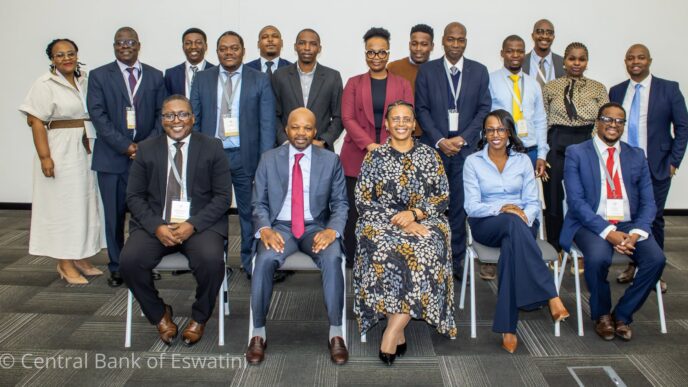
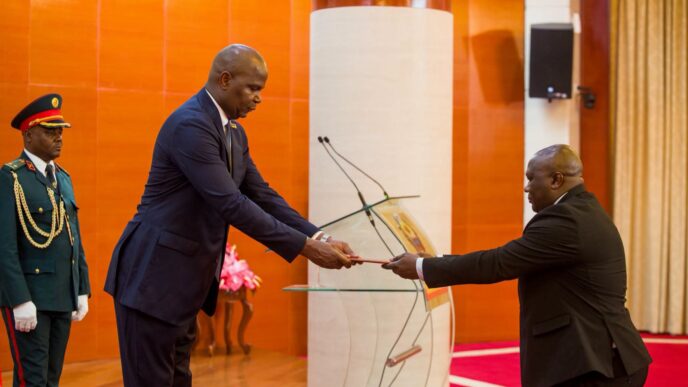
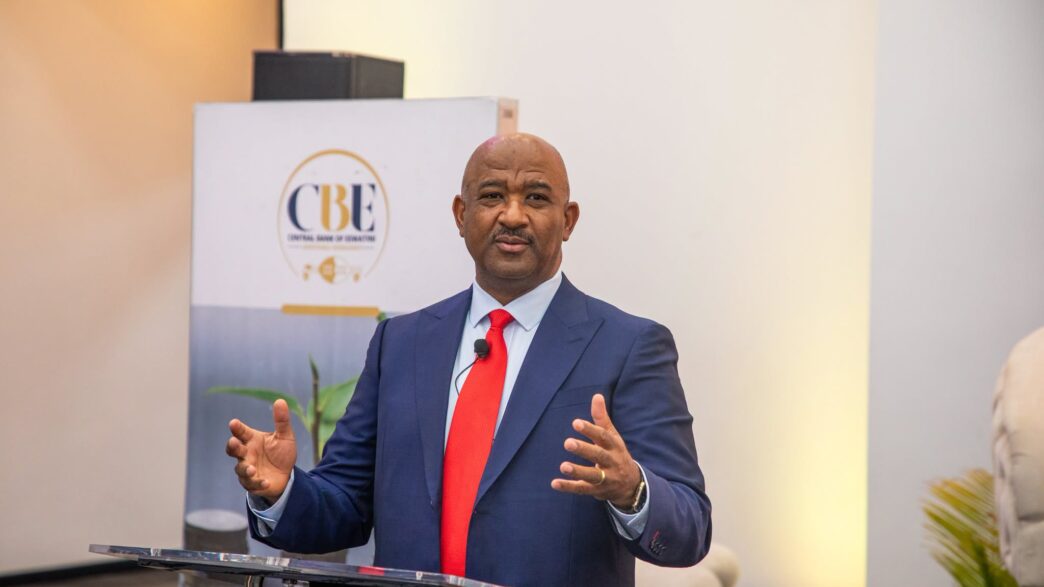
Governor Dr Phil Mnisi presented the report to the Minister for Finance and other stakeholders. The report was prepared against a backdrop of geopolitical tensions, higher oil prices and fiscal pressures affecting the domestic and global economies.
Economy grows by 5.6 percent
Eswatini’s economy grew by an estimated 5.6 percent in 2025, up from 3.0 percent in 2024.
The growth was mainly supported by the tertiary sector, including wholesale and retail trade, financial services, and information and communication technology.
The bank expects the economy to grow by 5.2 percent in 2026, driven by an anticipated recovery in agriculture, mining, manufacturing and infrastructure development.
However, the report noted that weaker external demand, subdued mining activity and the foot and mouth disease outbreak affected parts of the primary and secondary sectors.
Inflation remains low
Headline inflation averaged 2.6 percent during the financial year, compared with 3.9 percent in 2024/25.
It fell to 1.6 percent in March 2026 from 3.8 percent in March 2025, with lower food and transport costs contributing to the decline.
The Central Bank reduced its discount rate by 25 basis points to 6.75 percent in May 2025 and maintained the rate until March 2026.
The bank said the accommodative policy stance supported domestic lending and economic activity while maintaining financial stability and the lilangeni’s peg to the South African rand.
Reserves remain under pressure
Gross official reserves increased by 5.5 percent from E9.1 billion in March 2025 to E9.6 billion in March 2026.
Despite the increase, reserves covered only 2.2 months of imports, below the benchmark of three months.
The report linked the pressure to a 20.4 percent decline in Southern African Customs Union receipts, rising import demand and government cash flow constraints.
As part of its reserve diversification plan, the Central Bank acquired 2,500 ounces of gold in July 2025. It also recorded average monthly foreign exchange purchases of USD21.4 million.
The bank said its reserve building efforts included the signing of a reserves hedging financing term sheet with a South African bank, as well as board approval for foreign exchange swaps, listed funds, asset swaps and term funding.
Banking sector stays stable
The domestic banking sector remained stable during the reporting period, supported by strong liquidity and capital buffers.
The industry liquidity ratio rose to 38.4 percent in March 2026 from 32.9 percent the previous year. This was above the regulatory minimum of 22 percent for commercial banks and 20.5 percent for development and savings banks.
The sector’s capital adequacy ratio stood at 15 percent, comfortably above the regulatory minimum of 8 percent, although it declined from 17.41 percent in March 2025.
Non performing loans improved slightly, falling to 6.8 percent from 7.2 percent.
The bank said one financial institution continued to face structural challenges. It has since increased its oversight and support for the institution’s transformation programme, which is intended to restore its financial soundness, improve governance and support long term sustainability.
Public debt rises
Public debt increased to E42.3 billion, equivalent to 40.6 percent of gross domestic product, by March 2026.
This was an increase from E36.2 billion, or 38 percent of GDP, in March 2025.
The fiscal deficit for 2025/26 was estimated at 6.4 percent of GDP, compared with the budgeted 3 percent. The wider deficit was attributed to lower than expected revenue and continued expenditure pressures.
Private sector credit increased by 8.1 percent to E23.2 billion, supported by lending to businesses and households.
Payments system expands
The Eswatini Payment Switch continued to expand during the financial year.
Its Fast Payments Module became operational in December 2024, with all eight participating institutions connected by November 2025.
The system was processing more than 3,500 transactions a day, while work continued on QR code payment solutions for merchants and government services.
The bank also completed the ISO 20022 migration for cross border payments.
The Domestic Switch project was 54 percent complete by the end of the reporting period. Eight major financial service providers had been onboarded, comprising five banks and three mobile money operators.
The bank said the system would improve payment interoperability, support digital transactions and expand financial inclusion.
Fintech strategy launched
The 2025/26 financial year saw the launch of the National FinTech Strategy for 2025 to 2030.
The framework, led by the Ministry of Finance with the Central Bank as a key partner, is Eswatini’s first dedicated policy framework for fintech development.
It seeks to position the country as a secure and inclusive regional fintech hub through more than 40 initiatives to be implemented in phases.
The strategy focuses on digital infrastructure, consumer protection, human capital development, regulation, financial inclusion and regional integration.
Ezulwini complex takes shape
Construction of the Central Bank’s new headquarters complex in Ezulwini advanced during the year.
The bank appointed the Ingcebo Joint Venture, comprising Stefanutti Stocks and Stefanutti Stocks Construction Eswatini, as the Engineering, Procurement and Construction contractor.
The project is valued at E2.798 billion and is expected to be completed in September 2028.
The first phase includes a 19 storey headquarters tower, a parkade, podium, museum, innovation hub and library. The development is targeting a four star Green Building Council of South Africa rating.
The bank also relocated its operations from Mbabane to the Ezulwini Complex after infrastructure upgrades valued at more than E117 million.
The upgrades included operational facilities, conference and data centre infrastructure, access roads, parking areas, staff amenities and utility services.
Staff and stakeholder confidence
The bank had 339 employees as at March 31, 2026.
Its staff retention rate stood at 96.21 percent, while the employee engagement score was 85 percent. Voluntary staff turnover was recorded at 1.18 percent.
The bank’s stakeholder perception score improved from 57 percent to 58.5 percent.
Its Net Promoter Score moved from negative 67.9 to a positive four, which the report linked to improved communication and stakeholder engagement initiatives, including nationwide roadshows.
The bank contributed more than E308,000 through its Corporate Social Investment programme during the year.
The funding supported education, health, financial literacy, youth empowerment and community initiatives, including donations to schools, Enactus, the Eswatini Conference of Churches and the Eswatini Autism organisation.
Complaints and award
The Office of the Ombudsman recorded 37 complaints during the year. Most were resolved, while five were referred to the Office of the Ombudsman of Financial Services.
The bank also received the Local Currency Bond Deal of the Year award at the Global Banking and Markets Africa 2026 event in Cape Town.
The award recognised the E786 million Protea Bond, which was listed on the Johannesburg Stock Exchange.
The Central Bank said its priorities for the next financial year included rebuilding reserve buffers, strengthening capital adequacy, completing the Deposit Protection Fund and Resolution Regime, improving payment systems and advancing digital transformation.