


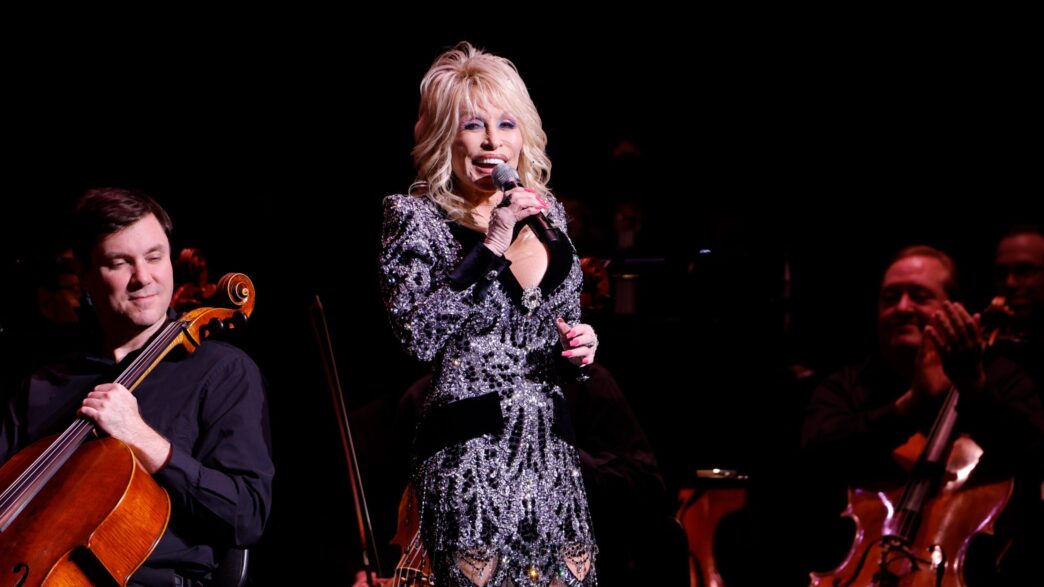
Dolly Parton, the Grammy-winning country singer, songwriter, and philanthropist who rose from a one-room cabin in rural Tennessee to become one of America’s most beloved entertainers, has died at her home in Nashville. She was 80.
A family statement released by her nephew, Bryan Seaver, said Parton died peacefully on Tuesday after a brief battle with cancer. Her publicist, Marcel Pariseau, confirmed she had been open about various health issues in recent years, particularly following the death of her husband, Carl Dean, in March 2025.
“Back when my husband Carl was very sick that was for a long time and then when he passed, I didn’t take care of myself,” Parton said in a video message to fans earlier this year. “So I let a lot of things go that I should have been taking care of.” 
A small, private service will be held for close family.
A songwriter first
Parton wrote more than 3,000 songs across a career spanning over half a century, crafting narratives of love, hardship and resilience that resonated far beyond country music. Among her best-known works are “Coat of Many Colors,” a tribute to her mother; “Jolene,” inspired by a bank teller who flirted with her husband; and “I Will Always Love You,” which began as a plea to her mentor Porter Wagoner to let her pursue a solo career.
“So I went home and wrote that song, took it back the next morning, and said, ‘Sit down, I need you to hear something.’ So I sang it, and he was crying,” she recalled. Wagoner relented, and Parton embarked on a solo path that would redefine American music.
She released 49 albums, won 11 Grammys and became one of the most successful crossover artists in history, scoring pop hits such as “Islands in the Stream” with Kenny Rogers.
From poverty to stardom
Born on January 19, 1946, in a one-room cabin in Tennessee, Parton was the fourth of 12 children in a family she described as “dirt poor.” Her father could not read, but music was central to household life, especially through her mother, whose father was a preacher who played piano and guitar.
An uncle gave Parton her first guitar as a child. She learned to play at age 7 and began writing songs soon after.
“Mama was fascinated with how I could rhyme and write songs about stuff I’d never lived,” Parton said, “but I’d hear them talk.”
After high school, she moved to Nashville, where she met Carl Thomas Dean outside a laundromat on her first day in the city. They married in 1966, a year after she signed her first record deal with Monument Records.
By 1967, she was a regular on “The Porter Wagoner Show,” a televised variety program that helped make her a household name. Her first number one hit, “Joshua,” came in 1971; “Coat of Many Colors,” released the same year, reached number four.
In 1974, after seven years working alongside Wagoner, Parton struck out on her own, bolstered by the success of “I Will Always Love You.”
Business acumen and creative control
At age 20, Parton co-founded a publishing company with her uncle Bill Owens, retaining controlling interest in her music—a rare move for any artist, and especially for a woman, at the time.
That decision paid off. In 1974, she turned down Elvis Presley’s request to cover “I Will Always Love You” because his manager, Colonel Tom Parker, demanded a share of the publishing rights.
“This is my publishing company, and obviously this is going to be one of my most important copyrights, and I can’t give you half the publishing,” she remembered saying. “Because that’s stuff that I’m leaving for my family.”
When Whitney Houston’s 1992 version of the song became a global hit as the theme for “The Bodyguard,” Parton earned an estimated $10 million in royalties.
From song to screen
Parton’s charm and charisma translated naturally to film. She made her feature debut in 1980’s “9 to 5,” alongside Jane Fonda and Lily Tomlin, playing one of three office workers who plot revenge against their chauvinistic boss.
Fonda, a producer on the film, said she knew Parton belonged in the cast after hearing her sing “Two Doors Down” on the radio.
“My hair stood on end,” Fonda said. “She’d never made a movie. I thought, Oh my lord. Dolly, Lily and Jane…”
Parton agreed to star on the condition she could write and perform the theme song. The result, “9 to 5,” became an anthem for working women and the broader movement for workplace equality.
She followed with roles in “The Best Little Whorehouse in Texas” (1982) and “Steel Magnolias” (1989), the latter introducing her to new generations of fans, including many in the LGBTQ+ community.
Her 2005 song “Travelin’ Thru,” featured in the film “Transamerica,” earned her a second Oscar nomination for best original song.
“I’m so outspoken as far as just being accepting of people in general,” Parton told Larry King in 2016. “I do not believe that we should criticize and judge other people, I think we should be accepting and loving. We are all God’s children. We are who we are, and we should be allowed to be who we are.”
When asked if faith-based communities objected, she replied, “Absolutely. I get it all the time.”
Parton rarely commented on politics or specific leaders, and resisted labels. She did not call herself a feminist, though she acknowledged living feminist principles.
Dollywood and a legacy of giving
In 1986, Parton purchased a theme park in Pigeon Forge, Tennessee, renaming it Dollywood. The park now attracts visitors from around the world and is Sevier County’s largest employer, credited with creating more than 23,000 jobs and generating about $1.8 billion annually, according to a 2021 economic impact study.
She published several bestselling books, including memoirs and children’s titles such as “Coat of Many Colors.”
In 1999, she was inducted into the Country Music Hall of Fame and received the Recording Academy’s lifetime achievement award in 2011. Though initially hesitant about the Rock and Roll Hall of Fame, she embraced the honor by recording “Rockstar,” an album featuring duets with Ringo Starr, Paul McCartney and covers of classics like “Stairway to Heaven.”
Her philanthropy grew alongside her success. The Dollywood Foundation, launched in 1988, initially focused on reducing high school dropout rates in her home county. It later expanded to include the Buddy Program, which pledged $500 to every seventh- and eighth-grade student who graduated high school.
In 1995, she founded the Imagination Library, which has since gifted more than 300 million books to children worldwide.
“He was the smartest man I have ever known but I know in my heart his inability to read probably kept him from fulfilling all of his dreams,” Parton said of her father, to whom the library is dedicated.
During the pandemic, she helped fund Moderna vaccine development and donated $1 million to coronavirus research at Vanderbilt University.
“I felt so proud to have been part of that little seed money that hopefully will grow into something great and help to heal this world,” she said.
A private love story
Parton guarded her private life, but her 59-year marriage to Carl Dean was a cornerstone of her life. Dean largely stayed out of the spotlight but remained a steady supporter.
“It’s worked for us because we both do different things and it’s exciting when we are together,” Parton said in 2024. “So the fact that there’s some little space, it makes it exciting when you go home.”
Dean died in March 2025 at age 82. Parton honored him with the song “If You Hadn’t Been There.”
“If you hadn’t been there, where would I be?” she wrote. “Without your trust, love and belief.”