

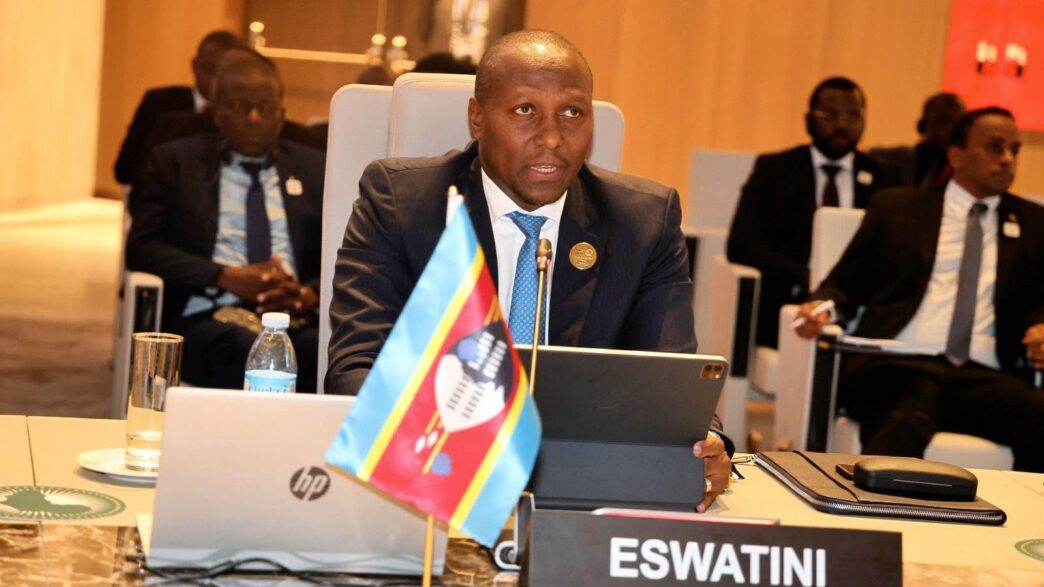
LUANDA — Prime Minister Russell Mmiso Dlamini on Sunday, 30 August 2026, told African leaders the continent must move from warnings to action if it is to prevent conflicts from escalating into violence.
Speaking on behalf of His Majesty King Mswati III and the Nation at the 21st Extraordinary Summit of AU Heads of State and Government on Strengthening Mechanisms for Conflict Prevention and Resolution in Africa in Luanda, Angola, the Prime Minister said Africa does not suffer from a shortage of information about emerging conflicts, but from a failure to act on that information early enough. He called for greater consistency in responding to unconstitutional changes of government.
“Time and again, warning signs of conflict have long shown themselves before the violence did and a moment when dialogue was still possible. What we are here to fix is not a shortage of information. It is the distance between knowing and acting. That distance is where people die. Every ambition this Union has set for itself rests on one condition: peace that holds,” Dlamini said. 
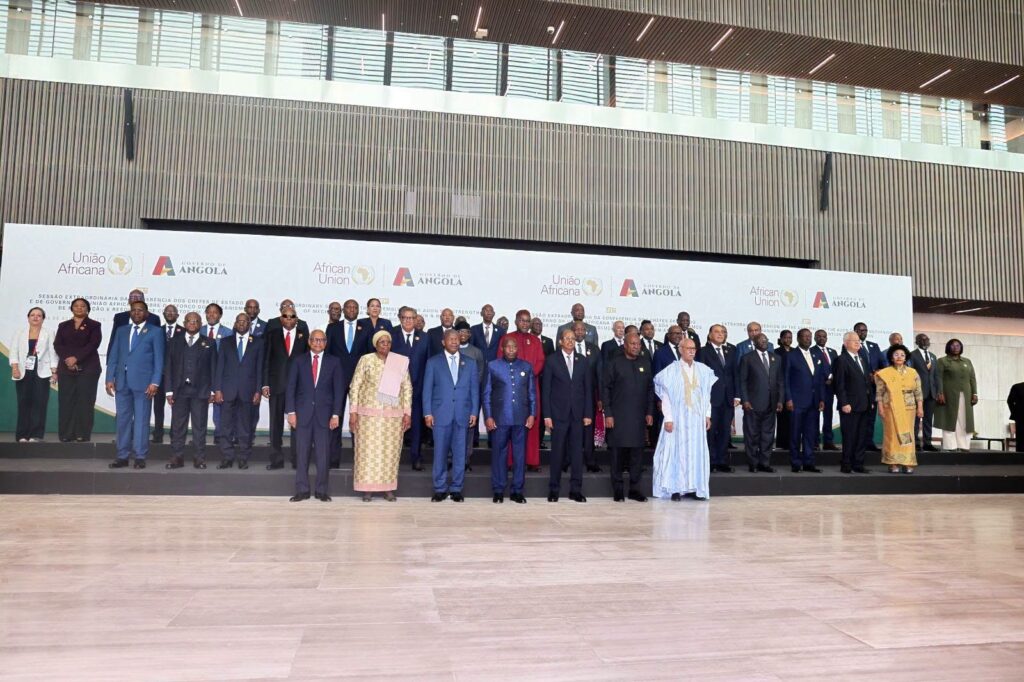
Speaking on behalf of His Majesty King Mswati III and the Nation at the 21st Extraordinary Summit of AU Heads of State and Government on Strengthening Mechanisms for Conflict Prevention and Resolution in Africa in Luanda, Angola, the Prime Minister said Africa does not suffer from a shortage of information about emerging conflicts, but from a failure to act on that information early enough. He called for greater consistency in responding to unconstitutional changes of government.
“Time and again, warning signs of conflict have long shown themselves before the violence did and a moment when dialogue was still possible. What we are here to fix is not a shortage of information. It is the distance between knowing and acting. That distance is where people die. Every ambition this Union has set for itself rests on one condition: peace that holds,” Dlamini said.
He pointed to political and external factors that keep peace out of reach. “Peace remains elusive, in Africa and beyond, because of the pursuit of power, our reluctance to confront allies who act unjustly, and our own lack of impartiality, impatience and harmful interference from beyond our borders. Legal and diplomatic actors must meet these challenges with open dialogue, mutual respect and inclusive cooperation, guided by justice, equity and mutual understanding, if lasting peace is to be built,” he said.
On unconstitutional changes of government, the Prime Minister said: “Unconstitutional changes of government have returned to this continent too often to call an exception. Article 30 of our Constitutive Act is unambiguous: governments that come to power unconstitutionally shall not participate in our affairs. The instrument is not the problem. Our consistency in applying it is.”
“Eswatini’s position is simple: this Union must apply its own rules without exception, suspend without delay and insist on credible timelines back to civilian rule, because the surest way to invite the next coup is to let the last one go unanswered,” Dlamini said.
He urged the summit to focus on implementation rather than new declarations. “We did not come to Luanda to issue another declaration. The architecture already exists on paper. What we lack is the discipline to use it before the first shot is fired. I ask this Summit to settle six things. First, treat dialogue as a mechanism in its own right, not a courtesy extended once the guns have fired,” he said.
“Second, give our Early Warning System teeth, with an automatic Council session within days of every warning it issues. Third, restore the Panel of the Wise to a standing mandate to engage early, with women and youth fully part of that mediation. Fourth, resource the African Standby Force to be trusted rather than merely announced,” the Prime Minister said.
“Fifth, fund prevention as the investment it is, starting with the billion-dollar Peace Fund this Union has yet to adopt. Finally, treat our Regional Mechanisms, SADC, ECOWAS, IGAD, as this Summit’s closest ears, because harmonising our architecture is the reform most likely to turn what we know into what we do in time,” Dlamini said.
“Eswatini remains ready to do its part, in this Summit, in our region and in whatever reform this Summit agrees. Prevention is not peacekeeping’s modest cousin. It is the only peace this continent can afford and the only peace our children will thank us for building,” he said.
He pointed to political and external factors that keep peace out of reach. “Peace remains elusive, in Africa and beyond, because of the pursuit of power, our reluctance to confront allies who act unjustly, and our own lack of impartiality, impatience and harmful interference from beyond our borders. Legal and diplomatic actors must meet these challenges with open dialogue, mutual respect and inclusive cooperation, guided by justice, equity and mutual understanding, if lasting peace is to be built,” he said.
On unconstitutional changes of government, the Prime Minister said: “Unconstitutional changes of government have returned to this continent too often to call an exception. Article 30 of our Constitutive Act is unambiguous: governments that come to power unconstitutionally shall not participate in our affairs. The instrument is not the problem. Our consistency in applying it is.”
“Eswatini’s position is simple: this Union must apply its own rules without exception, suspend without delay and insist on credible timelines back to civilian rule, because the surest way to invite the next coup is to let the last one go unanswered,” Dlamini said.
He urged the summit to focus on implementation rather than new declarations. “We did not come to Luanda to issue another declaration. The architecture already exists on paper. What we lack is the discipline to use it before the first shot is fired. I ask this Summit to settle six things. First, treat dialogue as a mechanism in its own right, not a courtesy extended once the guns have fired,” he said.
“Second, give our Early Warning System teeth, with an automatic Council session within days of every warning it issues. Third, restore the Panel of the Wise to a standing mandate to engage early, with women and youth fully part of that mediation. Fourth, resource the African Standby Force to be trusted rather than merely announced,” the Prime Minister said.
“Fifth, fund prevention as the investment it is, starting with the billion-dollar Peace Fund this Union has yet to adopt. Finally, treat our Regional Mechanisms, SADC, ECOWAS, IGAD, as this Summit’s closest ears, because harmonising our architecture is the reform most likely to turn what we know into what we do in time,” Dlamini said.
“Eswatini remains ready to do its part, in this Summit, in our region and in whatever reform this Summit agrees. Prevention is not peacekeeping’s modest cousin. It is the only peace this continent can afford and the only peace our children will thank us for building,” he said.