

Ezulwini – His Majesty King Mswati III has called for increased investment in seed production, irrigation and agricultural infrastructure to strengthen food security across Africa, as Eswatini hosted the inaugural African Seed Summit in Ezulwini on 6 October 2026.
The summit, held under the theme “Resilient Seed Systems for a Food-Secure Africa,” brought together African agriculture ministers, African Union representatives, government officials, development partners and other stakeholders to discuss ways of improving seed production and building resilient agricultural systems.
The gathering reflected the African Union’s commitment, in line with a decision of its Executive Council, to deepen engagement and investment in Africa’s seed sector. 
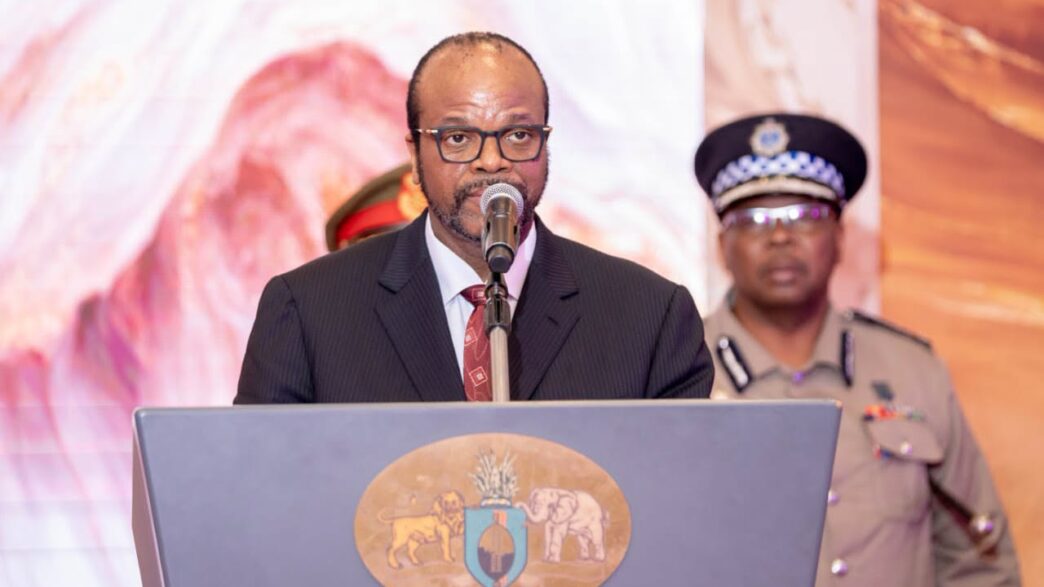
Addressing delegates at the opening ceremony at Ezulwini Palazzo, King Mswati III said quality seeds were fundamental to agricultural productivity and the continent’s ability to feed its growing population.
“No fertilizer, irrigation or machinery can make up for poor seed.”
The King said Africa needed to strengthen its control over seed production, conservation and investment, particularly as climate change placed increasing pressure on agricultural systems.
He called for greater investment in climate resilient crop varieties and measures to protect indigenous plant genetic resources, which could help farmers adapt to changing weather conditions.
The summit follows the Africa Fertilizer and Soil Health Summit held in Nairobi, Kenya, in 2024, which focused on improving soil health and fertiliser use. The Ezulwini gathering shifted attention to the quality, availability and development of seeds.
King Mswati III also proposed greater cooperation among African countries to improve access to water for agricultural production. He cited Lake Malawi, the Nile River and the Congo River as resources that could support irrigation and expand food production.
He said countries should assess their soil conditions, landscapes and agricultural potential to identify crops best suited to their environments. Nations could then focus on producing crops in which they had a comparative advantage while supporting other countries through regional trade.
The King called for improved storage facilities and transport infrastructure to help move agricultural products to markets and preserve surplus food for future use.
He linked the proposals to the African Continental Free Trade Area (AfCFTA), which seeks to expand trade among African countries, and called for stronger cooperation with financial institutions to fund viable agricultural projects.
He also urged the African Union to establish effective mechanisms to monitor funded initiatives and ensure that countries managed their debt obligations responsibly.
King Mswati III said African countries could not build secure seed systems in isolation because seeds, pests, diseases, genetic resources and agricultural markets crossed national borders.
He said the African Union had an important role in coordinating policies, harmonising standards and mobilising resources to strengthen the continent’s agricultural sector.
The efforts, he said, were consistent with the African Union’s Agenda 2063, known as “The Africa We Want”, which seeks to build an integrated, prosperous and peaceful continent.
On Eswatini’s progress towards seed sovereignty, the King said the country had upgraded its gene bank to support the conservation of indigenous plant genetic resources. Work was also under way to multiply seeds and germplasm.
Farmers had received training in seed production, with some groups already involved in small scale production and other agricultural activities.
However, he acknowledged that more work was needed for the country to reach its seed production targets, calling for increased investment, partnerships and knowledge sharing with other African countries and development partners.
The King also urged member states to translate continental agricultural programmes into practical initiatives that could increase production and create stronger seed value chains.
He cited the African Seed and Biotechnology Programme as a framework for developing the sector, alongside initiatives aligned with the United Nations Sustainable Development Goals and the food systems approach.
King Mswati III said seed production and related agricultural businesses could create employment opportunities, particularly for young people, through activities such as production, processing and trading.
“A young person who produces, processes or trades in quality seed is not looking for work; that young person is creating it.”
He further called for the protection of indigenous plant and animal species, saying their genetic resources were important for developing crop varieties capable of withstanding climate change.
The King also urged the responsible use of environmentally friendly agricultural technologies and greater public education to build confidence among farmers and consumers.
He said indigenous knowledge systems remained important to rural livelihoods and called for smallholder farmers and rural households to be included in agricultural development programmes.
Turning to investment, King Mswati III called on development partners, strategic investors and private sector companies to provide funding, technology and expertise to expand Africa’s seed industry.
He urged African governments to establish stable policies, harmonised regulations and predictable business environments capable of attracting long term investment.
The King thanked the African Union Commission and its partners for organising the summit and expressed hope that the discussions would generate practical investment opportunities for the sector.
He pledged Eswatini’s continued support for continental efforts to strengthen seed systems, diversify economies and improve food security before officially declaring the inaugural African Seed Summit open.