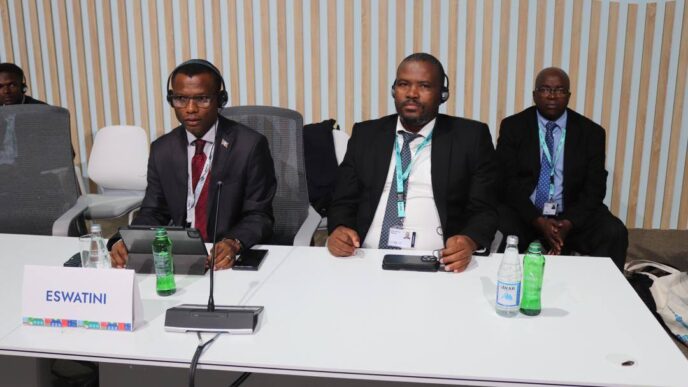


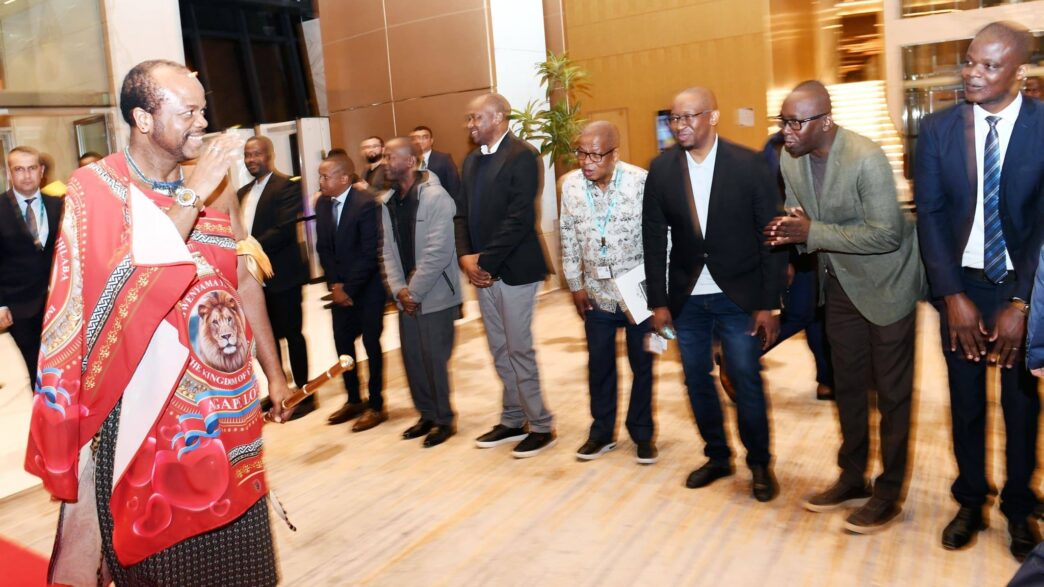
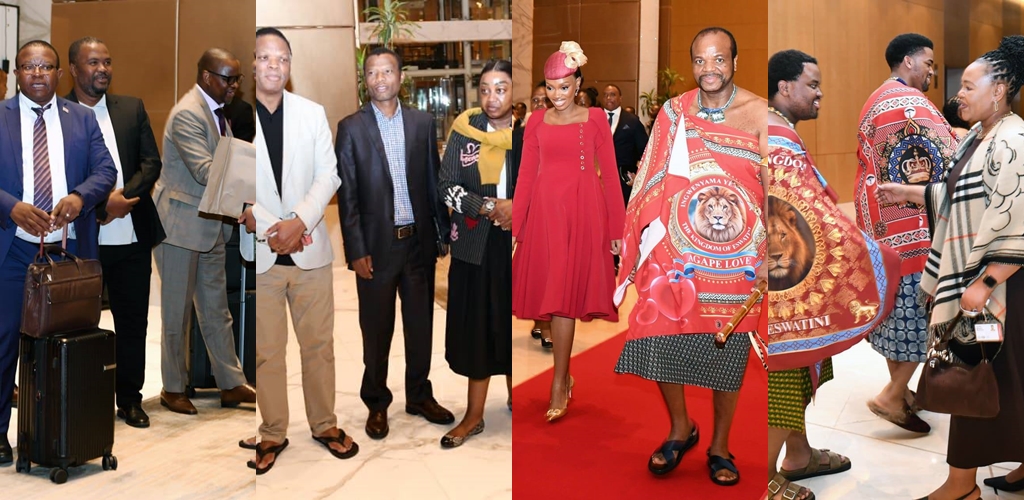
Baku – His Majesty King Mswati III and Inkhosikati LaMashwama have safely arrived in Baku, Azerbaijan, where the King will join world leaders for the 13th session of the United Nations World Urban Forum (WUF13).
The royal couple departed the Kingdom on Saturday, with Baku being the first leg of a multi-country trip that will also take His Majesty to Abu Dhabi in the United Arab Emirates for a State visit, before proceeding to New Delhi, India, for the 4th India-Africa Forum Summit.
The Baku forum, organised by UN-Habitat together with Azerbaijan, opened on Sunday and runs through Friday, 22 May. It brings together heads of state, mayors, urban planning experts and representatives from governments, the private sector, civil society and international organisations. Some 40,000 participants from 182 countries have registered to take part. 
The theme of this year’s forum is Housing the World: Safe and Resilient Cities and Communities, a response to what the United Nations has described as a deepening global housing emergency. Nearly 2.8 billion people are currently living in inadequate housing conditions, while more than 300 million have no home at all. With close to 70 per cent of the world’s population expected to live in cities by 2050, the pressure is only expected to grow.
UN-Habitat executive director Anacláudia Rossbach told UN Video that the situation amounts to a “global housing crisis.”
“This crisis has long been most severe and structural in the Global South, but now it is also being felt in the Global North as well,” she said.
Rossbach pointed to the rising cost of living as a major factor, with international conflicts including the war in the Middle East creating additional strain on global supply chains and further worsening conditions.
Among the key issues on the agenda is the rapid growth of informal settlements. Around 1.1 billion people currently live in slums, a number that could rise by another two billion in coming decades. Between 350 and 500 million children are estimated to live in such conditions. UN-Habitat is pushing for a change in how these communities are viewed, arguing that informal settlements are often the only means through which millions of people can secure shelter in cities, rather than simply being treated as problems to be cleared.
Francine Pickup, Deputy Director of the UN Development Programme and head of the UNDP delegation to WUF13, said the agency intends to use the Baku platform to build partnerships around integrated urban solutions that combine housing, climate resilience, governance and local financing.
“This global housing crisis that we’re in is not primarily a construction problem,” Pickup said. “We need to go beyond looking at building homes and houses and look at the urban setting and look at the housing issue as a complex problem.”
Climate change features prominently on the agenda. Extreme weather events including floods, storms and wildfires displaced more than 20 million people in 2023 alone, and estimates suggest climate change could destroy 167 million homes globally by 2040. The construction sector itself accounts for 34 per cent of global energy-related CO2 emissions, making the built environment both a victim of and contributor to the climate crisis.
Post-conflict reconstruction is another focus area. By the end of 2022, more than 123 million people had been forcibly displaced worldwide, with over 60 per cent seeking refuge in urban areas. Rossbach said discussions in Baku will centre not only on providing shelter, but on rebuilding communities.
“There is an urgent need not only to provide housing, but also to rebuild communities in ways that are inclusive, resilient and sustainable,” she said.
The forum will also mark the tenth anniversary of the New Urban Agenda, adopted in 2016, which sets out global principles for sustainable urban development. In July, the UN General Assembly in New York will conduct a midterm review of the Agenda, and outcomes from Baku are expected to shape that process.
“We cannot solve the global housing crisis alone. We need governments, local authorities, civil society, academia, communities and the private sector to work together,” Rossbach said.