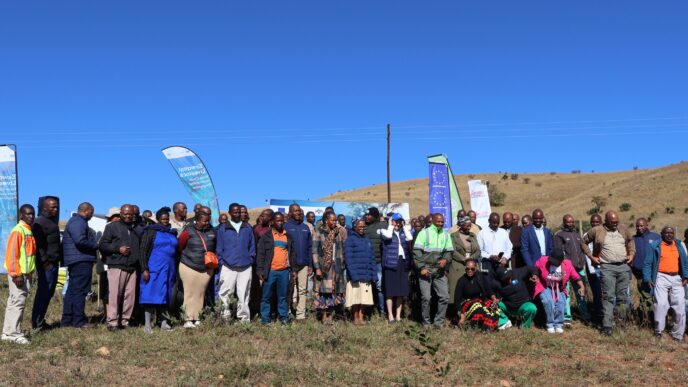


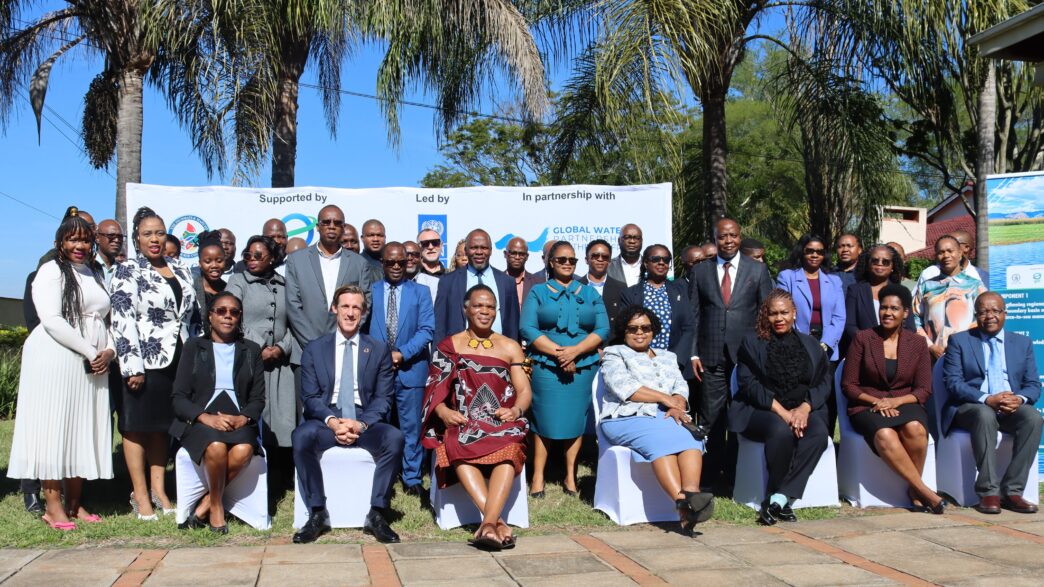
Mbabane – Eswatini, Mozambique and South Africa have officially launched a six-year transboundary water management project worth USD71.1 million that will benefit an estimated 3.4 million people across the three countries, with the launch ceremony held at the Royal Villas Hotel in Ezulwini on Wednesday, 28 May 2026.
The project is funded by a USD7.1 million grant from the Global Environment Facility and supported by USD64 million in co-financing from the three participating countries. It focuses on strengthening water, food, energy and environmental security across the Incomati and Maputo river basins while promoting sustainable livelihoods, basin-wide planning and investment mobilisation.
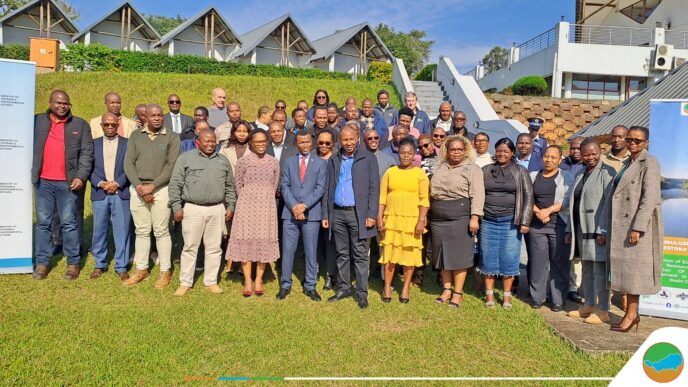
The launch was officiated by Minister of Natural Resources and Energy HRH Prince Lonkhokhela, Minister of Tourism and Environmental Affairs Hon. Jane Mkhonta-Simelane, and UNDP Resident Representative Henrik Franklin, with commissioners under the Incomati-Maputo Watercourse Commission and stakeholders from all three countries in attendance. 
Speaking at the launch, HRH Prince Lonkhokhela said the initiative reflects a broader recognition that isolated interventions are no longer enough. “The world requires systems change rather than isolated interventions,” he said. “This project reflects an integrated approach that aligns economic development with environmental stewardship, recognising that human well-being depends on a healthy biosphere.”
Minister Mkhonta-Simelane said the three countries are working together through INMACOM to balance development needs with environmental protection. “This cooperation ensures that our shared basins remain sources of life, prosperity and opportunity, while building resilience against floods, droughts and climate shocks,” she said.
UNDP Resident Representative Franklin made the case for treating river basins as economic assets. “When managed sustainably, they support food systems, tourism, renewable energy, biodiversity conservation, community livelihoods and regional trade. They create the foundation for inclusive and resilient economic growth,” he said.
Global Water Partnership Southern Africa Interim Executive Secretary Andrew Takawira said the project was built on a solid foundation from the start. “It was also developed through extensive consultations with key stakeholders across all three countries,” he said, pointing to the significant co-financing from the three governments as evidence of strong political commitment.
Speaking on behalf of INMACOM Chairperson Duduzile Mthembu, Commissioner Silo Kheva laid out what success would look like. “The success of this initiative will not be measured only by reports or meetings, but by the lasting impact it delivers for the people and ecosystems of the Incomati and Maputo river basins,” he said. He listed strong institutional coordination, inclusive stakeholder participation, effective financial and project management, transparent monitoring and reporting, and continuous knowledge sharing as the key factors that will determine the project’s outcome.
The project is implemented by the Global Water Partnership Southern Africa, with UNDP serving as the GEF implementing agency providing oversight and accountability throughout implementation. It adopts a source-to-sea approach that connects river basin management, biodiversity protection, sustainable livelihoods and climate resilience into a single regional vision.
The Incomati and Maputo river basins face growing pressure from climate change, altered water flows, unsustainable land and water use, pollution and ecosystem degradation, all of which pose serious risks to the communities, economies and ecosystems of all three countries. The project will strengthen the capacity of INMACOM, which is SADC’s youngest river basin organisation, while improving scientific knowledge and coordination among river basin, conservation and coastal management institutions.
Technical Services Manager Takhona Dlamini, receiving a message on behalf of the Joint River Basin Authorities Project Board, assured stakeholders of the institution’s commitment to turning regional cooperation into practical action that benefits both people and ecosystems across the three countries.