

Pretoria – South Africa’s Department of International Relations and Cooperation (DIRCO) has restated the country’s commitment to Pan African solidarity, the rule of law and continental dialogue on migration, following the final communiqué issued at the 69th Ordinary Session of the Economic Community of West African States (ECOWAS) Authority of Heads of State and Government.
DIRCO said in a statement on Thursday that South Africa regards ECOWAS as a vital pillar of continental integration and remains committed to engaging the regional bloc on matters of mutual concern, particularly regional stability and migration management.
The department repeated South Africa’s firm opposition to all forms of discrimination, saying the country “categorically” rejects xenophobia, racism, homophobia, intolerance and discrimination in all their manifestations. It said upholding the dignity of every person within South Africa’s borders is both a constitutional obligation and a moral responsibility. 
“South Africa remains steadfast in maintaining the rule of law and ensuring that those who perpetrate violence or unlawful acts are held fully accountable under our judicial system,” the department said.
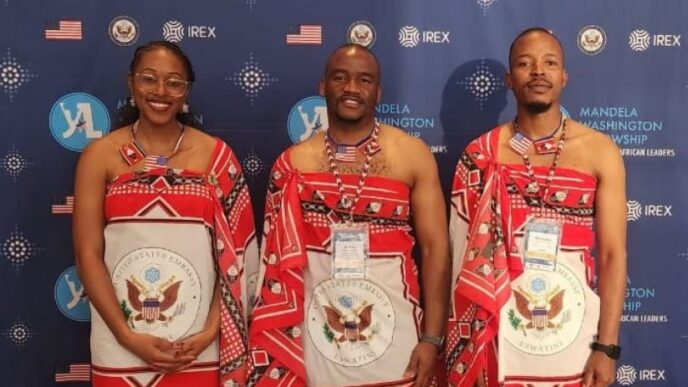
While South Africa continues to address specific bilateral issues with West African countries such as Ghana and Nigeria, the department noted that the country’s largest migration flows come from within the Southern African Development Community (SADC), the regional grouping to which Eswatini belongs. Thousands of Emaswati live and work in South Africa, mainly in Mpumalanga, KwaZulu Natal and Gauteng, while cross border trade and travel between the two countries remain a daily reality for families in Lubombo, Hhohho, Manzini and Shiselweni.
International Relations and Cooperation Minister Ronald Lamola said migration should be raised to the highest decision making level of the African Union so that its underlying causes can be addressed. He proposed a dedicated agenda item at the African Union focusing on good governance, democracy and economic stability as the primary factors driving irregular migration, saying such an approach “will enable a pragmatic, comprehensive approach to continental migration challenges.”
Lamola said discussions at the African Union Heads of State Summit could help ensure that migration across the continent becomes a choice rather than a necessity.
DIRCO also responded to a petition submitted to the International Criminal Court (ICC) by two Ghanaian civilians, describing it as opportunistic and saying it does not meet the legal thresholds required for the court to act. The department said the petition fails to satisfy the ICC’s statutory legal triggers and jurisdictional requirements, adding that South Africa has confidence in its domestic legal framework under the principle of complementarity.
The department pointed to the Prevention and Combating of Hate Crimes and Hate Speech Act, saying it gives effect to South Africa’s constitutional and international human rights obligations by criminalising hate crimes and hate speech and ensuring the prosecution of those found guilty.