


Midrand, South Africa – The Pan-African Parliament (PAP) has convened a high level dialogue to speed up the signature, ratification and implementation of the African Union Convention on Ending Violence Against Women and Girls (AU-CEVAWG), a landmark treaty adopted by African leaders last year.
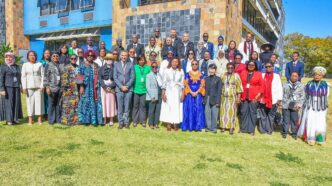
The meeting, held at the seat of the Pan-African Parliament in Midrand, South Africa, was organised in partnership with the African Union Commission (AUC), the UNFPA and other continental stakeholders. It brought together parliamentarians, ministers, African Union institutions, regional economic communities, development partners, civil society organisations, human rights institutions and academia, all with the aim of strengthening political commitment behind the Convention, which was adopted by the Assembly of Heads of State and Government in February 2025.
Opening the Dialogue, the Second Vice President of the Pan-African Parliament, H.E. Hon. Dr. Zanetor Agyeman-Rawlings, MP, pointed to the alarming rise in femicide and other forms of gender based violence across the continent. She called for stronger parliamentary leadership, gender responsive legislation, adequate financing, effective oversight and greater accountability to ensure the Convention becomes a practical instrument for social justice and sustainable development. 
She said ending violence against women and girls would require more than legal reform, calling for comprehensive public policies that tackle economic inequality, political participation, digital safety, women’s leadership and gender responsive budgeting. She urged African leaders to show political will by fast tracking the ratification and domestication of the Convention.
The President of the Pan-African Parliament Women’s Caucus, Hon. Rahab Mukami, who is also the Nyeri County Women Rep, described the Convention as a historic legal instrument representing Africa’s strongest collective commitment to eliminating violence against women and girls. She urged parliamentarians to champion the treaty within their national legislatures, saying the measure of success would not be the adoption of the treaty, but its implementation and its impact on the lives of women and girls across the continent.
Delivering remarks on behalf of the United Nations Population Fund, the Deputy Regional Director for East and Southern Africa, Ms. Yong Hong, reaffirmed UNFPA’s commitment to supporting African governments and parliaments in turning political commitments into concrete action. She spoke of the importance of placing gender based violence at the centre of national development agendas, strengthening partnerships across all sectors, and using evidence based policymaking to ensure accountability and measurable progress.
Representing the African Union Commission, the Special Envoy of the Chairperson on Women, Peace and Security, Ambassador Liberata Mulamula, said the adoption of the Convention marked the beginning, not the culmination, of Africa’s commitment to ending violence against women and girls. She noted that while several Member States had already signed the Convention, The Gambia had become the first country to ratify it, and called on all Member States to expedite ratification so the treaty could enter into force and become an effective instrument for protecting the rights and dignity of women and girls across Africa.
Earlier, the Dialogue was introduced by the Moderator of the Opening Ceremony, Ms. Matilda Phooko, who outlined the objectives of the meeting and spoke to the importance of multi-stakeholder collaboration in ensuring the effective implementation of the Convention. She noted that despite existing African legal instruments protecting women and vulnerable groups, the adoption of a dedicated Convention reflected the continent’s determination to comprehensively address the persistent challenge of violence against women and girls.
The Dialogue will continue through a series of thematic panel discussions focusing on the continental roadmap for the ratification of the AU-CEVAWG, national experiences and lessons from Member States advancing ratification, the role of parliaments in accelerating ratification, domestication and oversight, and the contribution of civil society, regional organisations and development partners in supporting implementation.
Participants said the Convention represented a significant milestone towards achieving the aspirations of Agenda 2063, promoting gender equality, advancing the Women, Peace and Security Agenda, and ensuring that every woman and girl in Africa can live free from violence, discrimination and fear.
The Pan-African Parliament reaffirmed its commitment to using parliamentary diplomacy, legislative advocacy and strategic partnerships to encourage Member States to expedite ratification and implementation of the Convention.