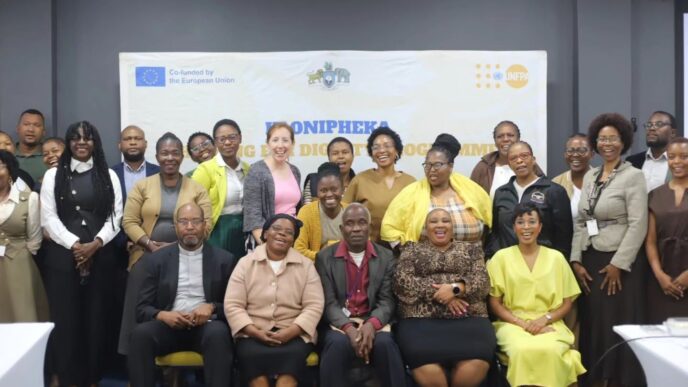




Staff from the Deputy Prime Minister’s Office have completed specialised training under the Taiwan Technical Assistance for Vegetable Industry Initiative.
The programme was conducted in partnership with the Embassy of Taiwan and the World Vegetable Center.
It was designed to give social workers and programme staff practical and theoretical knowledge to help communities grow and manage indigenous crops sustainably. 
The training covered the role of traditional vegetables in improving food security, strengthening climate resilience and supporting communities to become more self reliant.
Participants also took part in practical demonstrations on seed processing, water management and sustainable planting methods suited to Eswatini’s conditions.
The programme examined how indigenous crops can support household livelihoods, reduce reliance on imported food and preserve local agricultural knowledge and cultural practices.
The training is linked to wider agricultural initiatives in Eswatini that promote traditional African vegetables, improved nutrition and climate resilient farming. The Taiwan Africa Vegetable Initiative has also supported training for schools, farmers and other stakeholders involved in producing and using traditional vegetables.
The DPMO said the training would help its staff guide communities in using indigenous crop production as a means of building resilience and creating sustainable livelihoods.
The office said the new skills would strengthen the support provided to communities through social development and empowerment programmes.