

MASERU, Lesotho, August 19, 2026
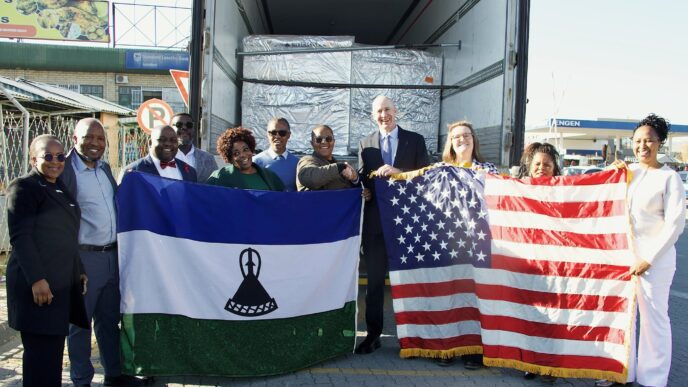
Lesotho has received 100 000 doses of Foot and Mouth Disease vaccine from Botswana to strengthen efforts to control the outbreak affecting the country’s livestock sector.
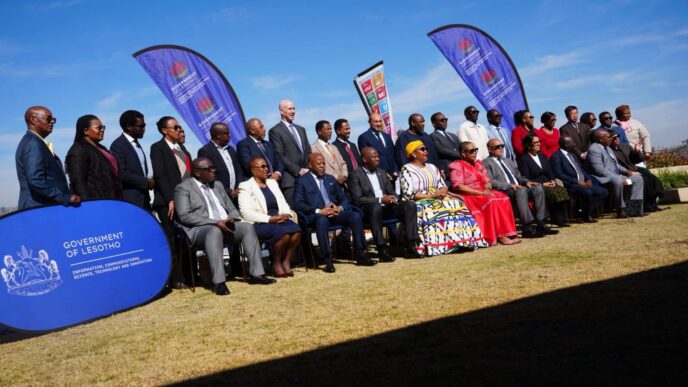
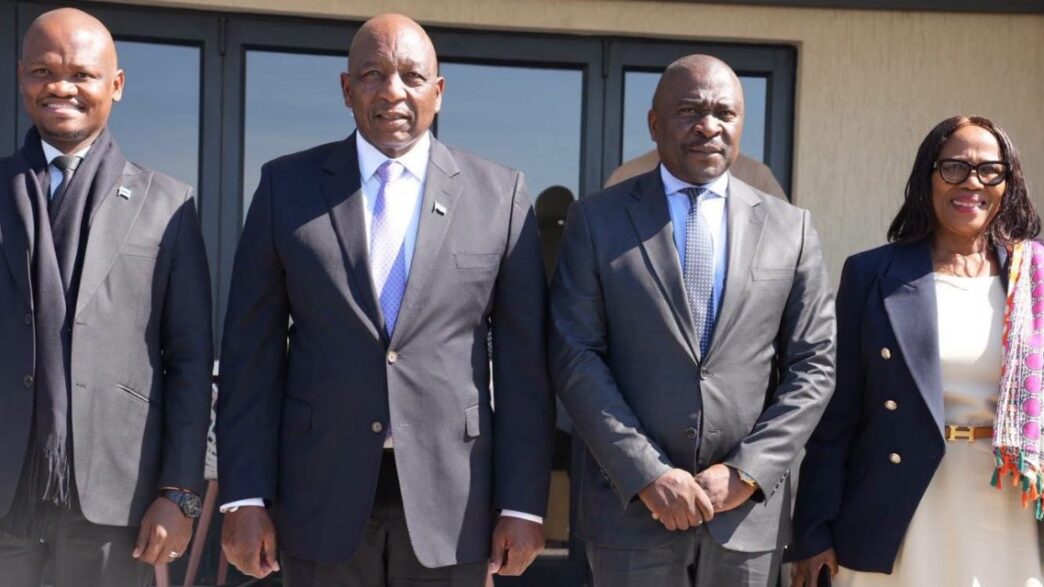
The vaccines were officially handed over during a ceremony held in Maseru on Wednesday, attended by senior officials from both countries.
Prime Minister Samuel Ntsokoane Matekane thanked Botswana for the support, describing it as a sign of friendship, unity and cooperation between the neighbouring countries. 
Matekane said livestock remained a major source of income for many Basotho households, leaving families vulnerable when animals became sick.
“Basotho ba iphelisa ka liphoofolo, ’me re ba tsietsing haholo ha li na le bothata. Sena seo Botswana se se entseng sa ho arolelana le rona rea se ananela,” said Matekane.
He said the donation would strengthen Lesotho’s response to FMD and show how countries could support one another when faced with challenges.
The Prime Minister also commended the Botswana Vaccine Institute for its contribution to the fight against animal diseases. He said livestock played an important role in food security, job creation and economic development.
Minister of Agriculture, Food Security and Nutrition Selibe Mochoboroane thanked the Botswana Vaccine Institute for supporting Lesotho’s disease control efforts.
Mochoboroane said the assistance went beyond the supply of vaccines, as it also created a foundation for lasting cooperation in animal health and veterinary services.
“Seftae se le seng ha se etse moru,” she said, meaning that one tree cannot make a forest. She said long term success in fighting animal diseases could only be achieved through cooperation.
The minister described the donation as a strong sign of African solidarity and said the vaccines would be used properly to strengthen Lesotho’s national response.
Speaking on behalf of Botswana President Duma Gideon Boko, Botswana’s Minister of Lands and Agriculture, Dr Edwin Goraotaone Dikoloti, said the donation reflected the friendship and unity between Botswana and Lesotho.
Dikoloti said the two countries shared common interests and were working together to advance cooperation in areas affecting their people and economies.
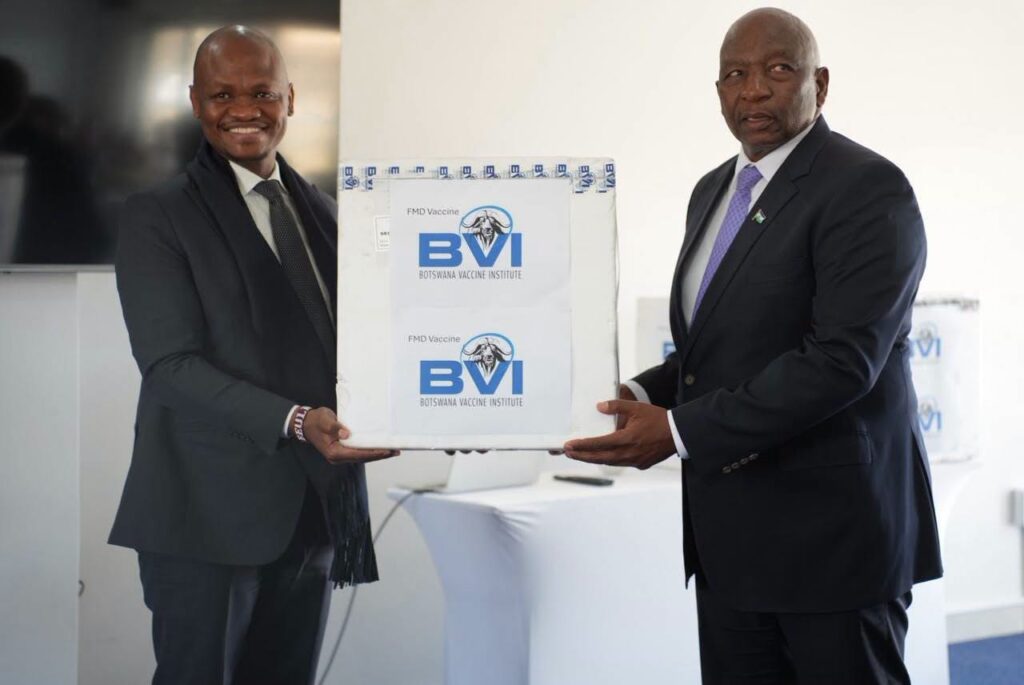
He said Botswana understood the importance of livestock to Basotho communities, which was why it had decided to support Lesotho’s efforts to contain FMD.
Dikoloti said the Botswana Vaccine Institute had played a major role in fighting animal diseases since its establishment, particularly FMD, and had helped Botswana respond to animal health challenges across the continent.
He said animal diseases did not respect national borders, adding that Botswana would continue working with Lesotho and other SADC countries to improve animal health.
The Director General of the Botswana Vaccine Institute, Dr Keabetswe Moagabo, said the institute operated under Botswana’s Ministry of Agriculture and had tested its products over many years to ensure their quality.
Moagabo said the institute supplied high quality vaccines suited to their intended use and provided services to match vaccines with specific disease strains.
He confirmed that the vaccines donated to Lesotho were suitable for use against FMD.
The donation is expected to assist Lesotho in strengthening measures to control and eradicate the disease, while the government continues seeking additional vaccines to expand the vaccination campaign across the country.
Lesotho recorded its first confirmed FMD outbreak in February 2026 in Butha Buthe District. Botswana announced the donation during the inaugural session of the Lesotho Botswana Bi National Commission in Gaborone.