

MBABANE | The Municipal Council of Mbabane recorded a surplus of E6.9 million for the financial year ended March 2026, according to its audited financial statements presented at the council’s annual meeting.
The council reported total income of E176 million during the year, representing a 5.4 per cent increase from E167.1 million recorded in 2025.
Operating expenditure, however, increased by 7.7 per cent from E164.5 million to E177.1 million. This resulted in an operating deficit of E1.08 million, compared with an operating surplus of E2.6 million in the previous financial year. 
The overall surplus for the year reached E6.9 million after finance income of E10.3 million and finance costs of E2.4 million were taken into account. The surplus increased by 15 per cent from E6 million in 2025.
The council presented the figures as part of its Annual Performance Report and Audited Financial Statements for the year ended March 2026.
The audited accounts received an unqualified audit opinion. The audit report stated that the financial statements were prepared, in all material respects, in accordance with the accounting basis described in Note 2.1.
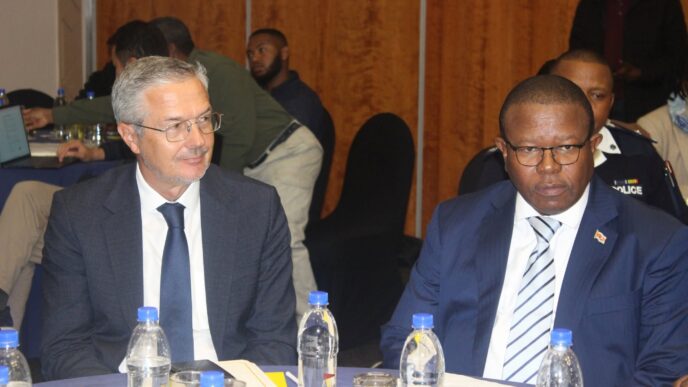
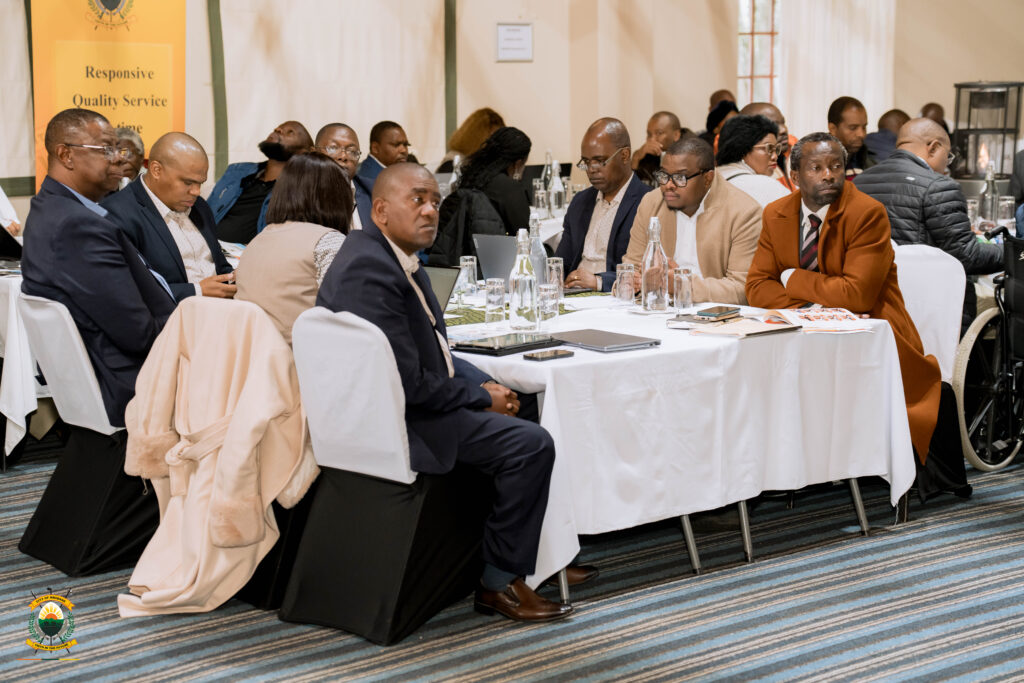
The annual meeting was attended by council leadership, councillors, representatives of the Ministry of Housing and Urban Development, municipal management, stakeholders, partners, members of the media and other guests.
The council said its mission remained focused on sustainable development, improved municipal service delivery, transparency and accountability in the management of the capital city.
Rates remain the main source of income
Private rates accounted for E91.59 million, or 52 per cent of total income, while government rates contributed E67.90 million, representing 39 per cent.
Rates penalties and interest contributed E5.41 million, while other operating income amounted to E11.12 million. Refuse collection accounted for E4.41 million of the other operating income.
Revenue increased from E155.86 million in 2025 to E164.90 million in 2026, a six per cent rise. Other operating income declined slightly from E11.22 million to E11.12 million.
The council collected 83 per cent of billed rates during the year, compared with 82 per cent in 2025.
However, private rates debtors increased by 14 per cent year on year. Outstanding private rates stood at E59.37 million, compared with E52.14 million in 2025.
Government rates outstanding fell from E64.75 million to E51.37 million, a decline of 21 per cent.
Total rates outstanding stood at E110.74 million, compared with E116.89 million the previous year.
The council said E28 million of the outstanding rates had been handed over for legal collection after internal collection efforts had been exhausted, in line with the Rating Act.
Operating costs rise
Personnel costs increased by 6.9 per cent from E56.8 million to E60.7 million and accounted for 34.3 per cent of operating expenditure.
Depreciation stood at E16.04 million, compared with E16.30 million in the previous year.
Other operating costs increased by 9.9 per cent from E91.36 million to E100.36 million, accounting for 56.7 per cent of total operating expenditure.
Road rehabilitation and drainage was the largest item within other operating costs, rising from E15.77 million to E21.90 million.
Waste management, security, cemetery and markets accounted for E19.79 million, while utilities cost E12.31 million.
Town planning, community and public health services accounted for E7.15 million, while other organisational running costs amounted to E39.21 million.
Council reports stronger cash position
At March 31, 2026, the council had cash and cash equivalents of E75.93 million, an increase of 15.7 per cent from E65.64 million in 2025.
Trade and other receivables declined by 11.4 per cent from E102.12 million to E90.47 million.
Property, plant and equipment stood at E595.7 million, compared with E599.1 million in 2025.
The council’s gross cash cover improved from four months to five months, although its stated ideal level is six months.
Its current ratio stood at 5.74 times, meaning the council had E5.74 in current assets, including rates debtors, for every E1 of current liabilities.
The gross cash ratio increased from 2.04 times to 2.20 times.
The operating margin, however, moved from 1.6 per cent in 2025 to negative 0.6 per cent in 2026 because operating costs exceeded operating income before finance income.
Borrowings as a proportion of assets declined from 3.4 per cent to 2.1 per cent.
Net operating cash inflow amounted to E31.11 million, compared with E35.24 million in 2025. Net investing outflow was E12.66 million, while net financing outflow stood at E8.17 million.
The council spent E12.81 million on property, plant and equipment during the year and made debt repayments of E9.90 million.
Overall, cash increased by E10.29 million during the year, compared with an increase of E15.23 million in 2025.
Council reports progress on revenue collection
The council said its procurement and debtor management plan was 91 per cent complete during the reporting period.
More than E67 million in arrear rates was recovered, while 11 competitive tenders worth E54 million were processed.
A total of 3,690 quotations were processed, with a value exceeding E73 million, while 894 invoices worth E96 million were paid.
Government payments accounted for more than E54 million and private payments for more than E13 million.
The council entered into 490 payment arrangements, with 99 per cent compliance reported. Arrangements covered E19.8 million.
Thirty three disputed accounts involving E233,000 were resolved, while more than 56,000 SMS reminders were sent to ratepayers.
The council also reported 4,612 e statement accounts and 519 enquiries resolved.
City records crime cases
The council reported 2,684 recorded crime cases during the four quarters of the financial year.
The figures included 481 cases of housebreaking and theft, 1,365 theft cases, 111 shoplifting cases, 149 thefts from motor vehicles and 142 robberies.
There were 41 armed robbery cases, 47 rape cases, 15 murder cases, five attempted murder cases and 10 car theft cases.
The report also recorded 242 cases of grievous bodily harm, two illegal firearms cases, 72 fraud cases and two stock theft cases.
The council said the Royal Eswatini Police Service continued working to reduce crime in the city.
It also reported that a new security company had been engaged during the year and that its performance was associated with a reduction in illegal trading activities and other forms of criminality within the city.
Public health services
The council’s public health programmes included treatment of 967 cases of minor illnesses, 737 blood pressure screenings, 81 blood sugar screenings, 886 tuberculosis screenings and 595 COVID 19 screenings.
Family planning services were provided to 556 people, while 16,647 home based care visits were conducted.
The council distributed 184 home based care supplies and made 112 referrals. Ninety nine sexually transmitted infection cases were also recorded.
The council recorded 153 new HIV infections during the year and said all those identified were successfully linked to care.
The report stated that most of the new infections were among adolescent girls and young women.
Council said future interventions would combine biomedical and behavioural approaches, guided by NERCHA, to prevent new infections and strengthen HIV prevention efforts.
HIV testing services reached 7,235 people, while 3,477 HIV self test kits were distributed.
A total of 2,074 people received pre exposure prophylaxis and 279 received post exposure prophylaxis.
The council distributed 684,616 condoms and 22,978 units of lubricants.
Food safety operations
Council inspectors seized and destroyed 1,100 kilogrammes of unsafe and expired food during extraordinary inspections.
They also seized an 88 kilogramme uninspected bovine carcass.
The council said its food safety by law was being revised as part of efforts to improve food safety in Mbabane.
Food premises inspections increased during the year, with restaurants, institutional kitchens, convenience shops, supermarkets, butcheries and bakeries subjected to grading.
The council said it would move towards a risk based food inspection system.
Health clearance applications increased from six in the first quarter to 68 in the third quarter. Of 30 applications received in the second quarter, 25 were cleared and five were declined because of land use issues.
During the third quarter, 63 of 68 applications were cleared, giving an approval rate of 93 per cent.
Liquor outlets remain a compliance concern
Mbabane had 103 licensed liquor outlets during the reporting period, with 41 of them located in residential areas and classified as non conforming.
The council listed several recurring compliance concerns, including noise from loud music, public urination, littering, public drinking, obstruction of access roads and residents’ properties, disruptive behaviour that could pose risks to children, breaches of operating hours and the sale of alcohol to underage individuals.
The council also referred to the Liquor Licensing Act of 2023, including the provision that a person may only operate a liquor business in an area designated and approved by the local authority.
Under the legislation, residents can also lodge written complaints concerning licensed premises when the required number of adult residents within the specified distance submit such complaints.
Social programmes support children and communities
Council continued feeding programmes at nine social centres during the reporting year, providing two meals a day to an average of more than 1,100 children.
With external funding, 15 high school learners who could not afford tuition fees were assisted to enrol in school.
The council also conducted 13 gender based violence awareness and prevention campaigns in communities, workplaces and tertiary institutions.
Spelling Bee and public speaking competitions were held for primary and high school learners, with the programmes aimed at promoting literacy, public speaking, leadership development, critical thinking and civic participation.
Council also worked on initiatives supporting social inclusion for children with disabilities.
Waste diversion reaches 39 per cent
The council reported receiving 14,486 tonnes of waste at its landfill during the 2025/26 financial year, down from 18,604 tonnes in 2024/25.
A total of 5,590 tonnes was diverted from landfill disposal, representing a diversion rate of 39 per cent.
City dry waste recycled across the four quarters amounted to 2,989 tonnes.
Through environmental health and safety initiatives, 36 schools participated in Eco Club activities, with 7,638 kilogrammes of dry waste recycled.
The council said waste diversion helped prevent windblown waste from reaching nearby households and yards, while reducing the risk of waste entering rivers and drainage channels.
Urban development projects advance
The council received E1.68 million in payments for UDP Phase 1 plots against a target of E1.5 million, representing a 12 per cent surplus against the target.
A total of 267 99 year leases were registered and 23 Crown Land applications were processed by the Crown Land Disposal Committee during three sittings.
For UDP Phase 2, pegging was completed at Nkwalini Zone 3 while the Surveyor General process for the approved General Plan continued.
Pegging at Makholokholo and Sidwashini was completed, the township General Plan was approved and registration continued through the Ministry.
Gazetting was finalised for Mahwalala Zone 6C and Fonteyn.
Council also approved the UDP Phase 2 plot pricing model during the financial year.
For UDP Phase 3, environmental audit reports for Gobholo, Mncitsini and PTS were approved by the Eswatini Environment Authority.
The council said its geographic information system supported municipal operations, public space mapping, major events and environmental initiatives.
The review of the Town Planning Scheme progressed to the Draft Development Plan and Inner City Urban Design Framework stages.
The Urban Addressing Policy was expanded to include street naming, house numbering and place naming, aligned with SZNS ISO 19160.
Four townships were listed as having completed registration. Malagwane has 286 lots and seven public open spaces, Mvakwelitje has 87 lots and 10 public open spaces, Fonteyn has 572 lots and three public open spaces, while Mahwalala Zone 6C has 430 lots and seven public open spaces.
Roads and public spaces receive investment
The council reported that 5.0 kilometres of streets were rehabilitated during the year.
Pothole patching covered 6,000 square metres at a reported expenditure of E5.6 million.
Vegetation clearance covered 855,000 square metres, while drainage cleaning and road grading and regravelling were also carried out.
The council reported 40.7 kilometres of road related work in one category and 43.3 kilometres in another as part of its technical services activities.
The city also recorded more than 2,400 participants in the Mbabane Marathon, more than 500 participants in the Olympic Day Run, more than 80 participants in Age in Motion and 140 participants in the Oval Keep Fit programme.
More than 600 burials were handled during the year.
Greening initiatives included the planting of 181 trees, among them 46 Alexander palms between Kia traffic signals and Mangwaneni traffic signals.
The council also reported a Forestry Department donation recorded as “one hundred (130)” indigenous trees.
Some 350 hectares of overgrown vegetation were cleared from public open spaces and riverine areas.
Rehabilitation of the Manzana wetland continued, partly funded through the Environment Fund, while alien invasive plants and gum trees were removed.
At the Interministerial Park, the council provided benches, carried out site clearance and installed litter bins.
Fencing and children’s play equipment were procured for Ward 7 GLA Park, while an ablution facility was constructed at Checkers Park.
Four jungle gym sets were reported across council parks, including Selection, Coronation and Mahwalala.
Public transport capacity remains constrained
The city had a reported public transport fleet of 845 vehicles, comprising 730 minibuses, 80 metered taxis and 35 buses.
The Sidwashini satellite bus rank became operational during the reporting period.
Council received 720 permit renewal applications but recommended that no new permits be issued because the main bus rank was already congested.
The national Road Transportation Board had also suspended new public transport permits.
Road safety activities included a school campaign and a week long vehicle audit.
Youth economic empowerment project
The Mbabane Youth Grass Cutting Project remained an ongoing initiative aimed at helping young people establish sustainable businesses.
The project had procured 12 grass cutting machines and had involved 28 Mbabane youths to date.
The programme links business development and funding through the Youth Enterprise Revolving Fund with opportunities for young people to secure work and develop stable businesses.
Smart city development
Mbabane’s Smart City programme includes the installation of a 5G network and 60 security cameras in the central business district.
A control room equipped with modern technology is operated by police officers from the Royal Eswatini Police Service, with daily reports generated from the system.
The council’s wider smart city objectives include real time city surveillance, a smart disaster early warning system, smart transportation systems, digital municipal services, data driven decision making, public Wi Fi hotspots and technology readiness assessments.
Council records strong organisational assessments
The Municipal Council of Mbabane scored 90 per cent in an independent organisational assessment, which the report described as a high performance level.
Its governance performance assessment stood at 93 per cent.
The assessment covered political leadership, conflict management, council image, relationship management, compliance with standing orders on conduct, procurement management, performance management systems, competency based recruitment of management and land and human settlements management.
During the 2025/26 financial year, council had 102 employees, excluding temporary staff.
Two employees resigned and three were hired during the period. No retirements or deaths were recorded.
Council sets longer term priorities
The council’s strategic priorities include improving revenue collection and management, attracting investment, promoting economic growth, improving operational and financial efficiency, environmental and public health management, social development, spatial development, local economic development, infrastructure development, governance, risk management and smart city development.
Council plans to reduce its reliance on rates to below 70 per cent of the budget by 2029 and increase rates collection by three per cent annually through improved debt management.
Other plans include introducing user fees and charges by laws, expanding public private partnerships, facilitating investment, modernising the city and revitalising the inner city.
The council also plans to automate financial services and strengthen financial sustainability measures.
Its environmental priorities include waste minimisation and recycling, landfill management, environmental assessment, pollution control, sanitation management, food hygiene and safety, water quality management and disease prevention.
| E MILLION | 2026 | 2025 |
|---|---|---|
| NET OPERATING INFLOW | 31.11 | 35.24 |
| Cash collected – cash utilized in Operations -11.7%. | ||
| NET INVESTING OUTFLOW | (12.66) | (13.21) |
| PPE purchases E12.81m; [2025- PPE-7M Financial Assets-6M] | ||
| NET FINANCING OUTFLOW | (8.17) | (6.80) |
| Debt repayments E9.90m, offset by net trust receipts | ||
| NET INCREASE IN CASH | 10.29 | 15.23 |
| CASH AND CASH EQUIVALENTS AT THE END OF THE YEAR | 75.93 | 65.64 |
Social development plans include social centres, early childhood development, health outreach, community halls, active parks, picnic parks, swimming facilities and multipurpose sports courts.
The council also plans to improve road maintenance, public transport infrastructure, mobility for people living with disabilities, electrical infrastructure, environmental sanitation and health, smart city systems and building application processing.
Its governance objectives include stronger performance management, financial oversight, compliance, stakeholder engagement, public participation, service delivery, strategic partnerships and disaster preparedness.
The council’s stated vision is to be “an attractive smart-city, offering quality life and opportunities for all”, while its mission is “To create a conducive and sustainable environment through responsible quality service delivery and good governance.”
Its core values are unity, respect, reliability, customer focus and communication.
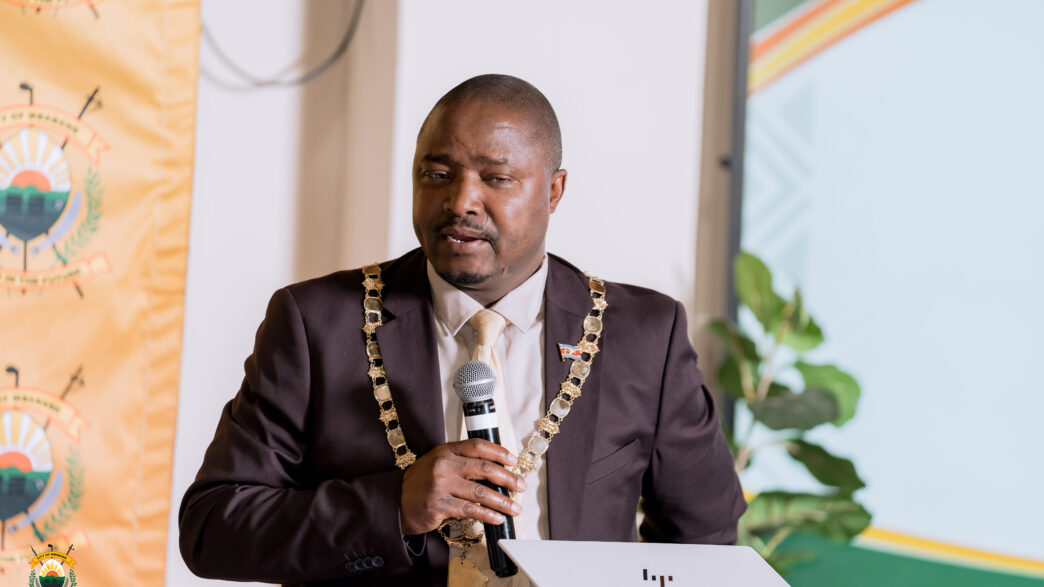
The council is headed by Mayor Thulani Mkhonto, with Vusi Tembe serving as Deputy Mayor.