

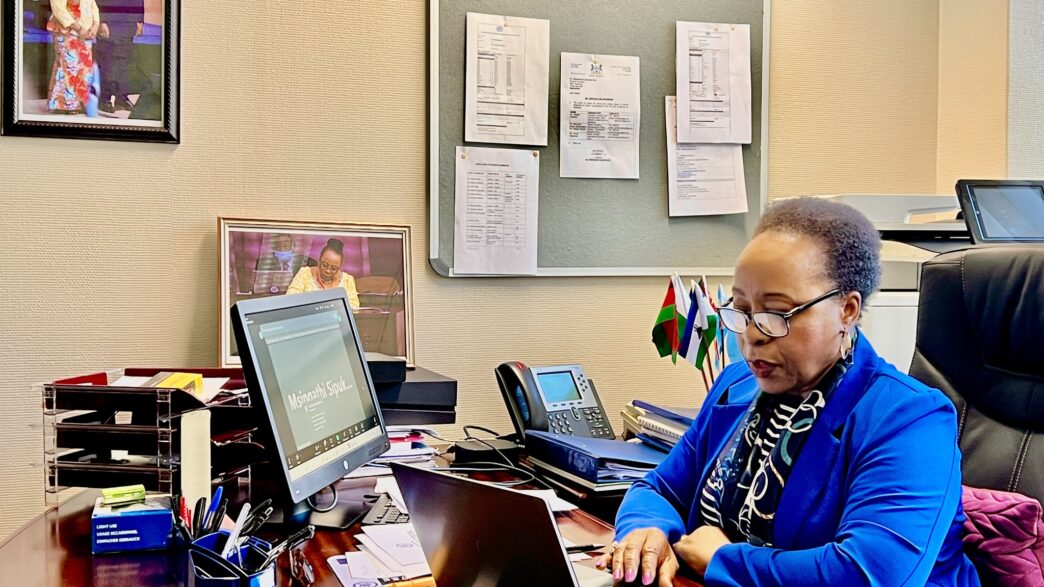
African Ministers of Finance and Planning held an emergency virtual meeting on 5 May 2025 to discuss the economic impact of sweeping new United States tariffs on African imports. The session was convened by the African Union Development Agency – NEPAD (AUDA-NEPAD), following Washington’s announcement of a 10% baseline tariff on all imports and a now-suspended set of reciprocal tariffs that were due to take effect on 9 April.
AUDA-NEPAD CEO, Mrs. Nardos Bekele-Thomas, chaired the high-level dialogue, which aimed to evaluate both immediate and long-term implications of the US policy shift. Participants deliberated on how to safeguard Africa’s trade interests and maintain momentum on the continent’s development goals amid rising global protectionism.
Ms. Angele Makombo N’tumba, Deputy Executive Secretary for Regional Integration at the Southern African Development Community (SADC), said the US accounted for about 7% of SADC’s trade and ranked among the top five export destinations for the region. She warned that the new tariffs would severely affect a wide range of exported goods and pushed for stronger intra-African trade systems and policy coordination within the region. 
Key decisions taken at the meeting included the development of a unified continental position on US trade policies. Ministers also proposed policy measures to cushion African economies from the tariffs, such as sector-specific support, economic diversification, and macroeconomic stabilisation tools.
Ministers also pushed for the acceleration of the African Continental Free Trade Area (AfCFTA) to boost investment, cut poverty, and deepen regional integration. Calls were made for harmonised trade regulations across the continent to better withstand external economic shocks and improve trade resilience.
The gathering was sparked by the US administration’s announcement on 2 April of a blanket 10% tariff on all imports, which took effect on 5 April. The reciprocal tariffs, initially set for 9 April, were suspended for 90 days, although tariffs on Chinese imports were raised to 125% that same day.