

MBABANE – Risk consultant Thembinkosi J. Dube says Eswatini faces several financial and governance threats that could affect the success of the 2026 to 2027 national budget if proper risk management measures are not strengthened.
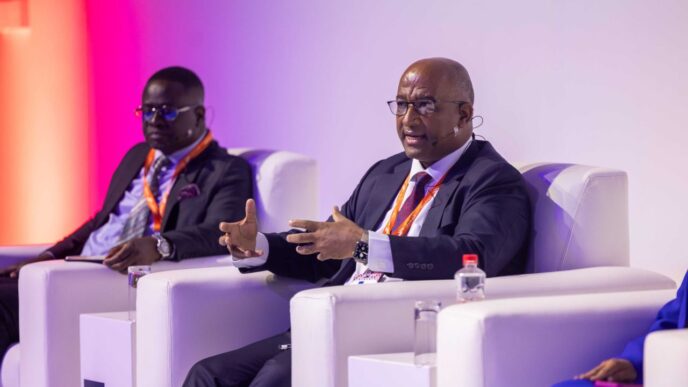
Dube, who works with Yetfu Risk Consulting, made the remarks during an online webinar titled Risks in the 2026 to 2027 Budget of Eswatini, held on Thursday morning through Microsoft Teams.
Participants joined the session to discuss factors that could influence government revenue, spending and project delivery as the country implements its latest fiscal plan. 
Dube explained that government projections show a deficit of about 4.9 per cent of the country’s gross domestic product. In monetary terms, this represents roughly E5.02 billion that government expects to spend beyond its income.
He told participants that a deficit occurs when government expenditure exceeds revenue and serves as one of the key indicators used to assess the strength of public finances.
According to Dube, the budget deficit will be financed through both domestic and international borrowing. Locally, government raises funds through treasury bills and bonds, while external financing comes from institutions such as the World Bank, the International Monetary Fund and the African Development Bank. Government has also participated in markets linked to the Johannesburg Stock Exchange to access funding.
Dube said several external and domestic factors could push the deficit beyond what government has projected.
One of the biggest concerns is the country’s dependence on the Southern African Customs Union for revenue. He said SACU receipts account for more than 30 per cent of the national budget, meaning any disruption in regional trade could affect government income.
“If SACU shrinks, the country cannot sustain itself,” he said during the session.
He also pointed to global developments such as the war in Iran as another potential threat to the economy. According to Dube, geopolitical conflict can influence global fuel prices, raising transport and production costs and eventually pushing inflation higher.
Higher fuel prices, he said, could place pressure on government expenditure through subsidies and operational costs while also affecting revenue collection through value added tax, fuel levies and corporate tax.
The consultant said such developments could slow economic growth and affect medium term fiscal planning.
Consumer and business confidence were also identified as key indicators influencing the economy.
Dube explained that consumer confidence refers to how optimistic households feel about the economy and their own financial stability. When confidence is strong, families are more willing to purchase items such as vehicles, appliances or homes. When confidence drops, spending slows and tax revenues are affected.
Business confidence, he said, reflects the outlook of company leaders regarding economic conditions and the future of their firms. When confidence is high, companies expand operations, invest in equipment and recruit more workers. When it declines, firms delay investment, reduce hiring and become more cautious.
He also warned that domestic challenges such as unemployment remain a serious threat to revenue collection.
Government income from taxes, he said, depends on employment levels and compliance from companies and individuals. If large numbers of citizens remain unemployed, the tax base becomes smaller.
The issue of tax compliance also surfaced during the webinar. Dube said authorities estimate that around E4 billion in taxes may not have been fully collected, prompting enforcement measures by the Eswatini Revenue Service.
He questioned whether the projected amount would materialise, especially in cases where some investors have been granted tax holidays as incentives for foreign direct investment.
Government expenditure pressures were also discussed. Dube said social services and support programmes are growing as authorities consider measures to assist unemployed citizens.
At the same time, the public sector wage bill continues to increase as civil servants seek improved benefits and allowances.
Infrastructure projects form another large share of government spending. Dube said capital expenditure for projects such as roads, dams, irrigation systems and energy facilities stands at about E7.78 billion.
He warned that weak project management structures could lead to delays, cost overruns and poor quality work if strong oversight mechanisms are not enforced.
Large projects require effective governance systems to ensure they are delivered on time and within the allocated budget, he said.
Corruption and governance weaknesses were also raised as serious risks to public finances.
Dube said cases where suppliers collude with officials can lead to inflated project prices and substandard work, increasing costs for government and reducing the intended economic benefits.
Weak governance structures, he said, also undermine tax compliance and public trust in institutions.
Another issue discussed was the implementation of the Integrated Financial Management and Information System known as UMSEBE. Dube described the system as a positive initiative aimed at improving transparency in public finance management.
However, he warned that risks remain around data quality, system adoption and change management if institutions fail to adapt to the new technology.
Dube also spoke about challenges related to project execution and human resource capacity. He said government institutions must ensure that employees have the competence and discipline required to deliver public services efficiently.
Corruption, poor work culture and weak accountability systems, he said, can undermine the goals set out in the national budget.
He urged authorities to strengthen scenario planning, conduct stress tests on revenue sources such as SACU and monitor global market developments closely in order to respond quickly to emerging risks.