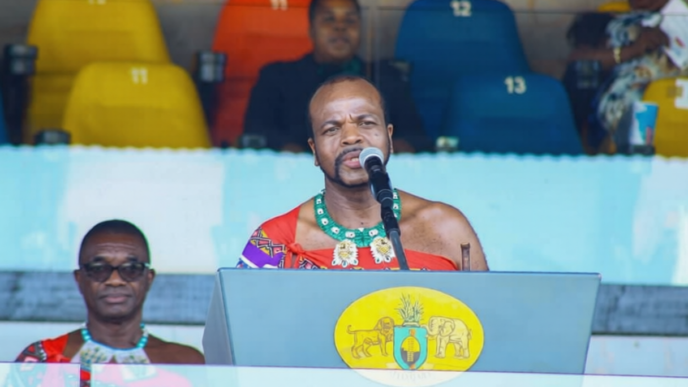


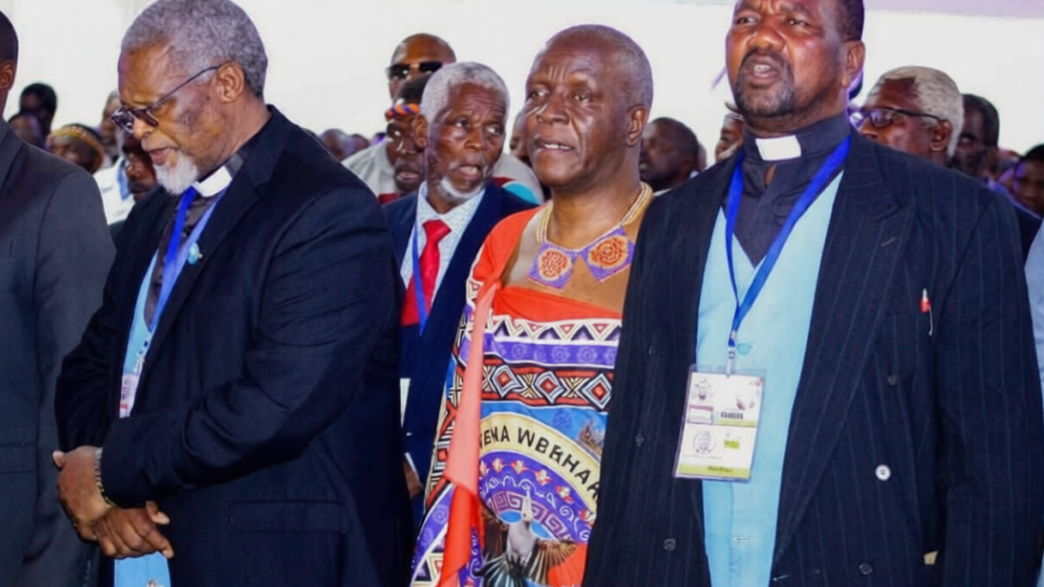
Lobamba – According to reports from Eswatini Observer, human rights concerns ranging from same sex unions to family planning and children’s conduct dominated this year’s Easter service at Engabezweni Royal Residence.
The annual gathering, held yesterday, brought together male pastors under the League of Churches and congregants who met in keeping with tradition to deliberate on key matters affecting the church and nation before presenting them to His Majesty King Mswati III.
As is customary, the clergy first convened among themselves during the opening segment of the service to identify pressing issues facing society. The matters were framed as questions and reduced to three main topics for presentation and discussion before the King. 
The first issue was tabled by Bishop Sipho Simelane of Sitsatsaweni, who asked whether it was acceptable for same sex marriages to be allowed in the church.
Simelane anchored his submission on Genesis 1 verses 27 and 28, which reads: “So God created mankind in his own image, in the image of God he created them; male and female he created them. God blessed them and said to them, ‘Be fruitful and increase in number, fill the earth and subdue it. Rule over the fish in the sea and the birds in the sky and over every living creature that moves on the ground.’”
He told the gathering that Scripture points to procreation as central to humanity and said the church was facing what he described as a serious and urgent challenge as same sex relationships and marriages gained recognition in parts of the world.
Simelane said such unions did not align with the biblical directive to “be fruitful and multiply.” Addressing the King, he added: “If there is no procreation, there will be no one to lead.”
Other pastors supported the submission, citing further biblical passages from the Book of Genesis and maintaining that the church had a duty to remain grounded in Scripture amid changing global norms.
Internationally, same sex relationships are regarded as a human right in some jurisdictions on the basis that fundamental rights are universal and apply to all people regardless of sexual orientation or gender identity. Global human rights law prohibits persecution, violence and discrimination, allowing individuals to live with dignity and equality.
The second matter was presented by Pastor Moses Ndzinisa of KaPhunga, who posed the question: “Is it okay for Christians to practise family planning?”
Ndzinisa referred to Genesis 1 verse 27 and also cited Jeremiah 1 verses 4 and 5, which reads: “Now the word of the Lord came to me saying, ‘Before I formed you in the womb I knew you, and before you were born I consecrated you; I appointed you a prophet to the nations.’”
He said the passage suggests that God has a predetermined purpose for every life conceived and argued that human intervention in reproduction calls for careful theological reflection within Christianity.
Family planning, he noted, presents complex moral questions for the church, particularly as it intersects with modern reproductive health practices and individual choice.
According to the United Nations Population Fund, family planning is recognised as a human right, enabling individuals and couples to decide freely and responsibly the number and spacing of their children. The principle, first articulated in 1968, is linked to bodily autonomy, health, life and gender equality.
The third topic was introduced by Pastor Galuja Dlamini of KaDeda in Mankayane, who asked: “Is it acceptable for children to engage in quarrels with their parents?”
Dlamini based his argument on Isaiah 1 verse 2 and Exodus 20 verse 12, the fifth commandment, which instructs children to honour their parents and promises long life to those who do so. He also referred to the Old Testament account of Jonah and Nineveh, describing how the reluctant prophet fled from his calling, was swallowed by a great fish and later delivered a message of repentance to the city.
He said the narrative illustrates obedience and respect for authority and drew parallels with the relationship between children and parents.
Supporting clergy members said that while children’s rights are increasingly recognised in modern society, such rights do not extend to disobedience or conflict with parents. They maintained that Scripture assigns children a clear responsibility to respect parental authority.
After the deliberations, the three questions were formally presented before His Majesty at Engabezweni. Each pastor elaborated on his position, backing submissions with biblical references as discussions unfolded within the broader context of faith, culture and evolving human rights standards in Eswatini and beyond.