

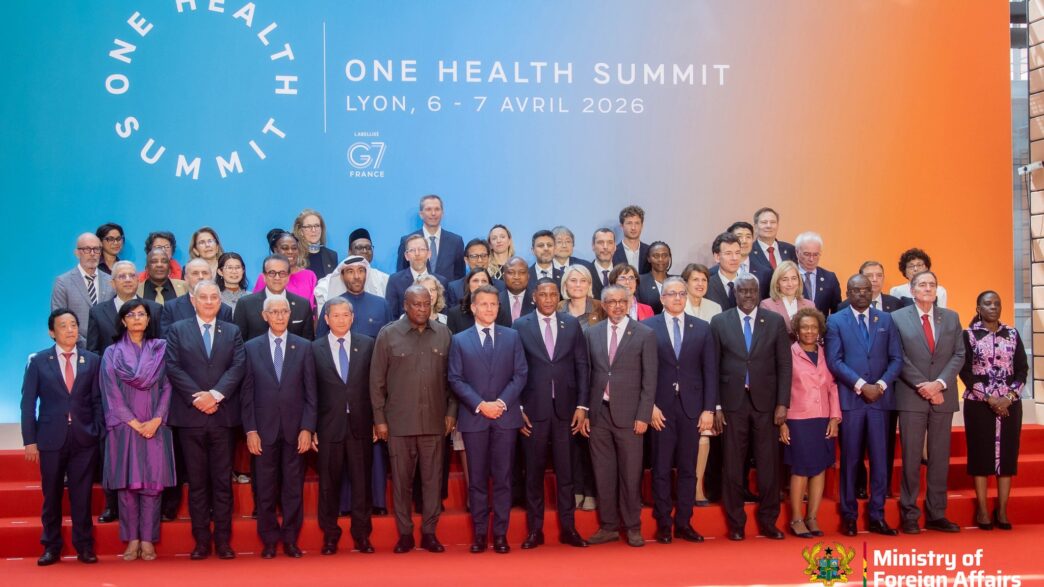
LYON, France – The European Commission has committed €700 million to strengthen global health through the One Health approach, which integrates the health of humans, animals, plants and ecosystems. The announcement was made as the Fourth Quadripartite Executive Annual Meeting convened in Lyon on April 8-9, 2026.
The meeting brings together the Food and Agriculture Organization of the United Nations, the United Nations Environment Programme, the World Health Organization, and the World Organisation for Animal Health. The focus is on preventing future health crises by coordinating efforts across sectors and borders.
“The health of humans, animals and the environment are inextricably interwoven, and we cannot protect one without protecting all three,” said WHO Director-General Dr Tedros Adhanom Ghebreyesus. “At a time of rising and interconnected challenges, the Quadripartite partnership is more important than ever in bringing together expertise across human, animal, plant and environmental health to drive coordinated global action through a fully integrated One Health approach.” 
The Quadripartite is advancing progress through four priority areas: implementing One Health at country level, strengthening science and knowledge exchange, enhancing policy engagement and governance, and mobilizing sustainable financing. Countries are being supported to operationalize One Health through multisectoral coordination, national planning, capacity building, and evidence-based decision-making.
Quadripartite officials stress that strong governance, political commitment, and adequate financing are key to scaling up impact. Effective surveillance, resilient food and agricultural systems, healthy ecosystems, and robust veterinary and public health services are central to reducing risks at the human–animal–environment interface.