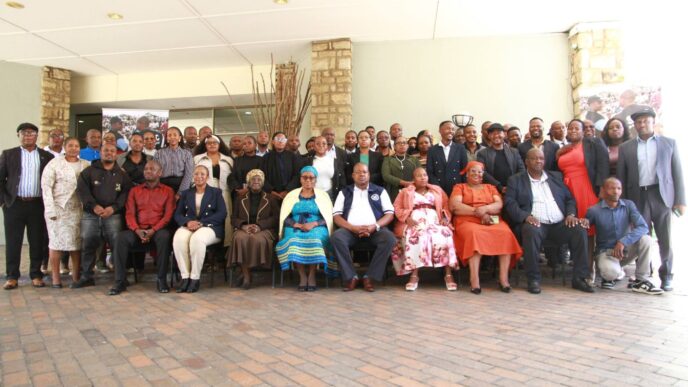


Johannesburg – Eswatini has set out its ambition to become a key transit hub in Southern Africa during a SADC ministerial panel held at the Department of Transport Conference, where regional leaders gathered to discuss transport governance and inclusive growth.
The session, moderated by Railways Africa Magazine Editor Phillippa Dean, focused on leadership and governance for transport as a driver of economic development across the region.
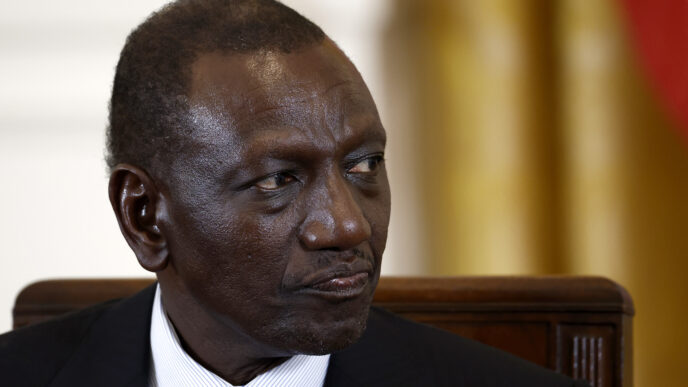
Representing the Kingdom, Principal Secretary in the Ministry of Public Works and Transport, Hon Thulani Mkhaliphi, told delegates that Eswatini’s strategic location between South Africa and Mozambique places it at the centre of major trade flows moving to the ports of Durban, Richards Bay and Maputo. 
He said with Gauteng serving as a major economic hub, the natural movement of goods and people towards seaports passes through Eswatini. This, he noted, calls for closer collaboration with neighbouring countries to ensure infrastructure is developed to handle these volumes efficiently.
Eswatini is currently advancing projects such as the Eswatini Rail Link and the development of an intermodal logistics hub at Mpaka. The country is also working on expanding the airport and constructing a new cargo terminal linked to the Mpaka railway station, where lines from Komatipoort and the Goba line meet and connect to Richards Bay.
The plan is to transform Mpaka into a regional railway interchange station connected to the cargo terminal, allowing goods from South Africa and Mozambique to move through Eswatini into international markets. As a landlocked country, Eswatini is also developing dry ports around the airport precinct to handle cargo, including goods originating from Mpumalanga and other regions.
Mkhaliphi told the panel that Eswatini has conducted an internal review to address past shortcomings in project delivery. The country is now strengthening master planning, embracing public private partnerships, improving coordination with neighbouring states and reinforcing domestic institutions responsible for rail, aviation and roads.
He said leadership is shown by bringing countries together to plan collectively, adding that Eswatini is taking its engagement with regional structures seriously.
The Eswatini Rail Link project, valued at about R30 billion and implemented jointly with South Africa, remains central to the country’s regional strategy. However, progress has been slowed by inconsistent leadership and frequent changes in project structures, which have affected certainty and investor confidence.
Delegates at the conference acknowledged that while funding is often cited as a constraint, well prepared projects are able to attract finance. Greater focus is therefore being placed on planning quality and execution.
Differences in public private partnership frameworks across countries were also identified as a barrier, as inconsistent regulatory systems create challenges for financiers and delay implementation. Regional alignment and standardisation were cited as necessary to unlock progress.
Eswatini further called for stronger coordination across agencies, countries and operators to ensure transport systems function as an integrated network. The Kingdom is advocating for complementarity rather than competition, including cooperation in aviation through bilateral air service agreements and alignment in rail infrastructure and access to seaports.
Mkhaliphi said Eswatini stands ready to serve as the missing link in the regional transport chain, facilitating the efficient movement of commodities from South Africa, Botswana and the Democratic Republic of Congo to major ports such as Richards Bay and Maputo.