


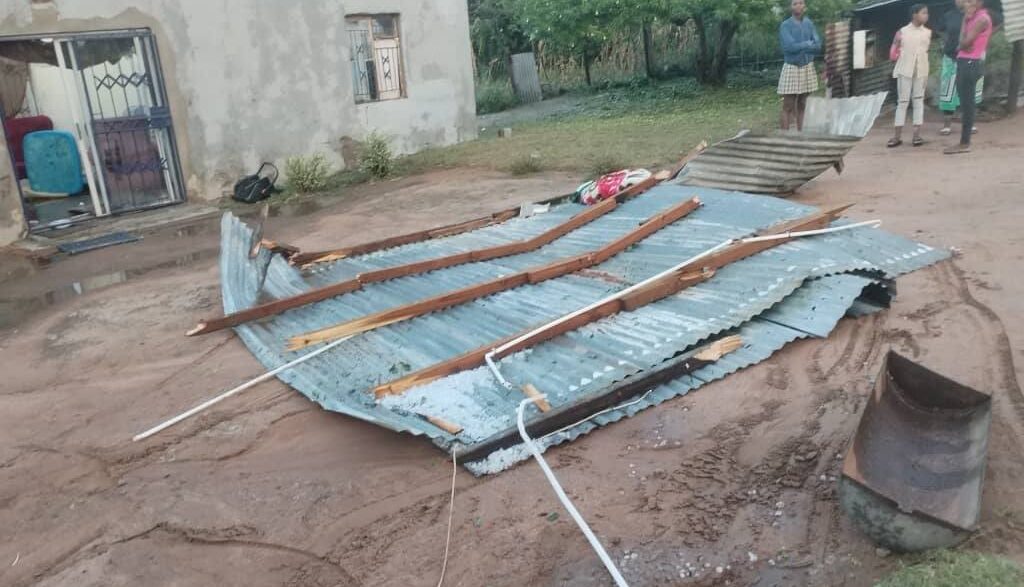
A hailstorm that swept through parts of Hhohho and Lubombo regions on April 20, 2026, left 289 households affected and an estimated 1,445 people facing disruptions to shelter and household assets.
The most affected areas were Mhlangatane, Madlangempisi, Ndzingeni and Dvokodvweni Tinkhundla. No fatalities or injuries had been recorded at the time of assessment, according to the National Disaster Management Agency.
Four schools sustained damage, including Nyakatfo Primary and Nyakatfo High School under Madlangephisi Inkhundla, with classrooms, toilet facilities, teachers’ houses, administration blocks and water supply systems all affected. Local businesses, including shops and market structures, suffered damage mainly to roofing, while a number of vehicles and church structures were also hit. 
Power supply disruptions were reported across the affected areas, with around 2,200 people experiencing outages.
The NDMA said the main humanitarian needs at this stage are temporary shelter support, roofing materials, restoration of basic services and protection of educational infrastructure to ensure children can continue learning. Further verification is still underway to determine the full extent of damage to livelihoods and community assets.
The NDMA, working alongside the Baphalali Eswatini Red Cross Society, World Vision and local authorities, has been conducting rapid assessments to establish the scale of the damage and guide response efforts. So far, 27 tarpaulins have been distributed for emergency shelter, and seven households have received emergency assistance.
The agency said further response actions will be guided by ongoing assessment findings.
Members of the public seeking more information can contact the NDMA Communications WhatsApp channel on (+268) 79000112.