

Nairobi – Africa’s richest man, Aliko Dangote, has pledged to lead the construction of a major crude oil refinery in Tanga, Tanzania, a development that could reshape the continent’s energy landscape and significantly reduce its dependence on imported petroleum products.
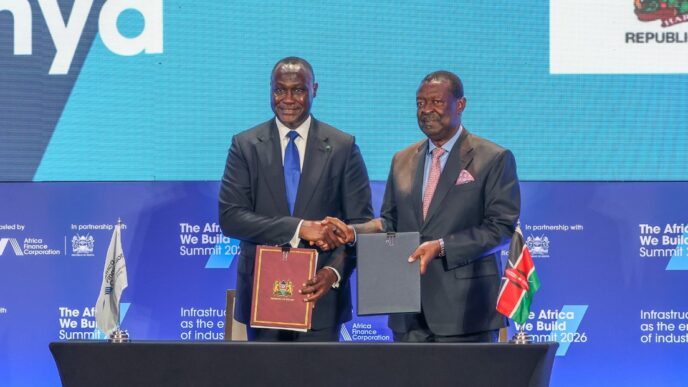
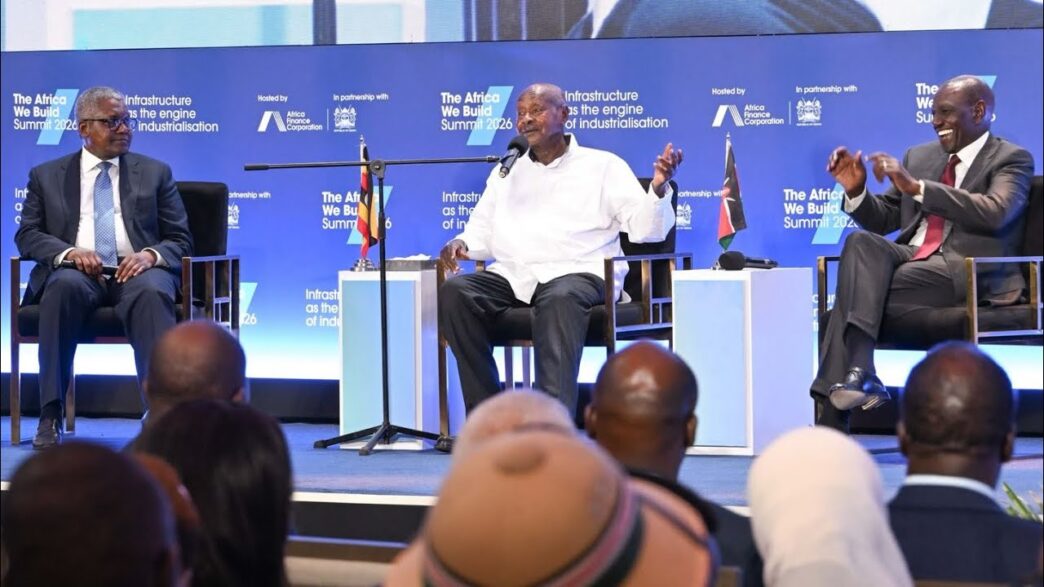
The commitment came during a panel discussion at the Africa Infrastructure Summit hosted by the Africa Finance Corporation in Nairobi, Kenya, where Dangote shared a stage with Uganda’s President Yoweri Museveni and Kenya’s President William Ruto.
“I can give commitment to the two presidents. If they will support the refinery, we’ll build the identical one that we have in Nigeria 650,000 barrels here,” Dangote told the summit. 
He added: “My commitment today here is that we will lead the refinery. We’ll make sure that that refinery is built within the next four to five years.”
Museveni revealed that Ruto had recently reached out to him about the possibility of establishing a refinery in Tanga, using crude oil from Kenya, South Sudan and the Democratic Republic of Congo as feedstock.
“So, therefore, when His Excellency Ruto recently sent me a message, I supposed that the surplus oil, which we had given to Total to take through Tanga, to I don’t know where, would be our contribution to the refinery in Tanga. Number one. Then later on, we can add the petroleum from the other area, Congo, from South Sudan,” Museveni said.
He indicated that oil originally set to be transported through the East Africa Crude Oil Pipeline (EACOP) could instead be refined in Tanga, keeping value on the continent. Uganda, however, will press ahead with its own 60,000-barrel-per-day domestic refinery planned for Kabaale in Hoima District, with UAE-based Alpha MBM Investments, led by Sheikh Mohammed bin Maktoum bin Juma Al Maktoum of the Dubai Royal Family, serving as lead partner alongside the Uganda National Oil Company.
Museveni also gave a candid account of past negotiations with Total over Uganda’s oil. “You know, I’m also tactical because Total was insisting that they should take all the oil. Why do you take all the oil when the users are here? Sorry. There is no money in the refinery. I said you are lying,” he said.
Ruto confirmed he had already opened talks with Dangote about the project. “We are discussing that we are going to have a joint refinery in Tanga to benefit all of us,” Dangote said.
The Kenyan president painted a stark picture of Africa’s energy paradox at the summit, noting that the continent produces roughly 10 million barrels of oil per day, about 10% of global output, yet remains a net importer of petroleum products to the tune of 120 million metric tonnes annually, at a cost of around $90 billion.
“However, if this same production were refined domestically and exported as finished products at an average price of U.S. dollars 800 per ton, it would generate over $500 billion,” Ruto said, adding that Africa foregoes an estimated $230 billion, nearly 7.5% of its GDP, from oil alone.
“This does not even account for the additional gains from downstream industries such as plastics and fertilizers, which we currently import and which could add another 2 to 3% of our GDP,” he said.
When asked why Africa had historically failed to build refineries, Dangote pointed the finger at global financial institutions. “Normally, when you go to those financial institutions, their interest is not to develop Africa. Their interest is to develop themselves,” he said.
The continent’s refining capacity had shrunk by about a third over the past two decades before Dangote opened his Lagos facility, which has since helped Nigeria become self-sufficient in fuel. That plant, which operates at 650,000 barrels a day, reached full capacity shortly before the recent conflict in Iran and is now shipping products as far as Tanzania while sending record volumes of jet fuel to Europe.
Dangote is also planning a $40 billion expansion of his industrial empire, aimed at more than doubling capacity at the Lagos plant.