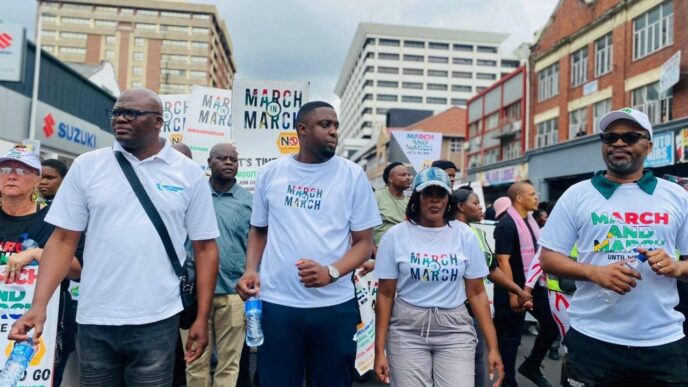


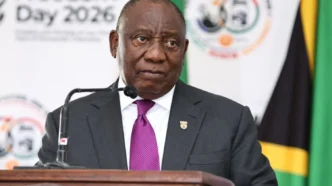
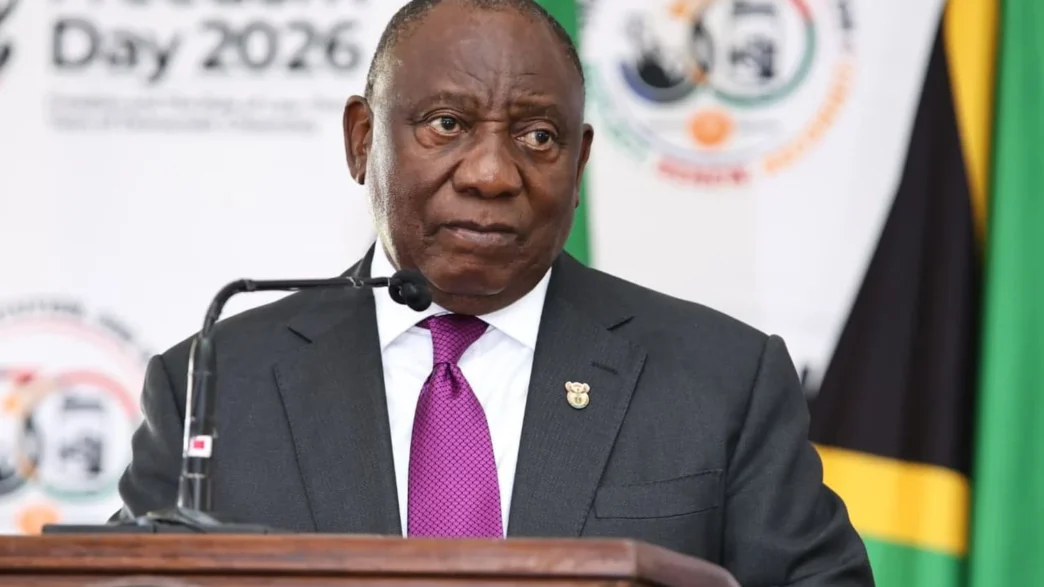
Mangaung, Free State – South African President Cyril Ramaphosa used his Freedom Day address in Mangaung, Free State, on Monday to speak out against the wave of xenophobic attacks that have swept across the country in recent weeks, urging South Africans not to let concerns about illegal immigration turn into hatred towards fellow Africans.
Delivering his speech on the day marking South Africa’s transition to democracy, Ramaphosa reminded the nation of the debt it owed to the rest of the continent. “It cannot be, and it must never be, that we trample into the dust the African fellowship that made our freedom possible,” he said.
“We should never allow the legitimate concerns of our communities about illegal migration to breed prejudice towards our fellow Africans.” 
The president said the government was actively tackling illegal immigration and cracking down on businesses that hire undocumented workers. “We are actively rooting out corruption in our immigration system. We will not allow people to take the law into their own hands. We extend hospitality to those who are guests in our country, with the expectation that generosity is honoured with respect for our society and its laws,” he said.
Ramaphosa also turned his attention to the state of local government, arguing that freedom meant little if it did not translate into better lives for ordinary South Africans. “This is important because the truest test of our democracy is whether freedom translates into material change in people’s lives,” he said.
“Failing water infrastructure, collapsing municipalities and deteriorating services are not mere inconveniences. They directly affect the quality of daily life. They constrain the growth of businesses, the economy and the creation of jobs. Our resolve to strengthen local government provides an opportunity to transform municipalities, making them better run, more efficient and more responsive to the needs of our people,” Ramaphosa said.
The president also defended the government’s broad-based black economic empowerment policy, which has faced significant criticism, describing it as a necessary tool to address the economic injustices of apartheid. “The progress we have made is evident in improvements in the income and quality of life of African, coloured and Indian South Africans and the gradual reduction in inequality between races. But this is not enough. There is much more that needs to be done. That is why we are working to strengthen our broad-based black economic empowerment policies, to make them more effective and more efficient, to ensure that they actually deliver the fundamental changes that our economy needs,” he said.
Ramaphosa also used the occasion to pay tribute to the late Mosiuoa Lekota, the first Premier of the Free State and a stalwart of the liberation struggle. “Last month, we laid to rest a son of this province, the first premier of the Free State and a stalwart of the liberation struggle, Mr Mosiuoa ‘Terror’ Lekota. He was a brave and principled leader who served this country with distinction. On this Freedom Day, we honour his memory,” the president said.