


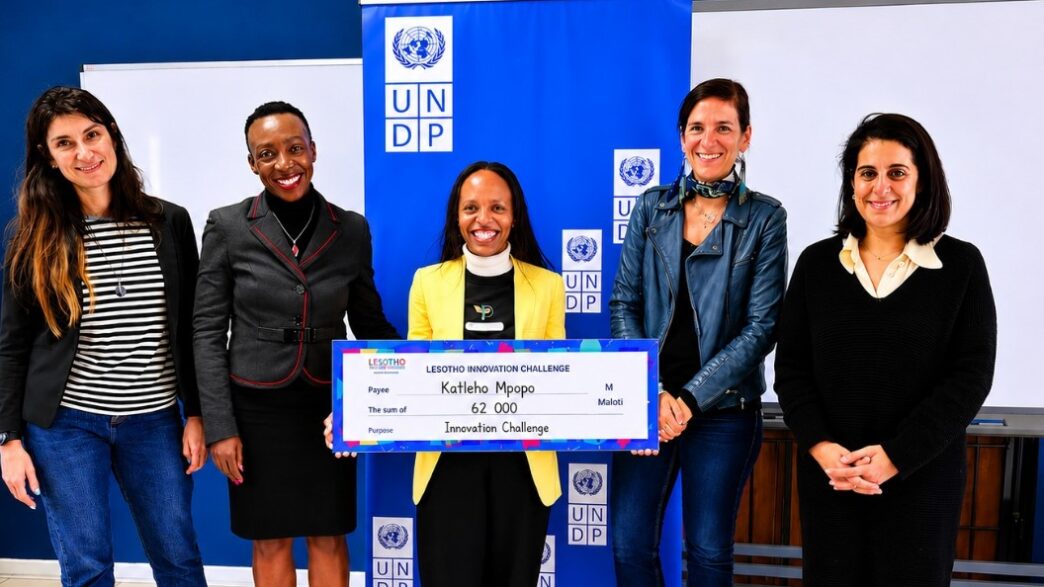
Maseru – A 2022 economics graduate from the National University of Lesotho has turned her back on a corporate career to build an award-winning food sovereignty enterprise in Berea Teyateyaneng, earning national recognition from some of the most prominent development and cultural institutions in the country.
Katleho Mpopo, who graduated with an economics degree from NUL in 2022, founded the Peace Farm Group of Companies after concluding that real economic development does not come from tracking numbers on a screen but from ensuring a nation can sustainably feed itself from its own soil.
In May 2026, the France South Africa Agricultural Institute, Alliance Française Maseru and the United Nations Development Programme Lesotho officially recognised Peace Farm as a top national innovator, a validation that has brought wider attention to what Mpopo has been building in the Berea district. 
Peace Farm operates on the philosophy that true community resilience requires healing both the wallet and the earth. The enterprise runs through three interconnected pillars. The first is diversified organic production, growing a wide variety of nutrient-dense vegetables completely free from chemicals, using conservation and regenerative agricultural methods designed to revive degraded ecosystems. The second is regenerative farming training, where Peace Farm functions as a community school, teaching individual farmers and rural groups how to cut production costs by working with nature rather than relying on expensive chemical inputs. The third is the Genesis Seed Bank, a community-owned indigenous seed library that collects, multiplies, preserves and distributes climate-resilient, locally adapted vegetable varieties.
At the heart of the business model is a contract seed multiplication programme through which Peace Farm distributes indigenous seeds to rural farmers, with a specific focus on marginalised women and youth, and guarantees to buy back 100% of the harvest. The arrangement creates a closed economic loop that channels a reliable stream of income directly into vulnerable households.