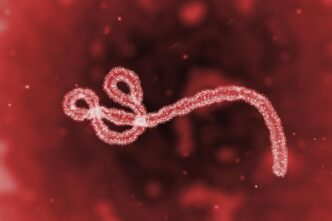



Addis Ababa, Ethiopia – African leaders and global health partners have warned that the ongoing Bundibugyo Ebola outbreak affecting the Democratic Republic of the Congo and Uganda could become the second largest Ebola epidemic in history if resources are not mobilised quickly enough, with delays in the response risking wider regional transmission and greater loss of life.
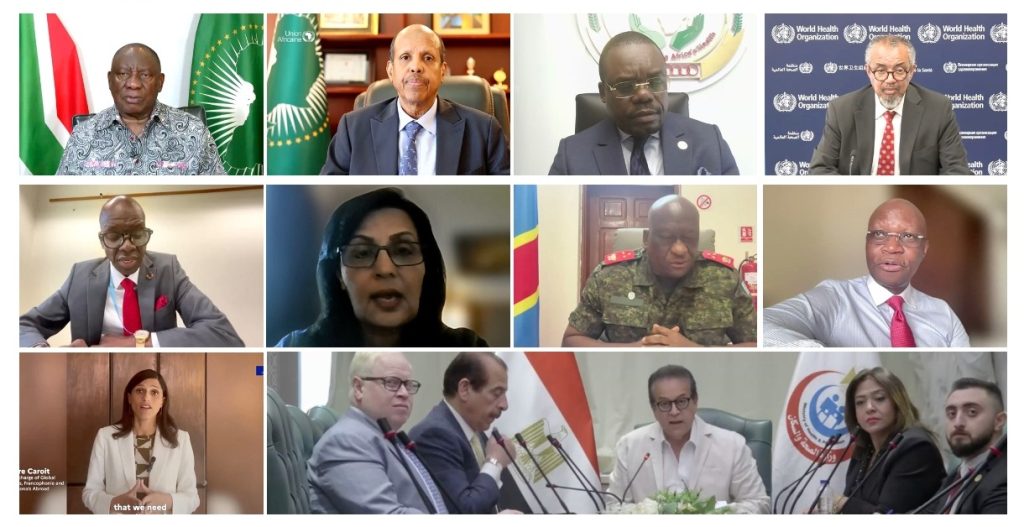
The warning came during a high-level virtual ministerial briefing convened by the Africa Centres for Disease Control and Prevention and the African Union in Addis Ababa, Ethiopia, on Tuesday, 25 May 2026.
Leaders at the briefing backed a continental preparedness and response plan requiring at least USD 319 million between June and November 2026 to strengthen outbreak control in affected countries and boost preparedness in at least 11 high-risk African Union member states. Nearly USD 500 million has already been committed or pledged by governments, multilateral agencies and humanitarian partners. 
Africa CDC Director General Dr Jean Kaseya welcomed the show of support and said the next step under the joint Incident Management Support Team would be to validate the pledges, clarify the breakdown between new financing, repurposed resources, in-kind contributions and country-level allocations, and ensure funds flow to the priority actions in the joint response plan.
South African President Cyril Ramaphosa, who also serves as the African Union Champion for Pandemic Prevention, Preparedness and Response, said the continent was stepping up.
“African countries themselves have already committed initial domestic contributions representing approximately 10% of the required financing. Africa is no longer waiting passively for others to act,” he said.
Ramaphosa also announced that South Africa had doubled its earlier pledge to USD 5 million for Africa CDC’s continental Ebola response. The Gates Foundation committed USD 5 million to Africa CDC and USD 10 million to the World Health Organization.
African Union Commission Chairperson Mahmoud Ali Youssouf said the outbreak pointed to the need for stronger investments in surveillance systems, emergency operations centres, genomics, community health workers and local manufacturing capacity.
“African problems require African leadership and African responsibility,” he said.
WHO Director-General Dr Tedros Adhanom Ghebreyesus painted a sobering picture of how the outbreak was unfolding, saying health authorities were “playing catch-up with a very fast-moving epidemic” following delayed detection in eastern DRC. WHO has already released USD 3.9 million from its Contingency Fund for Emergencies to support operations on the ground.
“We’re facing an extremely serious and difficult outbreak. It will get worse before it gets better. But we know this virus, and we know how to stop it,” said Tedros.
Containment efforts are being hampered by insecurity, displacement and community resistance, including reported attacks on an Ebola treatment facility in eastern DRC. The absence of approved vaccines and therapeutics for the Bundibugyo strain, combined with limited laboratory capacity to quickly confirm suspected cases, is making the situation harder to control.
Gavi CEO Dr Sania Nishtar said efforts were underway to accelerate vaccine research and preparedness for the Bundibugyo strain, while stressing the importance of equitable access to vaccines and therapeutics once available.
DRC Health Minister Dr Roger Kamba called for stronger regional coordination and sustained support for frontline responders, warning that the outbreak was unfolding in an extremely difficult security environment where attacks on health infrastructure continue to complicate response operations.
Somalia, Nigeria, Egypt and Burundi also raised the importance of preparedness, stronger laboratory systems, cross-border coordination, surveillance and information sharing, given high regional mobility and the risk of wider spread.
For Eswatini, while geographically distant from the current outbreak, the warnings about regional spread and the importance of preparedness are a reminder that no country on the continent can afford to be complacent when a fast-moving epidemic is on the loose.