

Matsanjeni South – Eswatini’s Deputy Prime Minister Thulisile Dladla has stated that the Shiselweni region has been identified as one of the country’s most vulnerable regions following the completion of a recent evaluation.
Dladla said the Shiselweni region has not only been vulnerable to climate change shocks but also assesses the level of poverty.
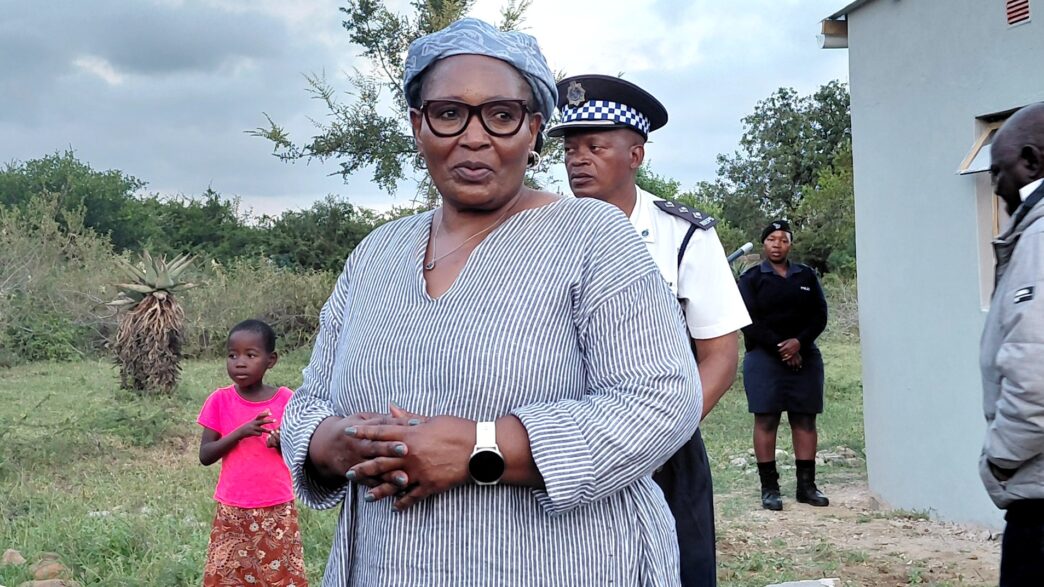
“We hired data collectors to determine the level of vulnerability. The assessment is now available. “The findings show that Shiselweni has the most vulnerable homesteads in the country,” she remarked on Friday while addressing community leaders and recipients of aid at Matsenjeni South. 
Dladla delivered building materials, like roofing, to storm-affected homesteads. One of the recipients of the material stated that she was leaving beneath a leaking roof. Zanele Mngomezulu was also assured that she will be given a new house after her former one deteriorated owing to storms.
Matsanjeni South Member of Parliament Sabelo Ndlangamandla said there were a number of households that needed aid.
The report was based on an assessment of severe climate change, poverty, food insecurity, and drought.
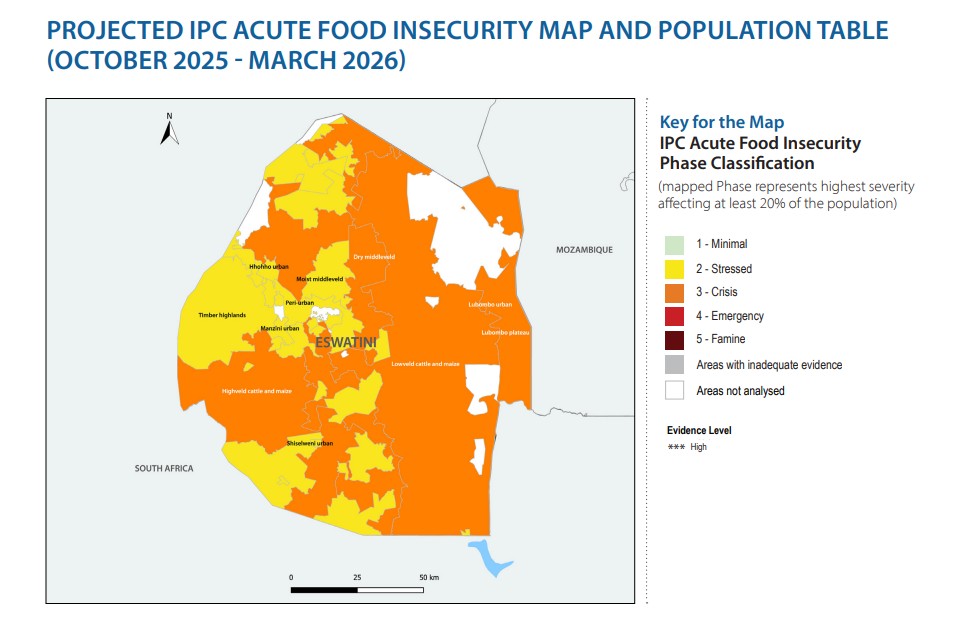
The Integrated Food Security Phase Classification (IPC) reported that between June and September 2025, 193,000 people (16 per cent of the population) in Eswatini experienced high levels of acute food insecurity and loss of livelihood. They were classified as in a crisis, with the situation expected to have worsened by March 2026.
Between October 2025 and March 2026, the situation was expected to deteriorate, carrying the weight of an estimated 259,000 people (21 per cent of the population) that were likely to face crisis or worse conditions.
The period accounts for a 66,000 increase in vulnerable people needing humanitarian aid.
The Annual Vulnerable Assessment & Analysis Committee (VAC) report also said households in the Shiselweni region have a 20% rate of access to normal employment, third to Lubombo and Manzini.