

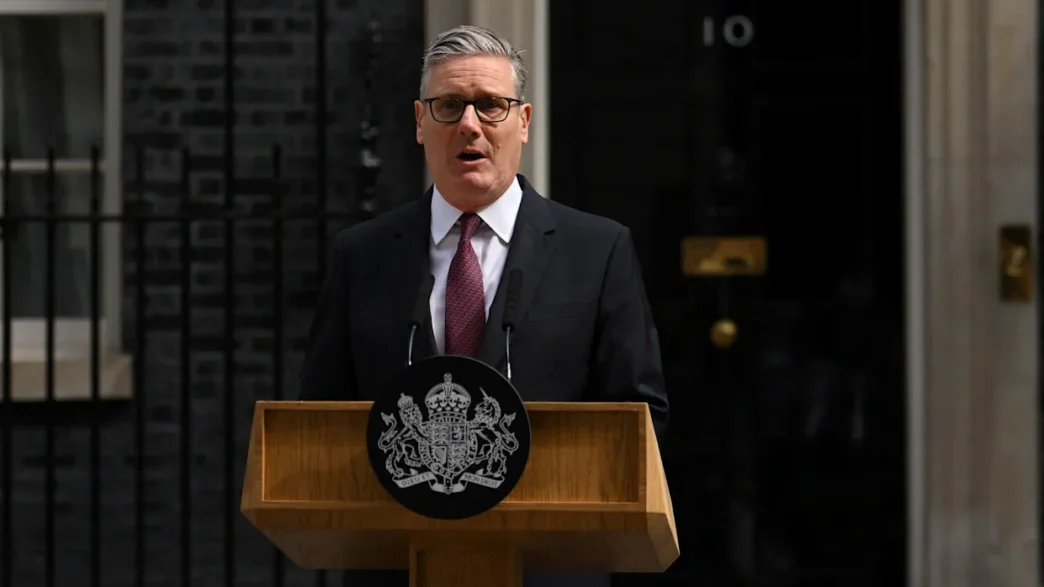
London – British Prime Minister Keir Starmer has announced his resignation, setting the United Kingdom on course for its sixth prime minister in seven years.
The announcement came after intense pressure from lawmakers within his own governing Labour Party, who had questioned whether he was best placed to lead the party into the next general election.
Speaking on the steps of 10 Downing Street in London, Starmer listed achievements during his tenure, including building what he described as a “stronger” economy and reducing waiting times for Britain’s National Health Service. 
He confirmed he had spoken to King Charles to inform the monarch of his decision, and said a new Labour leader would be in place by September, with him remaining in post until then.
“I will do everything I can to ensure an orderly handover of power,” he said. “I will also give my successor my full and unequivocal support.”
Starmer thanked colleagues for “their incredible commitment, service and support” over the past six years. He grew emotional when speaking about his family, saying he would now focus on being “the best husband I can” to his wife, whom he called “a rock by my side,” and “the best dad I can to my beautiful children, who are my pride and my joy.”
A government under pressure
Starmer swept to power in July 2024 on a promise to revive Britain’s struggling economy. “Change begins now,” he declared after Labour’s landslide general election victory. However, that change has been slow to materialise. The party suffered heavy losses in May’s local elections, leaving Starmer politically exposed.
On wages, official figures show average weekly pay after inflation has risen less than 1% since Labour took office, reaching £494 (approximately E12,000). The government is also unlikely to meet its target of building 1.5 million homes, and economic growth has remained weak at just above 1%.
The International Monetary Fund now projects the UK economy will expand by only 0.8% this year, partly due to soaring energy costs linked to the Iran war.
Burnham emerges as frontrunner
Former Greater Manchester Mayor Andy Burnham has emerged as the most likely successor, though no formal transition has been announced.
Burnham won a by-election in Makerfield, northwest England just days ago, securing his return to parliament and clearing the path to challenge for the Labour leadership. His commanding victory over the hard-right Reform UK party, coming just weeks after Labour’s local election losses, has given his campaign considerable momentum.
He served as an MP for 16 years, rising to health minister and twice running unsuccessfully for the Labour leadership, before leaving Westminster to become Manchester mayor. His allies argue he is the only candidate who can reverse Labour’s electoral decline.
Farage calls for snap election
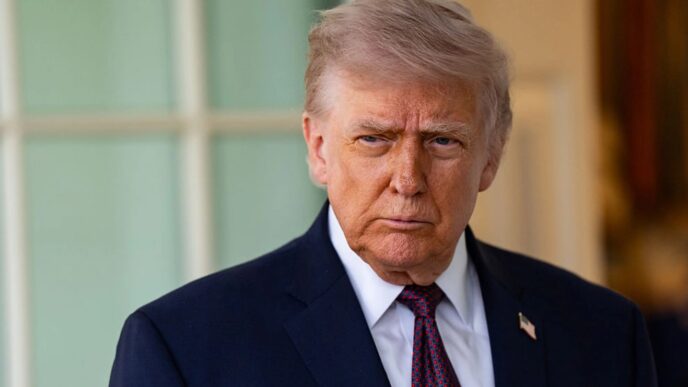
Reform UK leader Nigel Farage, a close ally of US President Donald Trump, wasted no time responding to the news, demanding a general election.
“If Labour thinks it can shove another professional politician into No 10, it has another thing coming,” Farage wrote on social media.
Under British law, Labour is not required to hold a general election until 2029. While Reform currently leads national opinion polls, the party holds only eight seats in parliament, making a strong election result difficult to translate under Britain’s first-past-the-post electoral system.