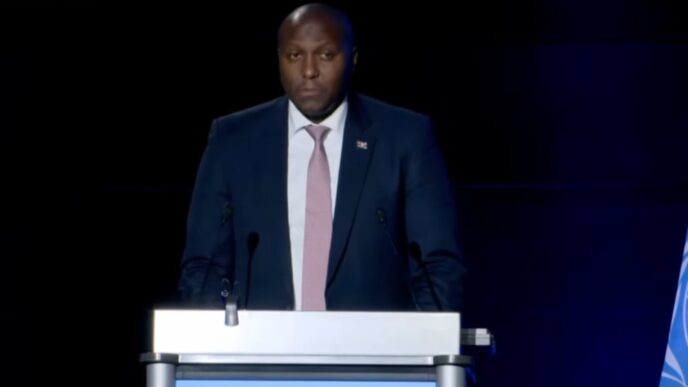


Kwaluseni – Mthunzi Shabangu, Principal Secretary of the Ministry of Public Service says the transformation of the Eswatini Institute of Management and Public Administration (EIMPA) into Eswatini School of Governance, is progressing which aims to build a capable and ethical public service.
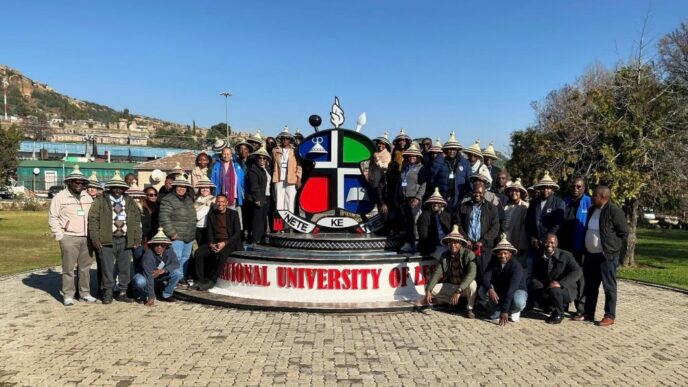
Shabangu conveyed the government’s message during a familiarisation tour of EIMPA/Institute of Development Management (IDM) at the Kwaluseni campus. This moves the pieces in place for the merger of IDM and EIMPA announced last year.
Shabangu said the government’s Programme of Action (PoA) resolved a mechanism of government-led transformation that works and delivers inclusive economic growth while professionalising the public service and building strong institutions capable of efficient service delivery. 
“To this desired end, the PoA Strategy under Paragraph 1.8.5 commits the government to revitalise EIMPA as a national school of governance, with the explicit outcome of an accredited and internationally recognised governance programme. This transformation goes beyond changing the institution’s name. It is about repositioning EIMPA into a modern, nationally and regionally recognised centre of excellence for public sector leadership, governance, policy development, research, innovation and executive education,” he said.
This reform will provide public servants and leaders with the skills needed in their job. Furthermore, the government’s ability to provide efficient, responsible, citizen-centric, and results-oriented public services will be improved.
He declared that the transformation required assessment and market analysis, modernising infrastructure and digital resources, and strengthening the institute’s governance.
It will focus on:
- Expanding EIMPA’s mandate from training to a comprehensive school of governance that integrates learning, research, policy advisory services and consultancy.
- Developing internationally benchmarked academic and professional programmes in governance, leadership, public administration, public finance, digital government, monitoring and evaluation, and public policy.
- Becoming the government’s centre for executive leadership development and continuous professional development.
- Strengthening research and evidence generation to support government policy and decision-making.
- Leveraging digital technologies to increase access to learning through modern learning management systems and blended learning. The Ministry of Public Service and EIMPA seek to strengthen collaboration in advancing public service through credible courses, research, consultancy, and training programmes.
Shabangu stated that his visit gave him a greater grasp of the operations, accomplishments, obstacles, and future goals after several postponements.
“I do also recognise that you have continued to deliver training, research, consultancy, and capacity-building programmes despite the absence of a substantive principal for quite some time now. Such dedication demonstrates commitment to national service and institutional excellence. I especially offer you words of encouragement to continue working together as a team while the ministry addresses the leadership and institutional matters of this institute,” Shabangu said.
EIMPA was established in 1965, three years prior to the country gaining independence to elevate performance standards and productivity of the public service. It plays a strategic importance to public service by enhancing the performance, productivity and efficiency of the Eswatini public service while also mapping the coordination and management of human resources across commissions, including the Civil Service Commission.
Shabangu said for EIMPA to adequately capacitate civil servants to effectively respond to the needs and expectations of EmaSwati, the ministry of public service promotes efficient, accountable, and citizen-centric public service that underpins good governance and sustainable socio-economic development.
“Indeed, a capable, ethical, innovative, and professional public service is essential for national development. To attain these ideals, we look upon EIMPA as the country’s management development institution for public sector capacity development.”