

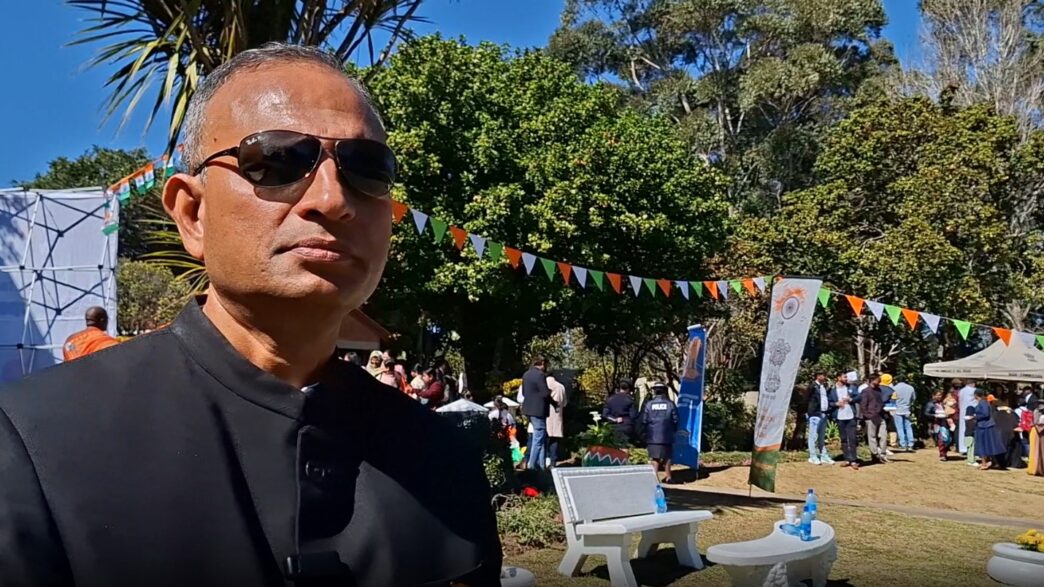
Mbabane – India’s High Commissioner to Eswatini, N. Ram Prasad, has described relations between India and the Kingdom as deep and longstanding, citing cooperation in health, education, infrastructure and diplomacy.
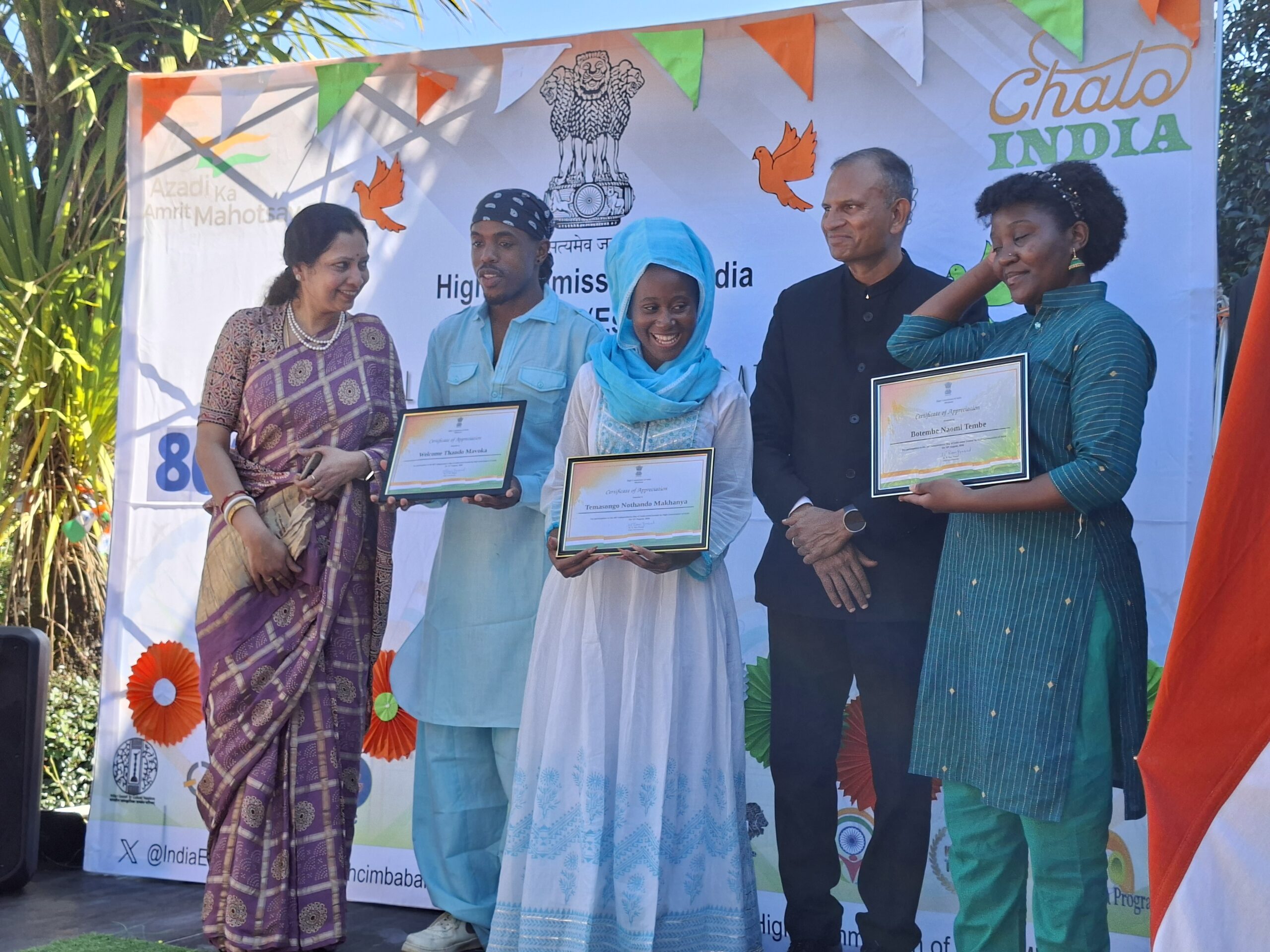
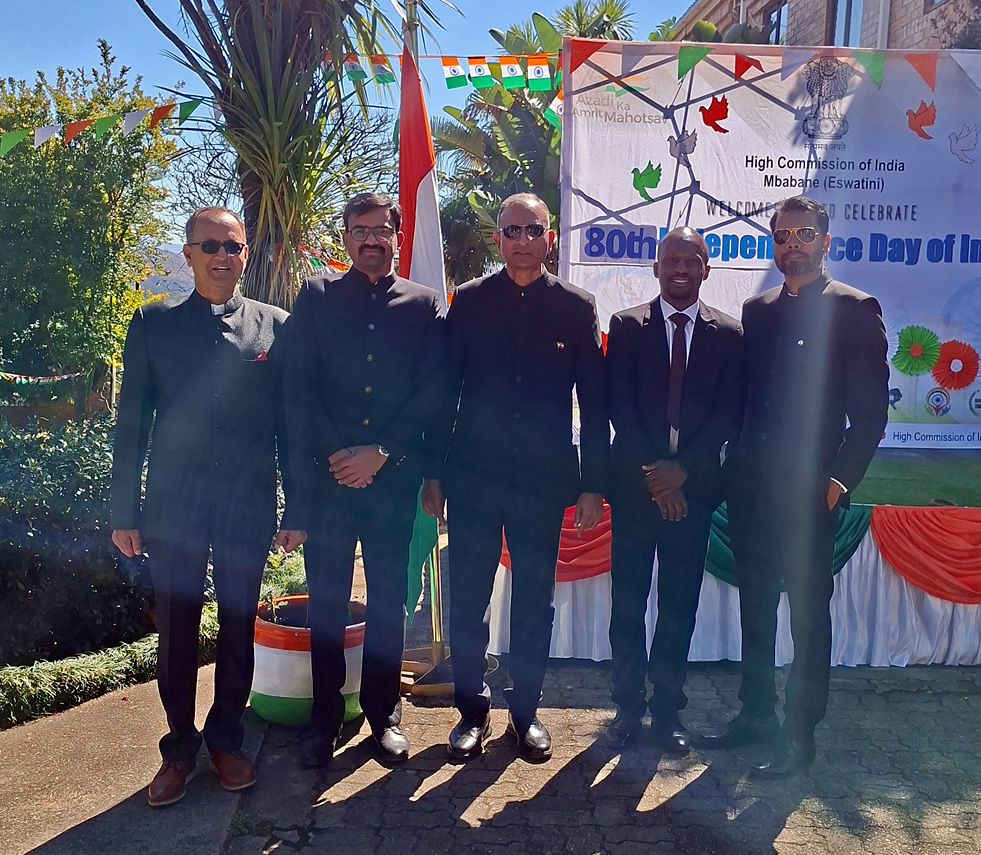
Ram Prasad made the remarks during an interview with Swazi24 journalist Adekunle Owolabi at India House in Mbabane on Saturday, where the High Commission hosted members of the Indian diaspora and friends of India to mark the country’s 80th Independence Day.
India gained independence from British colonial rule on 15 August 1947. Ram Prasad said the day remained significant because independence was achieved through years of struggle and sacrifice by the country’s freedom fighters. 
“Today was the day when India gained its independence from colonial rule on the 15th of August 1947. So this independence came at a great cost to us in terms of blood and treasure,” he said.
“This has a very great significance for us and today’s India’s rise as a nation has its foundation built upon the sacrifices of all those freedom fighters, which enabled India to throw off the colonial yoke.”
The High Commissioner said India’s progress in medicine, infrastructure, digital technology, space exploration and trade had been supported by the country’s unity in diversity.
He said people from different languages, religions and cultures had contributed to a unified India and that national development required citizens to work towards a common goal.
“One of the strengths of India has been its unity in diversity,” Ram Prasad said.
“We are able to bring together people from different languages, different religions, different cultures. All together they form part of a unified India and as a nation, if we are to achieve greatness, we all need to pull together in the same direction.”
He said India’s current national objective was to achieve Viksit Bharat, or a developed India, by 2047, the centenary year of its independence.
India and Africa
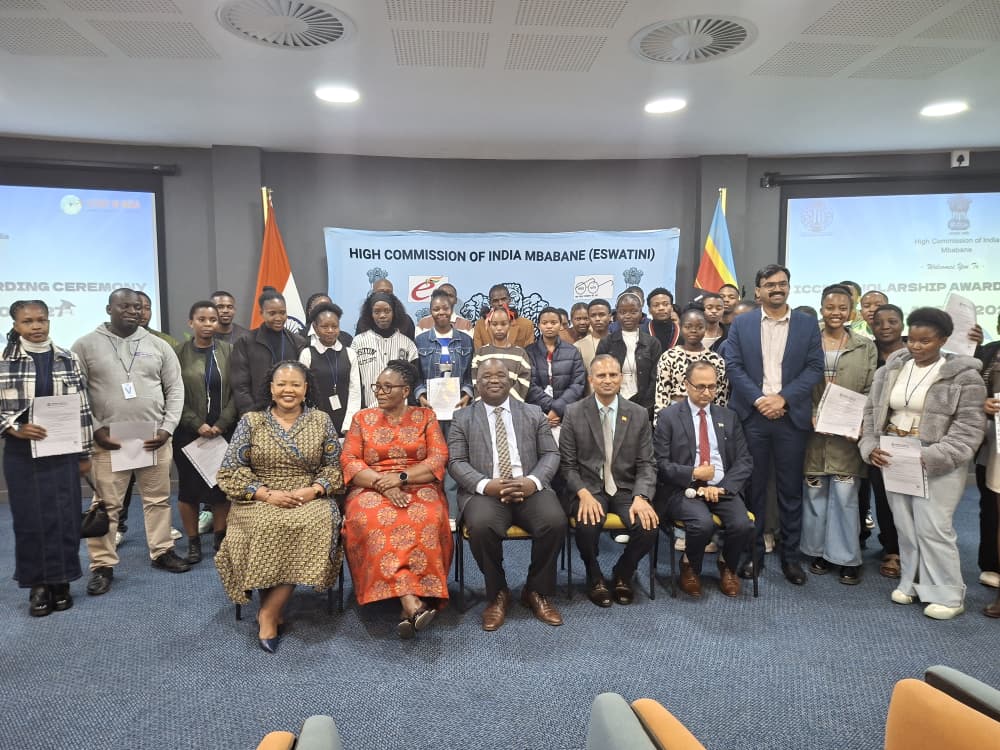
Speaking about India’s relations with Africa, Ram Prasad said the partnership was based on shared history, culture, values and development goals.
He said India and Africa had once formed part of the same landmass and continued to share common aspirations.
“The fundamental thing which drives the relations is the commonality of cultures, of purpose and of the goals,” he said.
“India as such is driven by the philosophy of Vasudhaiva Kutumbakam, which means the world is one family.”
Ram Prasad said this philosophy shaped India’s cooperation with African countries in education, infrastructure, energy and other areas.
He said India wanted to work with African countries to promote development on both sides and build on their shared history and interests.
Bilateral relations
Ram Prasad said diplomatic relations between India and Eswatini were established in 1970, making 2026 the 56th year of formal relations between the two countries.
He said Eswatini had consistently supported India’s candidatures in international organisations, including the United Nations, while India had also assisted the Kingdom during difficult periods.
Ram Prasad referred to India’s Vaccine Maitri initiative during the Covid 19 pandemic, saying Eswatini was among the countries that received vaccines from India when supplies were limited globally.
“India too has stood by Eswatini in times of its need. For example, during the COVID pandemic, we were the first country to give vaccines to Eswatini at the time when all the Western countries were holding their vaccines,” he said.
“We had this Vaccine Maitri initiative when we gave vaccines to Eswatini at a time when we ourselves were needing the vaccines. So it is this brotherly relation that drives India Eswatini relations forward.”
The High Commissioner said bilateral relations received further momentum during the visit of India’s President to Eswatini in 2018.
India established its first resident mission in Eswatini in 2019, while Eswatini opened its resident mission in India in December 2025.
Ram Prasad also referred to the first visit by an Eswatini Foreign Minister to India’s WAVES Summit in 2025, as well as other ministerial engagements between the two countries.
“These are all signs that our relations are going, and we also saw the first ever visit by a Foreign Minister from Eswatini for the WAVES Summit last year. There have been many other ministerial engagements between India and Eswatini, and these relations are continuing to strengthen and grow,” he said.
India and Eswatini continue to cooperate in areas including skills development, health, infrastructure, agriculture, trade and diplomatic engagement. India’s ITEC programme has also provided training opportunities to Emaswati in government, parastatal and private sector institutions.



![President Cyril Ramaphosa hosts State Banquet ahead of the 46th Summit of SADC Heads of State and Government, Durban, South Africa [PHOTO: GCIS]](https://swazi24.com/wp-content/uploads/2026/08/55468257617_8cf3f739c9_o-332x222.jpg)
![President Cyril Ramaphosa hosts State Banquet ahead of the 46th Summit of SADC Heads of State and Government, Durban, South Africa [PHOTO: GCIS]](https://swazi24.com/wp-content/uploads/2026/08/55468257617_8cf3f739c9_o-688x387.jpg)