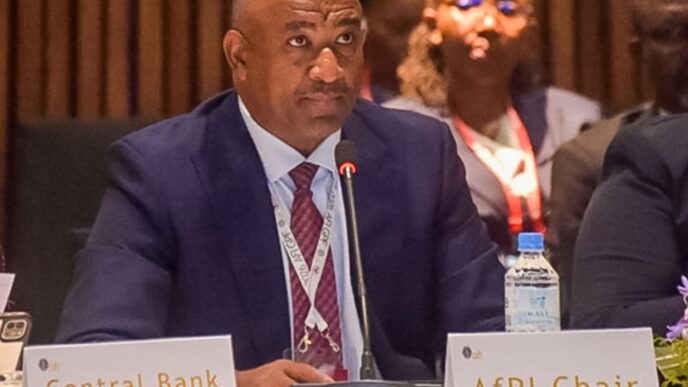


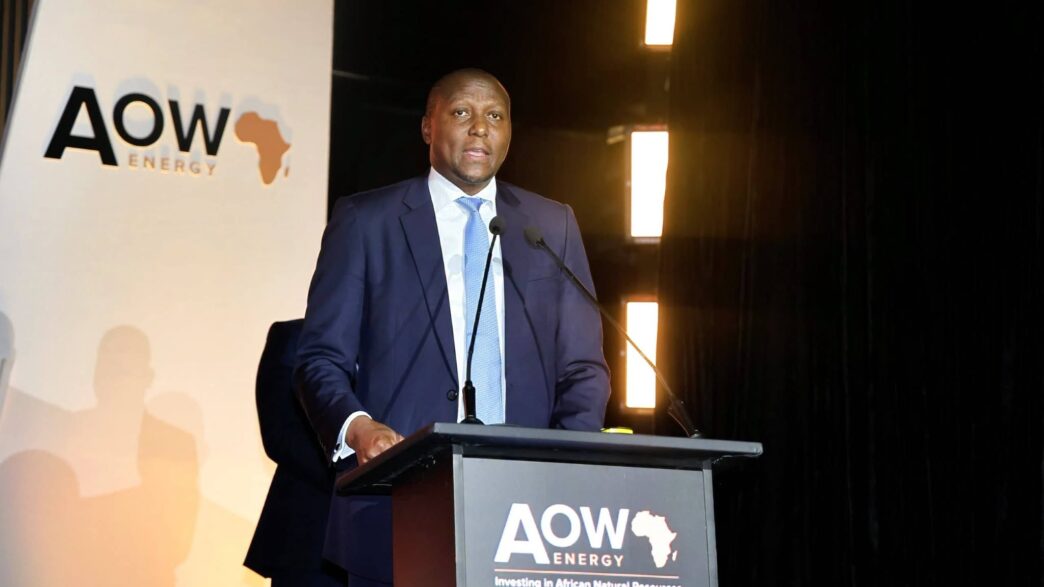
Accra, Ghana – Prime Minister Russell Mmiso Dlamini has called for greater African ownership of the continent’s energy sector, saying political independence will remain incomplete unless African countries also build the economic and productive capacity to control their own resources.
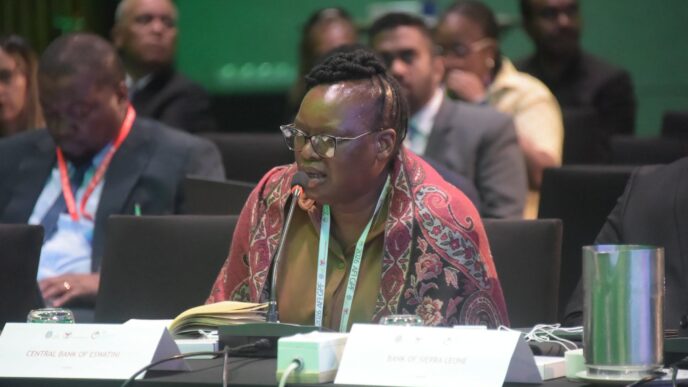
Dlamini made the remarks while addressing delegates at the AOW Energy 2026 conference in Accra, Ghana, where he challenged African countries to move beyond their traditional roles as consumers and exporters of raw materials.
Speaking under the topic, “The Era of Indigenous Operators: Technology, Capital and the Future of African Energy Leadership,” the Prime Minister questioned whether Africa would take control of the next phase of its energy development. 
“will the next chapter of our energy story be written by Africans, with African capital, technology and enterprise? Or will we remain participants in a narrative authored elsewhere?”
Dlamini said the continent needs decisive leadership and practical action to build an energy economy that benefits its people.
“This moment does not call for caution. It calls for leadership that disrupts, leadership that innovates and leadership that delivers. The moment is here. Africa’s task is to see it clearly and take concrete action. Our governing principle ought to be definite: Our People first, Africa first, Africa for Africans. This is not isolationism. It is simply what every government owes its people.”
He said sovereignty should extend beyond control of territory to include the ability to produce food, generate energy, finance development and process natural resources locally.
“Sovereignty must mean more than jurisdiction over territory. It must extend to the capacity to feed ourselves, to power ourselves and to finance ourselves – to process our own resources, and to keep a greater share of the value our endowments generate, because political sovereignty without productive capacity is only half a sovereignty.”
The Prime Minister said African governments have a role to play in creating globally competitive companies by improving access to capital and markets and creating effective local content policies.
“Globally competitive African corporations will not arise on their own. Governments must build them deliberately – through transparent local-content regimes, easier access to capital and markets, real support for technology acquisition and public procurement used with intent, not to shield inefficiency, but to build industrial champions.”
Dlamini also called for major investments in Africa to deliver lasting skills, knowledge and technological capacity instead of simply leaving physical infrastructure behind.
“Every major investment must leave behind more than infrastructure – it must leave knowledge. This means technology transfer, skills development, research partnerships, local manufacturing and sustained investment in our universities and centres of excellence. We already have the sun. Now we must own the technology that converts it into prosperity.”
He described energy security as a key component of both economic and national security, saying reliable and affordable electricity would be essential if Africa is to industrialise.
“Energy security today is economic and national security. Africa cannot industrialise without abundant, reliable, competitively priced power – a diversified mix of solar, hydro, wind, geothermal, biomass and storage, alongside reliable base-load capacity.”
Dlamini said African countries must also reduce their dependence on exporting raw materials while importing finished products.
“We can no longer export minerals and import machinery, export commodities and import processed goods. We must beneficiate, refine and manufacture. Energy policy must serve industrial policy.”
He further called for a shift in how African expertise and businesses are perceived, saying local companies and professionals should not have to receive validation from outside the continent before being considered capable.
“The need to change the African mindset is obvious. The deepest transformation required is intellectual. African enterprise, technology and expertise are too often deemed unproven until validated elsewhere. This must change. We must move from participation to ownership. From extraction to beneficiation.From dependency to capability.”
The Prime Minister used his address to invite energy sector operators to the SADC Sustainable Energy Week, which will be hosted in the Kingdom of Eswatini from 15 to 19 March 2027.
The regional event will be held under the theme, “Unlocking Investment for Sustainable Energy, Energy Access and Energy Security in the SADC Region.”