

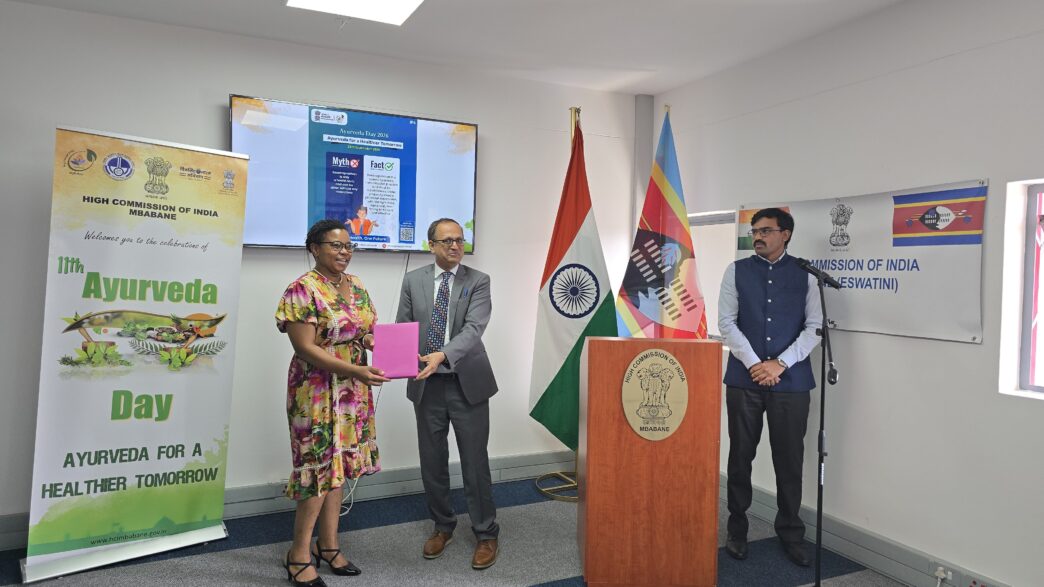
MBABANE: The High Commission of India in Mbabane marked the 11th Ayurveda Day on Wednesday, 23 September 2026, with a call for greater cooperation between India and Eswatini in traditional medicine, wellness, preventive healthcare and related areas.
The event was held under the theme, “Ayurveda for a Healthier Tomorrow”, focusing on the role of Ayurveda in promoting holistic approaches to health and responding to emerging global health challenges.
India’s Chargé d’Affaires, Shri Ajay Kumar Sharma, said Ayurveda could contribute to discussions around preventive healthcare, healthy lifestyles and sustainable living, while also noting opportunities for India and Eswatini to share knowledge and expertise. 
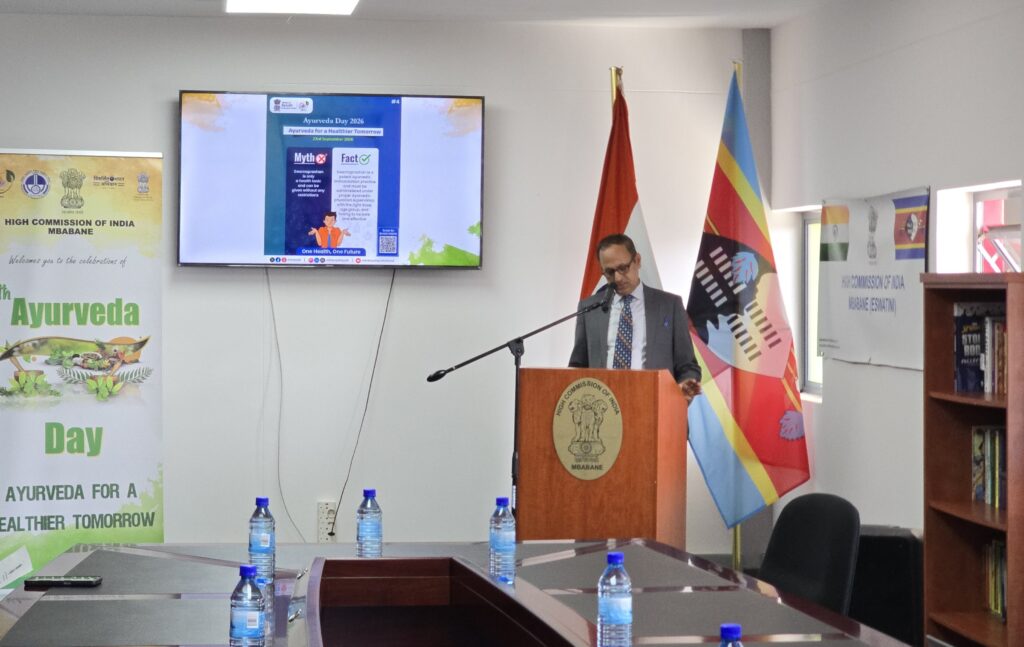
Addressing guests including representatives from the World Health Organisation, the University of Eswatini and other stakeholders, Sharma said the theme represented more than the focus of the day’s celebration.
“DEN. Dlamini, WHO, Ms Dr Thabile Ndlovu, Senior Lecturer, UNESWA, and colleagues Sanibonani/ good morning and it gives me great pleasure to welcome you all to the 11th Ayurveda Day, being celebrated today, 23 September 2026, under the theme “Ayurveda for a Healthier Tomorrow.” The theme is not merely a theme for today’s celebration. It is a vision for the future. It reminds us that some of the solutions to tomorrow’s health challenges may be found by looking both forward to scientific innovation and backward to the accumulated wisdom of traditional knowledge.
“Ayurveda, India’s ancient system of holistic healthcare, is rooted in a simple yet profound principle: health is not merely the absence of disease; it is a state of balance and harmony between the body, mind, lifestyle and our environment.
“The word Ayurveda itself means the “science of life.” For thousands of years, it has placed emphasis on prevention, healthy living, nutrition, physical activity, mental wellbeing and harmony with nature. This philosophy is particularly relevant today.
“The world is witnessing increasing challenges from lifestyle-related diseases, stress, unhealthy dietary habits, sedentary lifestyles and the growing burden on healthcare systems. At the same time, there is increasing global interest in preventive healthcare, wellness, healthy ageing and sustainable living.
“Ayurveda offers valuable perspectives in addressing many of these challenges.
“The internationalisation of Ayurveda is not about replacing one system of medicine with another. Rather, it is about exploring how traditional knowledge, modern science and preventive healthcare can complement each other for the benefit of humanity.
“This brings me to the special relevance of Ayurveda in the context of India- Eswatini relations. India and Eswatini enjoy warm and friendly relations, characterised by cooperation in several areas, including healthcare, capacity building, education and human resource development. There is considerable potential to further explore cooperation in the area of traditional medicine and wellness. Both India and Eswatini possess rich traditions of knowledge relating to medicinal plants, nutrition, natural resources and community-based approaches to health and wellbeing. This provides a natural foundation for
“Ayurvedic education and training, research, medicinal plants, wellness Ind would be happy to share its experience and expertise in areas such as practices, preventive healthcare and capacity building, in accordance with the priorities and regulations of Eswatini.
“A healthier society cannot be created only by building more hospitals. It also requires people to adopt healthier lifestyles and communities to develop greater awareness of nutrition, physical activity, mental well being and disease prevention.
“Once again, I wish everyone a very happy and meaningful 11th Ayurveda Day.
“Thank you.”
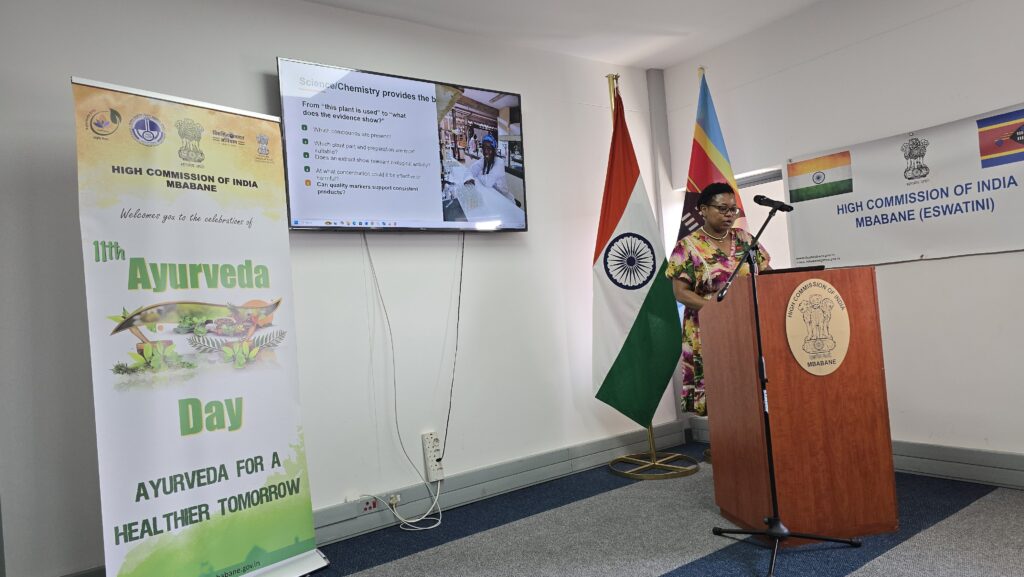
Dr Thabile Ndlovu, Senior Lecturer at the University of Eswatini, also addressed the gathering with a presentation on traditional medicine in Eswatini.
Her presentation examined traditional health practices in the Kingdom and pointed to similarities between traditional practices in Eswatini and India.
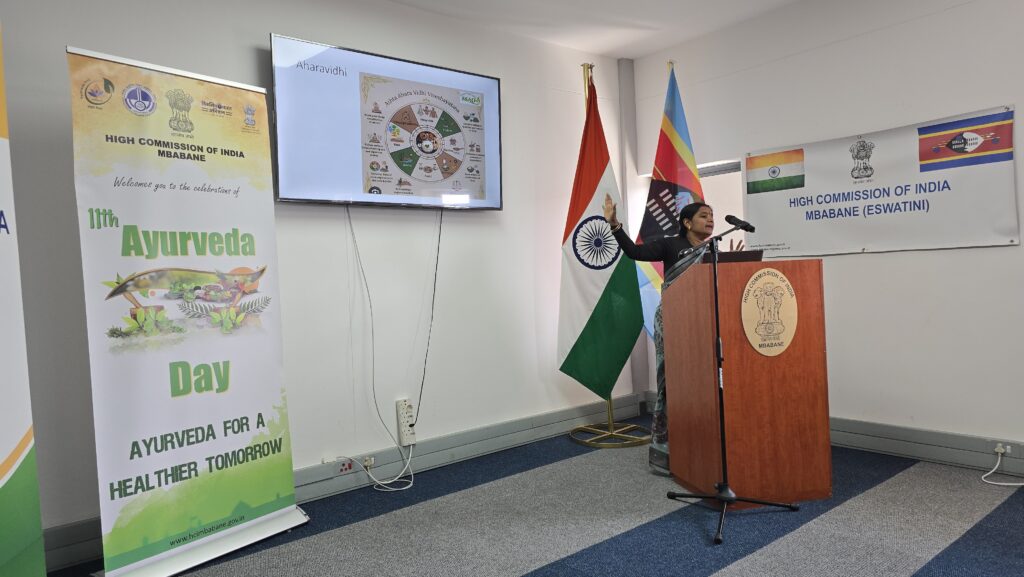
Dr Swapnika Enagula delivered a presentation on the science of Ayurveda, explaining its principles and their application to everyday life.
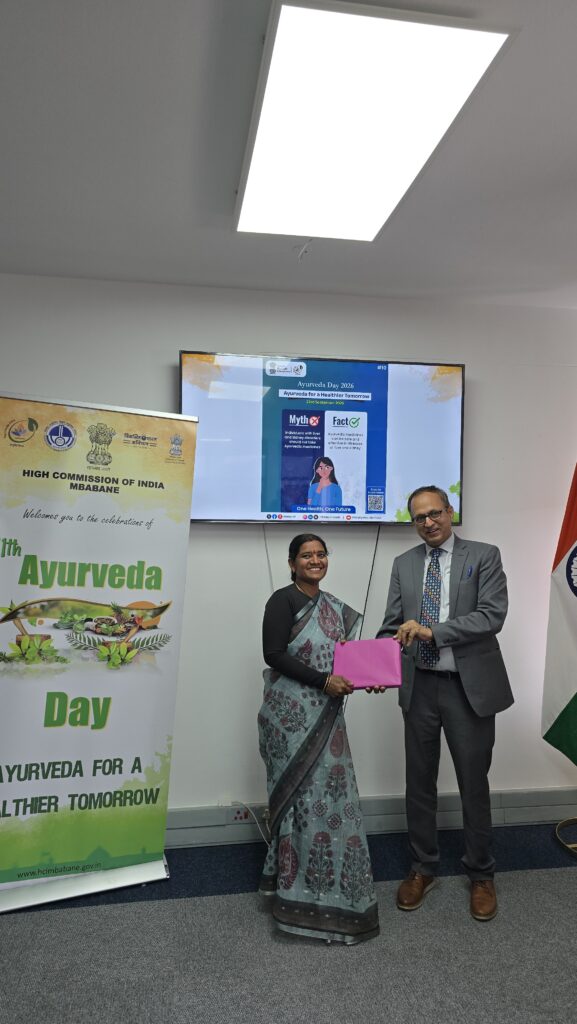
She encouraged participants to understand their individual bodies and consider incorporating appropriate Ayurvedic practices into their daily routines.
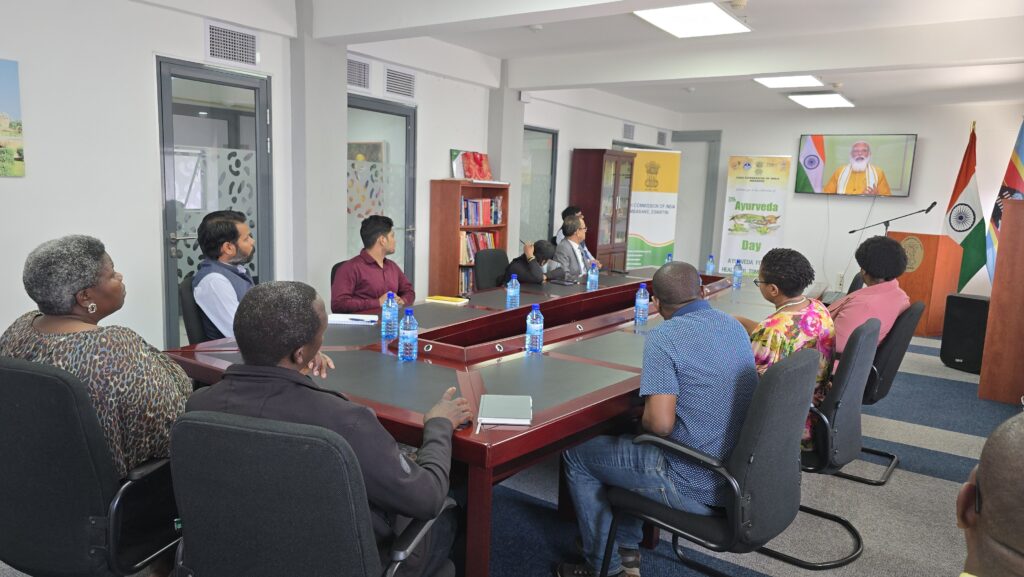
The event brought together representatives from the diplomatic community, health sector, academia and other stakeholders interested in traditional medicine and wellness.
The programme ended with the presentation of tokens of appreciation to the speakers who participated in the Ayurveda Day celebrations.