



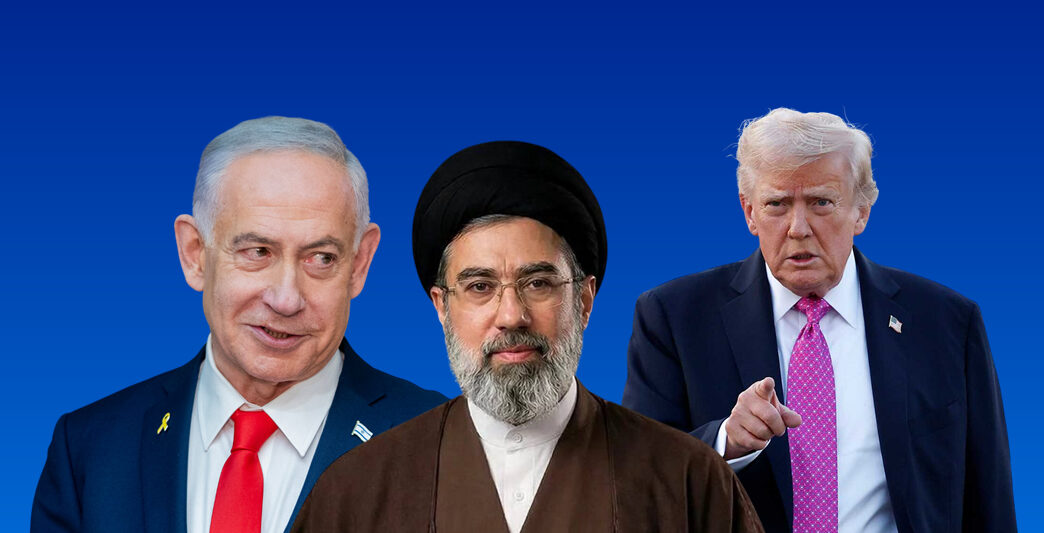
Washington DC – A fragile ceasefire between the United States, Israel and Iran was announced on Wednesday as the Middle East conflict entered its 39th day, with former US President Donald Trump setting a two week deadline aimed at reopening the Strait of Hormuz and cooling tensions in the Gulf.
Missile attacks were reported across parts of the Gulf region and Israel shortly after Trump revealed he had agreed to the temporary truce with Iran. A US official confirmed that American forces have paused strikes on Iranian targets following the announcement.
The Strait of Hormuz, a critical global oil route through which about 20 percent of the world’s oil supply passes, remains central to the agreement. Iran’s Foreign Minister Seyed Abbas Araghchi said safe passage during the two week period “will be possible via coordination with Iran’s Armed Forces and with due consideration of technical limitations.” 
Trump stated that the “COMPLETE, IMMEDIATE, and SAFE OPENING” of the strait was a key condition of the ceasefire deal. Posting on Truth Social just after midnight, he said the US would assist with what he described as congestion in the waterway.
“There will be lots of positive action! Big money will be made,” Trump wrote. “Iran can start the reconstruction process. We’ll be loading up with supplies of all kinds, and just ‘hangin’ around’ in order to make sure that everything goes well. I feel confident that it will.”
He added, “A big day for World Peace! Iran wants it to happen, they’ve had enough! Likewise, so has everyone else!”
Trump did not provide details on how Washington would manage operations in the strait. Traffic through the channel has largely stalled since the war began, disrupting global energy markets and pushing up fuel prices in several regions, including Southern Africa where economies such as Eswatini rely heavily on imported petroleum products.
On the diplomatic front, Pakistan’s prime minister has invited delegations from both Iran and the United States to Islamabad for talks on Friday. Earlier on Tuesday, Pakistan proposed the two week ceasefire to create room for negotiations.
Israel, however, indicated that while it would suspend strikes against Iran, Lebanon was not included in the ceasefire arrangement, according to the office of Israeli Prime Minister Benjamin Netanyahu.
Speaking to AFP, Trump described the agreement as a decisive outcome for Washington. “Total and complete victory. 100 percent. No question about it,” he said. When asked whether he would follow through on previous threats to destroy Iran’s civilian infrastructure if Tehran broke the deal, he replied, “You’re going to have to see.”
Trump also addressed concerns surrounding Iran’s enriched uranium stockpile, a key issue throughout the conflict. “That will be perfectly taken care of or I wouldn’t have settled,” he told AFP, without elaborating.
He further claimed that China may have played a role in encouraging Tehran to negotiate. “I hear yes,” Trump said during a telephone call when asked whether Beijing had been involved.
A spokesperson for the Chinese embassy in Washington told CNN that since the conflict began China had “been working to help bring about a ceasefire and end to the conflict.”
“China welcomes all efforts conducive to peace,” said Liu Pengyu. “We hope relevant parties will seize the opportunity for peace, bridge differences through dialogue and put an early end to the conflict.”
Beijing previously helped broker a rapprochement between Iran and Saudi Arabia in 2023 and has positioned itself as a potential mediator in global security matters.


