

Vienna – World leaders in space policy have converged for the 65th Session of the Legal Subcommittee of the United Nations Committee on the Peaceful Uses of Outer Space, with 110 member states, observers and experts gathered to deliberate on the future of space governance.
The United Nations Office for Outer Space Affairs announced the opening of the session, noting that the meeting comes at a pivotal moment as the world approaches the 60th anniversary of the Outer Space Treaty in 2027.
UNOOSA Director Aarti Holla-Maini told delegates that advancing principles for space resources, improving information sharing and supporting safe lunar operations are key priorities for the years ahead. 
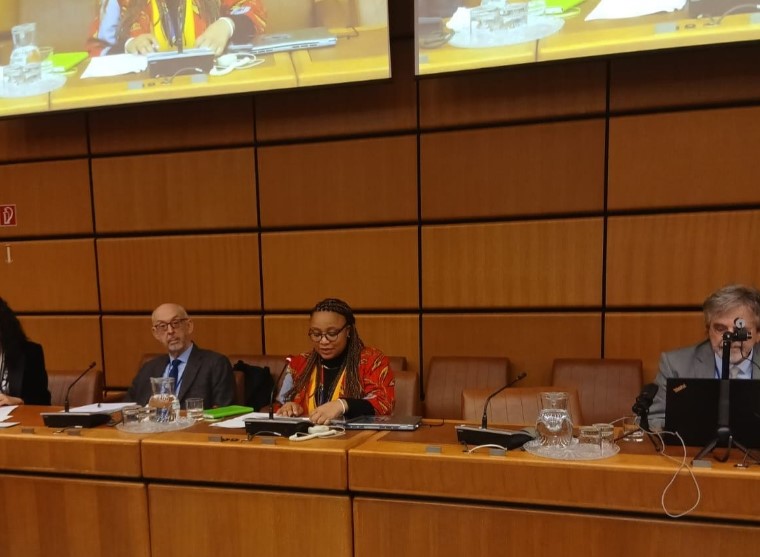
Among those who took part in the proceedings was Fikiswa Majola, Deputy Director for Space Systems at South Africa’s Department of Science, Technology and Innovation, who participated in a panel discussion organised by Space Renaissance International on the sidelines of the session.
The side event focused on operationalising space as a cross-cutting enabler of sustainable development and the emerging push for a proposed 18th Sustainable Development Goal dedicated to space. It also examined the legal implications, institutional feasibility and potential pathways for recognising space as both an enabler and an environment within sustainable development discourse.
Majola said the discussion is taking place at a particularly sensitive moment globally. “In an era where certain states are distancing themselves from the 2030 Agenda, characterising sustainable development as a ‘programme of soft global governance inconsistent with national sovereignty,’ it is more critical than ever to amplify the voices of the Global South,” she said.
She warned that the Space For All framework must not be allowed to lose its relevance. “We must ensure that the Space For All framework remains a robust tool for equitable development and collective progress, rather than a rejected concept of the past,” Majola said.
The full Legal Subcommittee session is expected to cover a broad range of agenda items including the status and application of the five UN treaties on outer space, the definition and delimitation of outer space, legal aspects of space resource activities, lunar activities, space traffic management, space law and policy, and the registration of objects launched into outer space.
The work of the subcommittee is being carried out through three working groups and an action team, with UNOOSA providing capacity-building support throughout the session.