

Ondo, Nigeria – An international virtual conference on clean and equitable energy transitions opens on April 22, 2026, and runs until April 24, offering participants from Eswatini and across the globe access to leading voices on climate policy, technology and energy justice.
The Energies 3.0 Conference, convened by the Green Institute of Nigeria, will be held entirely online from 10:00 AM to 4:00 PM over three days. More information and registration details are available at www.greeninstitute.ng/energies2026.
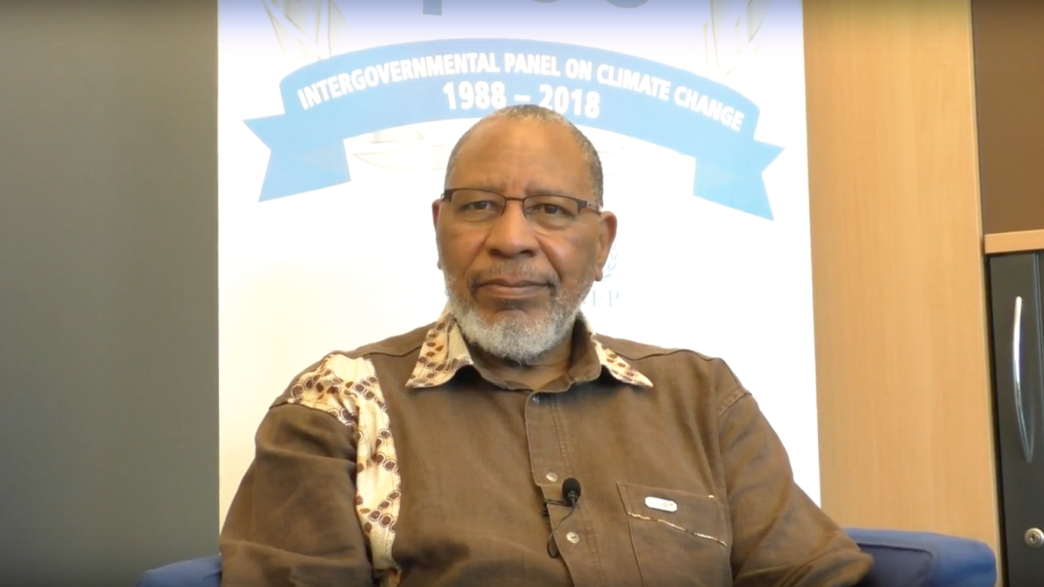
Among the confirmed speakers is Prof. Youba Sokona, who will deliver the keynote address. Prof. Sokona is one of Africa’s most respected figures in climate and energy policy, with decades of experience on the continent. He leads the African Institute for Sustainable Energy and System Analysis and previously served as Co-Chair of IPCC Working Group III and Vice Chair of the IPCC’s sixth assessment report. He has been a Lead Author of IPCC reports since 1990 and received a personal certificate from the Nobel Committee in 2007 for his contribution to the IPCC’s work, the year the panel shared the Nobel Peace Prize. He holds positions with the World Academy of Sciences, the African Academy of Sciences and the International Council of Science, among others, and is an Honorary Professor at University College London. 
Speaking ahead of the conference, Prof. Sokona pushed back against the idea that developing nations must choose between climate action and economic progress.
“For Global South nations a just transition should not be seen as a constraint on development, but rather as a pathway to achieve it in a more resilient and equitable manner,” he said.
He said the challenge lies in designing transition strategies that reflect the real socio-economic conditions of these countries, and that the most successful approaches treat decarbonisation as a development tool.
“For the Global South, climate ambition must reinforce development sovereignty, not constrain it,” he said.
On what policy changes are most needed to ensure vulnerable communities actually benefit from clean energy solutions, Prof. Sokona identified three priorities: shifting from project delivery to system-building, moving from access metrics to livelihood outcomes, and reforming finance to prioritise the most vulnerable rather than the most bankable.
“Climate resilience and decentralized energy will serve vulnerable populations only when equity is embedded in planning, financing, and institutional design, not treated as an afterthought,” he said. “Measure success by resilience and income gains, not just connections installed.”
The conference themes are directly relevant to Eswatini, where expanding access to affordable and clean energy, particularly in rural areas, remains a development priority for the government. Swazis wishing to participate can register online at www.greeninstitute.ng/energies2026.