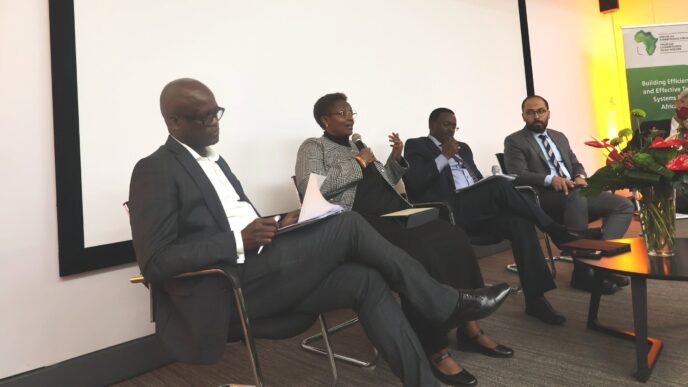


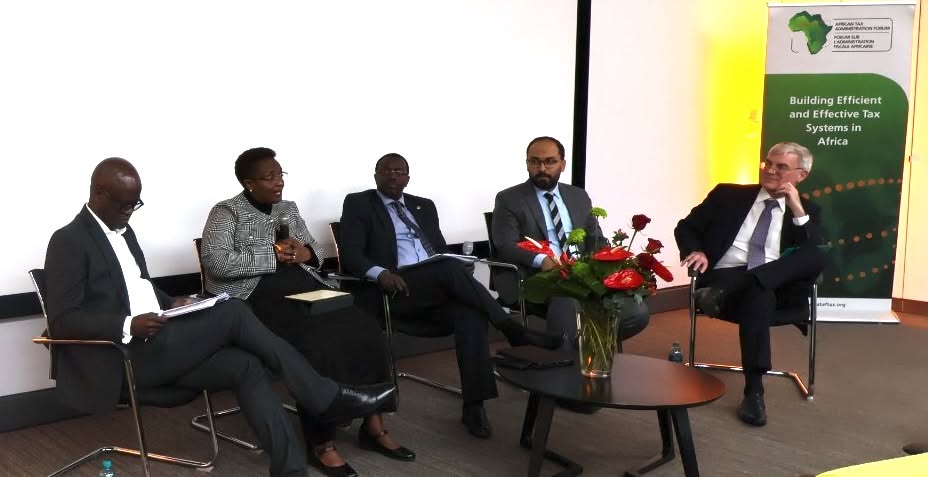
Pretoria – The African Tax Administration Forum (ATAF) hosted its inaugural African Tax Research Network (ATRN) Fireside Chat of 2026 at the Javett Art Centre, University of Pretoria, South Africa, on 26 June 2026, bringing together policymakers, researchers, tax administrators and development partners to discuss the United Nations Framework Convention on International Tax Cooperation.
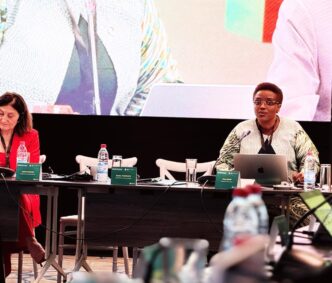
Delivering a public lecture at the event was Ramy Mohamed Youssef, Egypt’s Deputy Minister of Finance for Tax Policy and Reforms and Chair of the United Nations Intergovernmental Negotiating Committee on International Tax Cooperation. He was joined by a distinguished panel of experts, including Professor Annet Oguttu, ATRN Advisory Board Chair and Director of the African Tax Institute, and Mary Baine, ATAF Executive Secretary.
The discussion, which ran from 15:00 to 18:00, explored the progress of negotiations, Africa’s role in shaping the Convention, and what lies ahead for global tax cooperation. 
Ahead of delivering his public lecture, Youssef paid a courtesy visit to the ATAF Secretariat in Pretoria, where he was received by Baine and the Secretariat team. They exchanged views on strengthening African tax administrations, advancing tax research, and enhancing international tax cooperation.
As negotiations on the Convention enter a critical phase, Baine told Africa’s research community that the continent’s negotiating positions must be underpinned by rigorous, African led evidence.
“Our advocacy and engagement must be evidence-based,” she said.
“The Convention will be shaped, in part, by the quality of the analysis that informs it. And the analysis that will carry most weight is the analysis that comes from Africa, about Africa, and for Africa.”
She also spoke on ATAF’s practical engagement in supporting African countries throughout the negotiations.
“Technical analysis and coordination can sound abstract. In practice, it means ensuring that African countries have the evidence, analysis and technical support needed to negotiate with confidence,” Baine said.
ATAF’s support has included direct participation in the Intergovernmental Negotiating Committee as an accredited observer, including monitoring developments across the Framework Convention, Protocol I on cross border services, and Protocol II on dispute prevention and resolution.
The organisation has also provided technical intelligence to member administrations by translating complex negotiation documents into accessible briefing notes, analytical outputs, and reports to support revenue commissioners and finance ministry officials.
Beyond analysis, ATAF has advanced substantive policy positions on issues that matter most for Africa, including source state taxing rights, modern nexus standards, digital value creation, and the need for binding commitments within the Convention text.
Through its coordination with the African Union and the Africa Group at the UN, ATAF continues to serve as a technical bridge between continental negotiating priorities and the operational realities faced by African revenue administrations. It has also supported member countries through training, bilateral engagements with revenue authorities, and knowledge sharing platforms to ensure that all members, including smaller administrations, can engage meaningfully in the technically demanding process.
On the same day, the ATAF Secretariat in Pretoria hosted a delegation comprising representatives from Corruption Watch, Transparency International, and the INTOSAI Development Initiative (IDI), at their request. The meeting gave ATAF an opportunity to share perspectives on the role of effective tax administration in addressing illicit financial flows, and to hear the visiting organisations’ perspectives on transparency and accountability in the space.
Topics discussed included beneficial ownership transparency, exchange of information, and other mechanisms relevant to tax administration, domestic resource mobilisation, and accountability across Africa.