

Farmers in Shewula are adopting new sustainable farming methods following a partnership between World Vision Eswatini, the Eswatini National Trust Commission and the Ministry of Agriculture Eswatini under the Mbuluzi Ecosystems Restoration Project.
The initiative, currently underway in the Lubombo region, is equipping selected lead farmers through Farmer Field Schools with practical skills aimed at improving productivity while protecting the environment. The training focuses on soil health management, soil and water conservation, integrated production and pest management as well as conservation agriculture.
Joseph Tfumbatsa, one of the lead farmers participating in the programme, said the knowledge gained is already transforming how he works his land. He is particularly pleased to have learnt how to produce organic manure from cow dung, a method he describes as affordable and beneficial to the soil. 
“This new method keeps the soil healthy, is very cost effective, and results in bigger harvests,” he shares.
Another lead farmer, Celiwe Magagula, believes the training goes beyond individual benefit and will have a lasting impact on the wider Shewula community. She said the skills acquired will be shared with other farmers to strengthen food production at household level.
“I am excited to share this knowledge with others in the community. When we apply these practices, we strengthen our food security.”
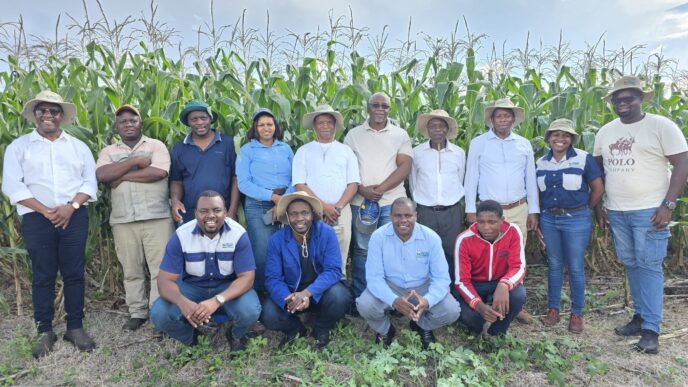
Kuhle Hlophe, Livelihoods Coordinator at World Vision, said Shewula is among the communities targeted for capacity building on sustainable land management practices. These include inter cropping, which is being demonstrated at a local plot where maize has been planted alongside mung beans. The approach allows farmers to maximise land use while naturally improving soil fertility and resilience.
The Mbuluzi Ecosystems Restoration Project seeks to restore degraded land while supporting rural livelihoods. By integrating sustainable land management methods, farmers are better positioned to cope with changing weather patterns and improve yields, contributing directly to household food security.