

The Foton Tunland V9 LTD has arrived in South Africa as a bold lifestyle bakkie that looks the part and delivers a premium interior, but falls short where it matters most under the bonnet.
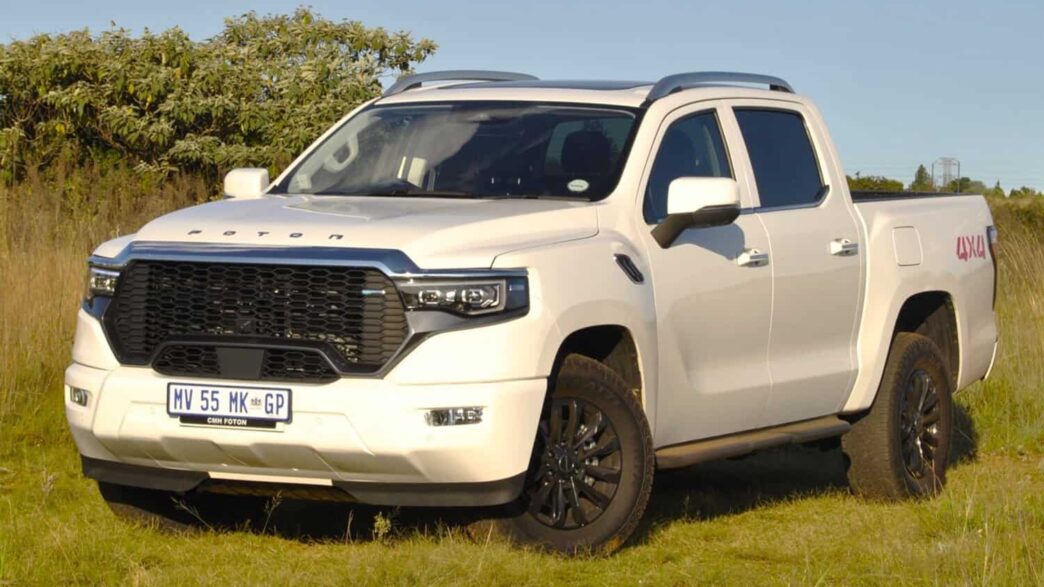
Styled unmistakably after the American Ram pick-up truck, the V9 is the flagship of Foton’s V-Series range, which also includes the V7. Both models, known as the Mars 7 and Mars 9 in China, are now the longest and widest bakkies on sale in South Africa, measuring just over 5.6 metres in length and two metres wide.
Foton re-entered the South African market two years ago and has been building steadily. Excluding its truck division, the brand shifted 2,329 units of the Tunland G7 in its full year of sales last year. So far this year, the G7 and the new V-Series have combined to move 424 units, averaging around 200 units per month. 
While the G7 remains the volume driver, the V-Series pair is aimed at a more upmarket buyer, targeting not only legacy brands but also the Great Wall Motors P500.
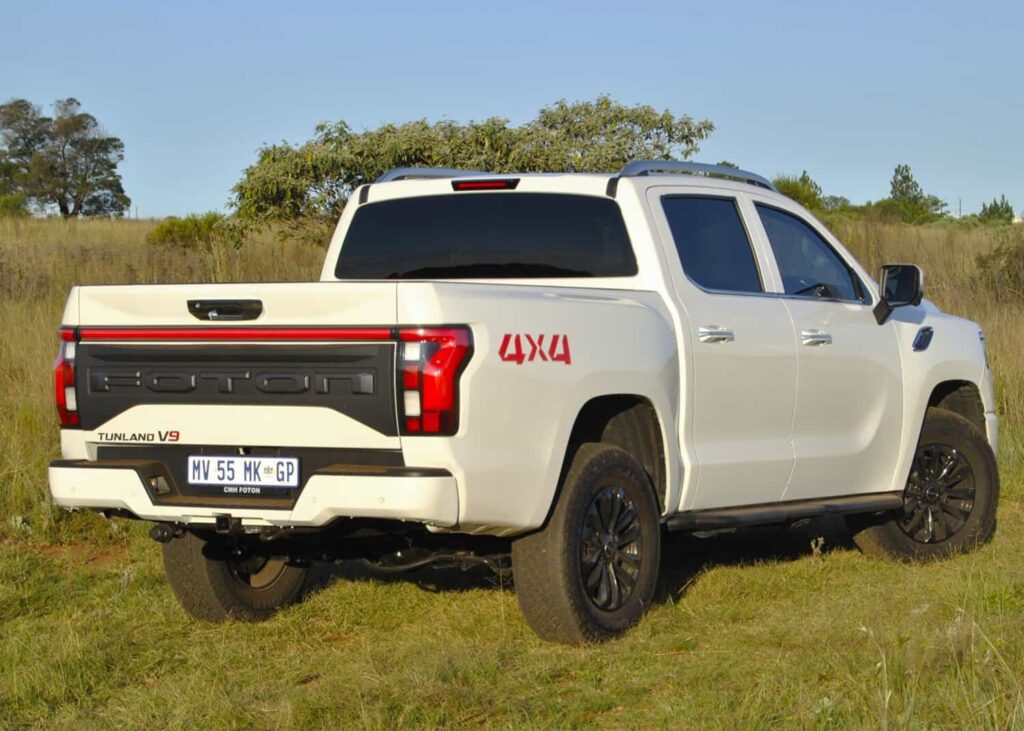
The V7 and V9 share the same body but serve different purposes. The V7, which resembles the Ford F-150, is the more utilitarian of the two, fitted with a traditional leaf spring rear suspension and hydraulic power steering. The V9 takes after the Ram and South American Ram Rampage, offers a more luxurious experience, and comes with a multi-link coil spring rear suspension and electric power steering.
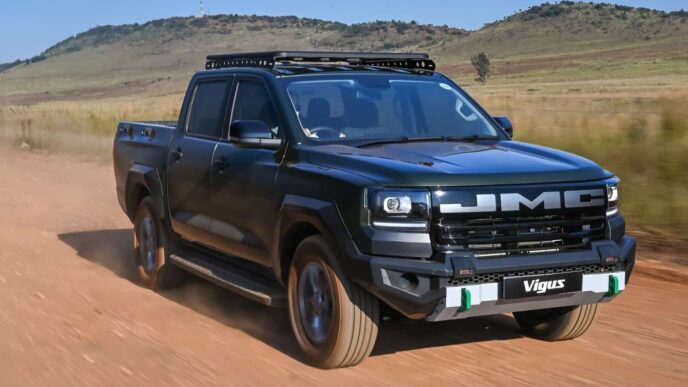
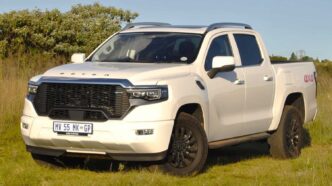
Aesthetically, the V9 makes a strong impression. The Ram-inspired front end, complete with imitation chrome plastic finish, gives it an imposing road presence that the P500 cannot replicate. The 18-inch black wheels do not make the truck look top-heavy, and the massive wheel arches are well filled. The rear of the vehicle carries over F-150 styling from the V7, which could have been differentiated further, but overall the design works well for a market that has shown a clear appetite for American-inspired bakkies.
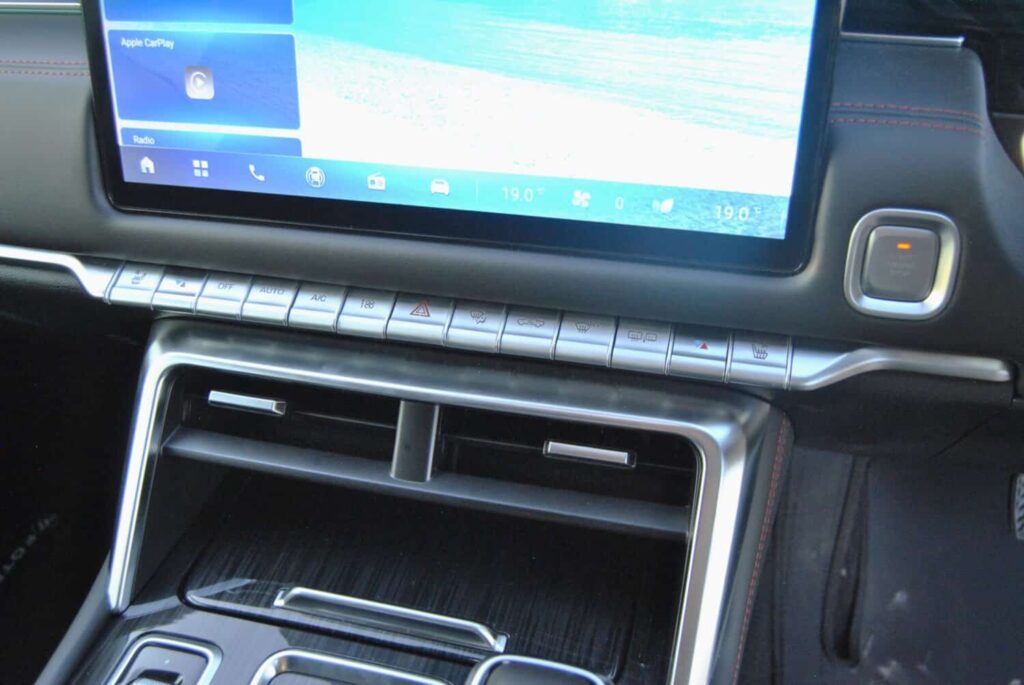
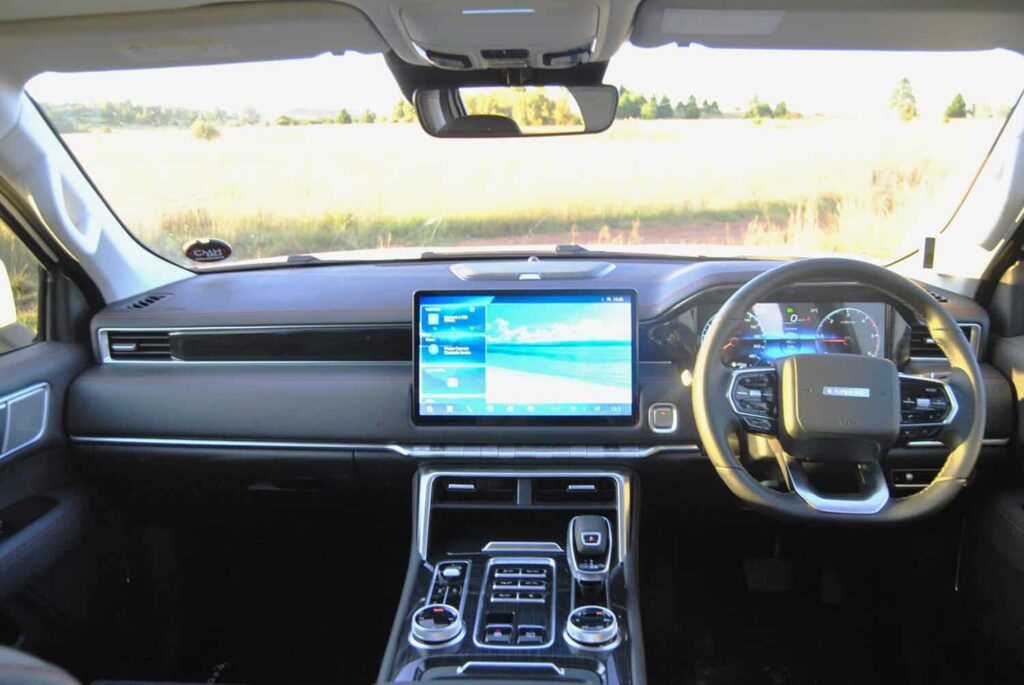
Stepping inside, the V9 abandons any pretence of being a working bakkie. The interior is closer in feel and quality to an SUV costing well over R1 million. Soft, plush materials are used throughout, red stitching contrasts well against the black imitation leather upholstery, and Foton has resisted the temptation to bury all controls inside the infotainment display. Physical buttons appear on the steering wheel, centre console and below the 14.6-inch screen, with the dual-zone climate control remaining easily accessible.
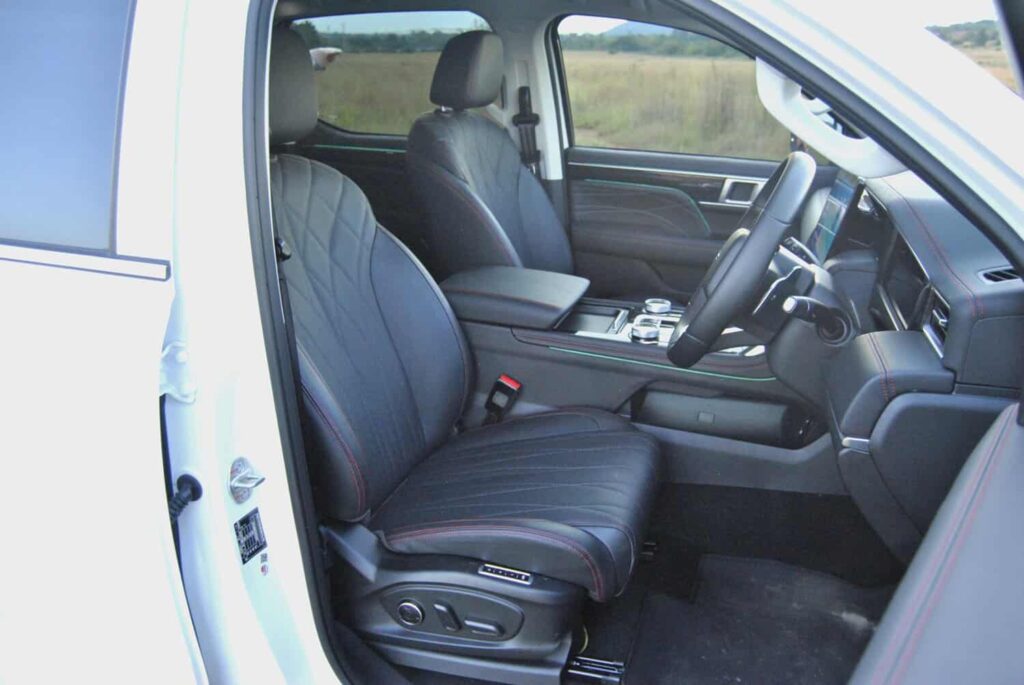
Faulty driver’s seatback proved a massive annoyance throughout the seven-day test. Picture: Charl Bosch
The infotainment system is responsive and user-friendly, offering both wireless Apple CarPlay and Android Auto. Ambient lighting, keyless entry, push-button start, a wireless smartphone charger, and electric, heated and ventilated front seats round out a generous specification list that also includes a 360-degree camera system, Adaptive Cruise Control, Automatic Emergency Braking, Blind Spot Monitoring, Lane Change Assist, Forward Collision Warning, Traffic Jam Assist, Lane Departure Warning, Driver Attention Alert, Traffic Sign Recognition, Lane Keep Assist and Rear Cross Traffic Alert. Six airbags are standard.
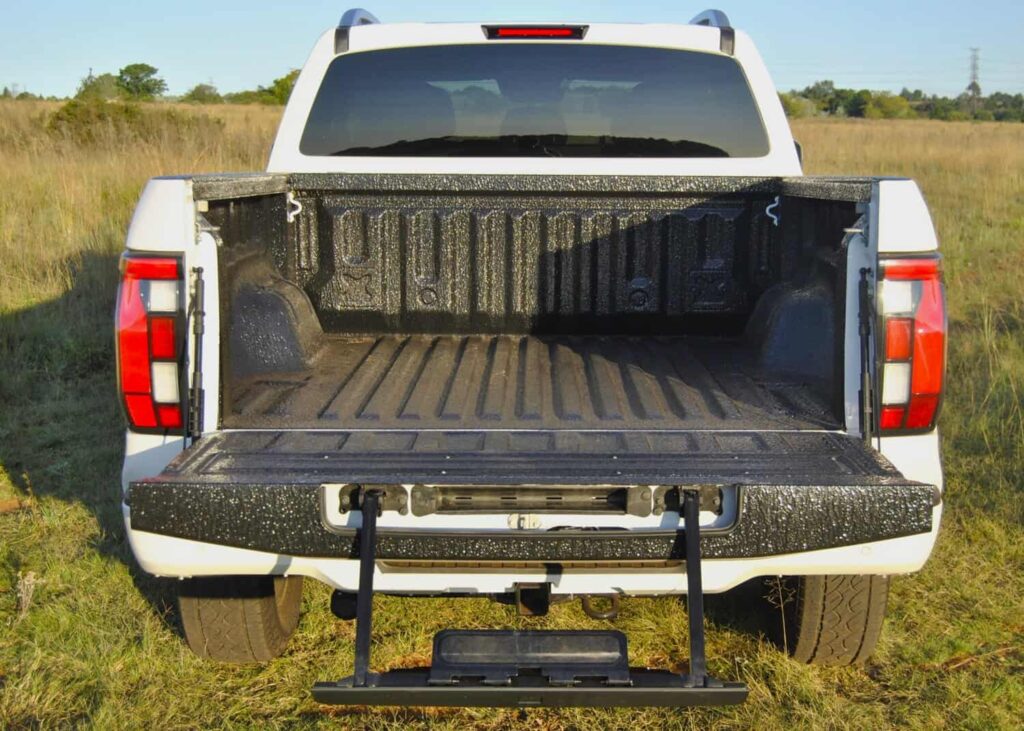
However, those safety systems re-engage every time the ignition is switched on, which proved overly intrusive during testing. The six-speaker sound system also fell below expectations for a vehicle at this price point, and the tailgate-integrated rear step, while a welcome addition, sits too high for some users.
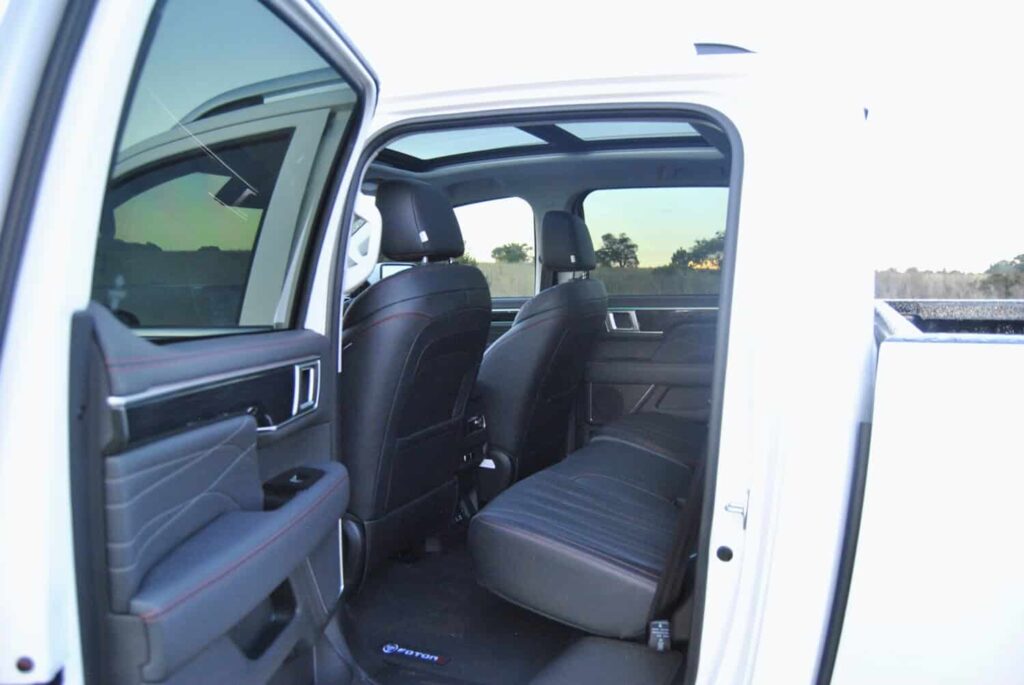
Durability raised a concern during the test week. The unit collected had covered fewer than 800km, yet the driver’s seatback stopped adjusting at a certain angle. Those present at collection confirmed the angle was normal, but it provided poor back support and forced the seat base uncomfortably close to the steering wheel. The passenger seat reclined without any problem. When the test unit was returned, a second V9 adjusted normally, suggesting a fault specific to that vehicle, but the experience raised questions about long-term build quality.
Under the bonnet, the V9 is powered by a 2.0-litre turbodiesel engine developed by Foton and long-time partner Cummins under the Aucan banner, producing 120kW and 390Nm, supplemented by a 48-volt mild-hybrid system. The engine is paired to a ZF-sourced eight-speed automatic gearbox and a BorgWarner four-wheel drive system with an Auto mode. The LTD adds front and rear locking differentials from Eaton, Hill Descent Control and three off-road modes covering Mud, Snow and Sand. Claimed wading depth is 700mm, payload is rated at 1,000kg and towing capacity stands at the industry standard 3,500kg.
On the road, the V9 feels lethargic. The engine struggles with the vehicle’s 2,360kg kerb weight and would benefit from at least another 20kW. Power delivery is linear and cabin noise is well suppressed, and the hybrid system largely eliminates the throttle calibration issues common in Chinese vehicles, but the performance numbers at Gerotek test facility told the full story of an underpowered drivetrain.
The coil spring setup delivers a largely comfortable ride, though sudden road imperfections send shudders into the cab and the rear feels light without a load. The brakes required more input than expected to bring the vehicle to a stop, and the sheer size of the V9 demands attention in tight spaces such as underground parking areas.
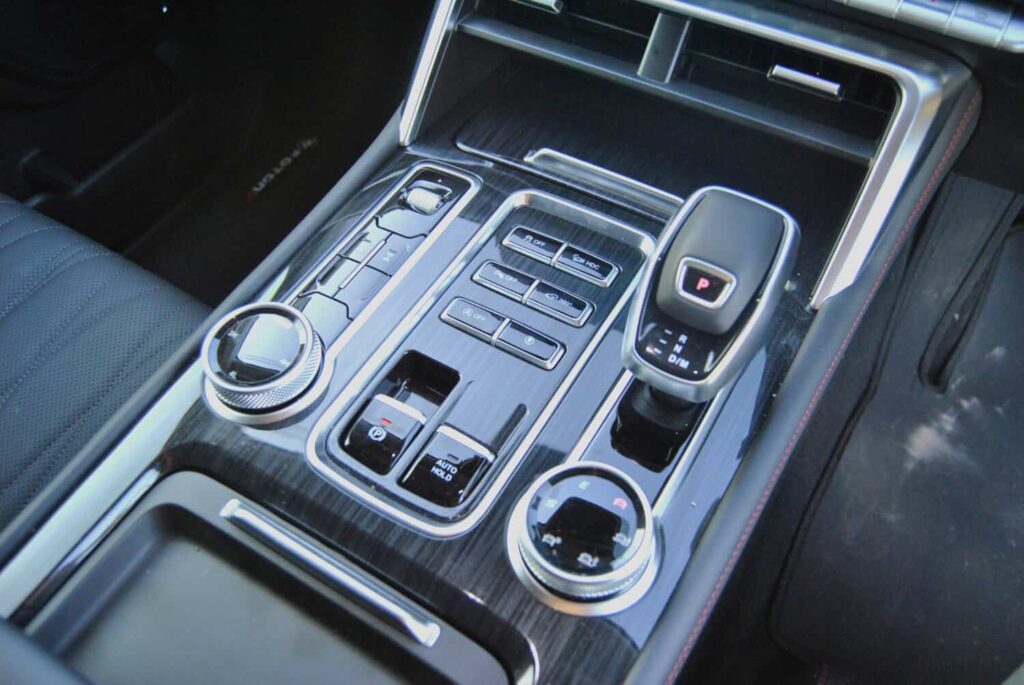
Floating centre console is replete with low range transfer case dial (L) and mode selector (R). Picture: Charl Bosch
Fuel consumption showed a best of 9.5 litres per 100km over seven days and 693km of mixed driving, bettering Foton’s claimed figure of 10.8L/100km, though town driving and harder acceleration pushed consumption into the low 10s.
Priced at R799,900, the Foton Tunland V9 LTD delivers a remarkable amount of equipment and visual presence for the money, offering features that similarly priced offerings from Ford and Volkswagen cannot match. For Swazi motorists and businesses looking across the border at the South African new vehicle market, the V9 represents a genuinely different option in the double cab segment, one that prioritises style, luxury and off-road capability, even if the engine leaves something to be desired. Test driving is available at Mbabane Motors in the city of Mbabane.