

Washington DC – A fragile ceasefire between the United States and Iran is under serious strain after both sides exchanged fire in the Strait of Hormuz on Monday, with US President Donald Trump refusing to confirm whether the truce remains in place.
Trump, speaking to conservative radio host Hugh Hewitt, was pressed on whether the ceasefire was over and whether strikes could resume as soon as Monday night.
“Well, I can’t tell you that,” Trump said. “You wouldn’t if I answered that question, you’d say this man is not smart enough to be president.” 
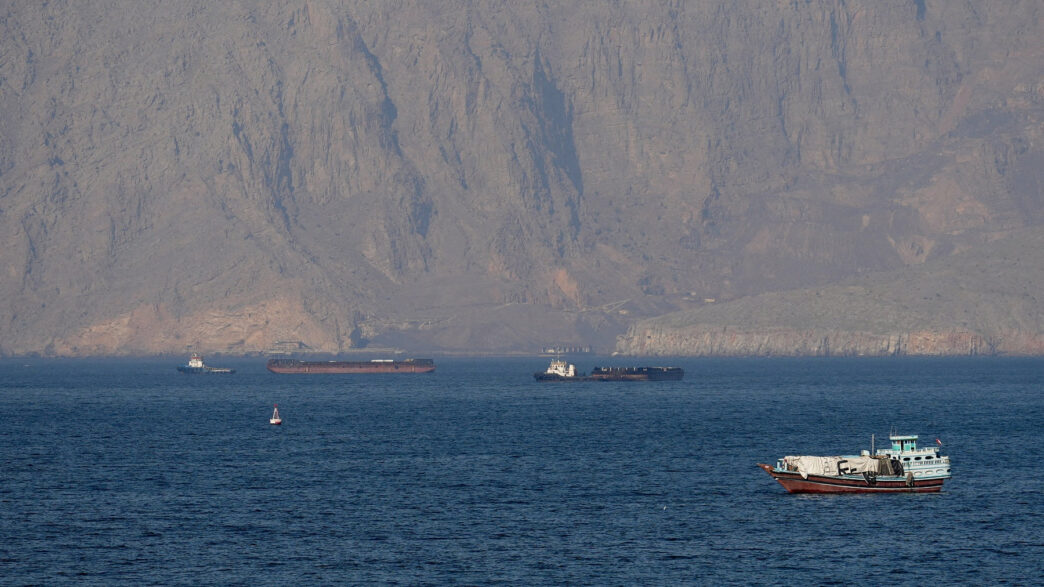
US Central Command chief Admiral Bradley Cooper said the US military destroyed six small Iranian boats in the strait after Iran launched multiple cruise missiles, drones and small boats at US Navy ships and commercial vessels under American military protection. Trump later said the number was seven boats.
Iranian state media disputed the US account and denied that any boats were sunk.
Earlier on Monday, Trump issued a stark warning to Iran during a phone interview with Fox News.
“They would be blown off the face of the Earth,” Trump said, referring to Iranian forces that might attempt to target US ships in the Strait of Hormuz or the Persian Gulf.
Trump said no damage was suffered as a result of the Iranian strikes, except to a South Korean vessel. He also told Fox News he saw two paths forward: reaching a good faith deal or resuming full military operations. Later in the same interview, he insisted that war with Iran “militarily is essentially over.”
Cooper said the US is not providing escorts for commercial ships but rather a broader defensive package to clear a one-way path through the strait, allowing vessels in the Persian Gulf to exit.
Danish shipping giant Maersk confirmed that its vessel, the Alliance Fairfax, transited the strait on Monday under US military protection. The ship had been stranded in the Persian Gulf since the war broke out in February and was unable to depart until the US military recently offered it an exit window.
“Maersk extends its gratitude to the US military for its professionalism and effective coordination in making this operation possible,” the company said in a statement, adding that all crew members are “safe and unharmed.”
The conflict also spread further into the Gulf region. The United Arab Emirates said its air defenses engaged 19 Iranian projectiles on Monday, including 12 ballistic missiles, three cruise missiles and four drones. Three Indian nationals suffered moderate injuries after an Iranian drone struck an oil port in the Fujairah Oil Industry Zone, causing a major fire.
Sources told CNN that an Israeli Iron Dome air defense system was used to intercept Iranian projectiles in Emirati airspace, a sign of the deepening relationship between Israel and the UAE, which only established formal relations six years ago.
Qatar pledged full solidarity with the UAE, while Saudi Arabia condemned in the strongest terms Iran’s targeting of civilian and economic facilities. UAE schools announced a shift to remote learning from Tuesday through Friday, with the situation to be reassessed on 8 May 2026.
Back in Washington, Trump pushed back against polls showing declining public support for the war. A Washington Post, ABC News and Ipsos poll published on Friday showed only 36% of respondents believed the US was right to use military force against Iran.
“They give me fake polls,” Trump said at a White House small business event. “They did a poll on the war with Iran, and they said only 32% of people like it. Well I don’t like it and I don’t like war at all, but we’re equipped better and we have the greatest military in the world.”
He also sought to put the six-week conflict into historical context.
“We have a war right now and we’re into what, like, six weeks? They say, ‘What’s taking so long?’ We were in Vietnam 19 years. We were in Iraq for many years, 10 years, 12 years,” he said.
Oil prices rose and stock markets fell on Monday amid concerns about the safety of shipping through the strait. An oil market expert told CNN that average US petrol prices could reach five dollars a gallon if the waterway remains closed.d stock markets fell on Monday amid concerns about the safety of shipping through the strait. An oil market expert told CNN that average US petrol prices could reach five dollars a gallon if the waterway remains closed.