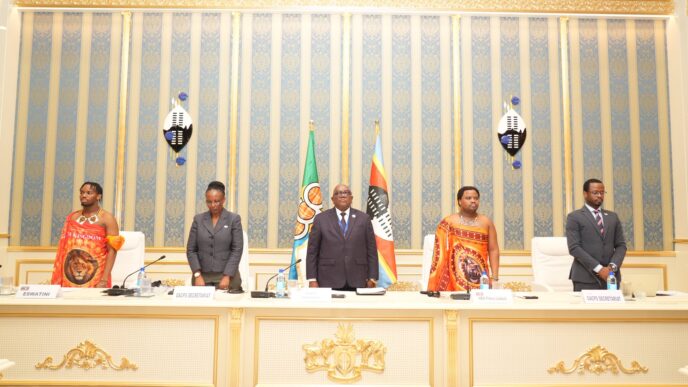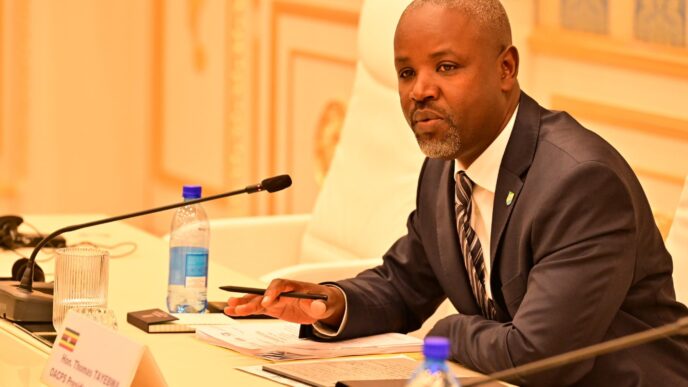


Ezulwini – Prince Lindani, representing His Majesty King Mswati III, has challenged delegates attending the Organisation of African, Caribbean and Pacific States (OACPS) and European Union Parliamentary Assembly brainstorming session to confront the continent’s hardest truths and focus on practical solutions addressing unemployment, trade imbalances and youth opportunities.
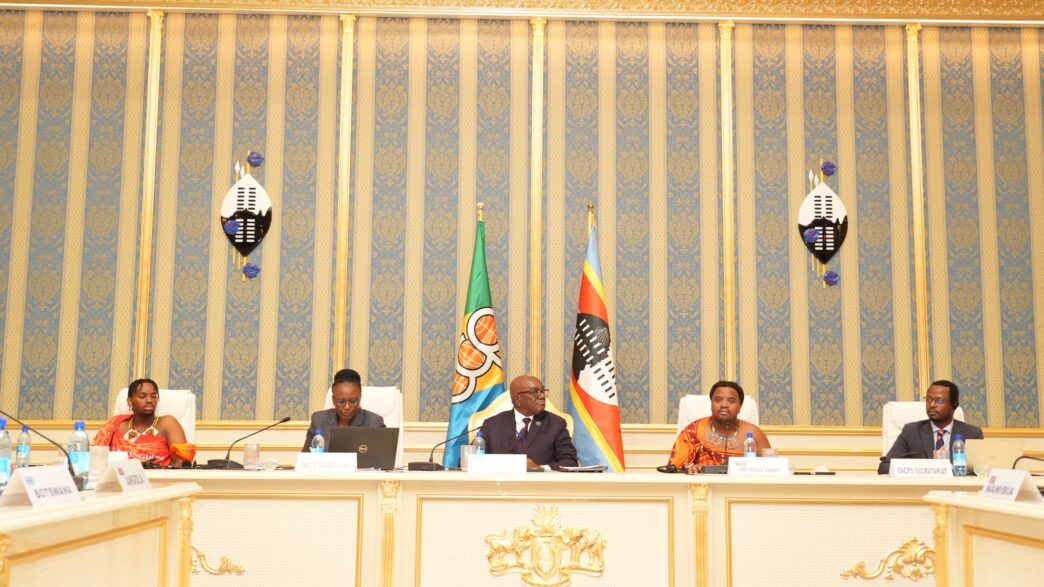
Delivering welcoming remarks during the brainstorming session held at the ICC eZulwini Palazzo on Friday, Prince Lindani said the gathering should not merely become another diplomatic engagement, but a platform for honest reflection and action-oriented discussions.
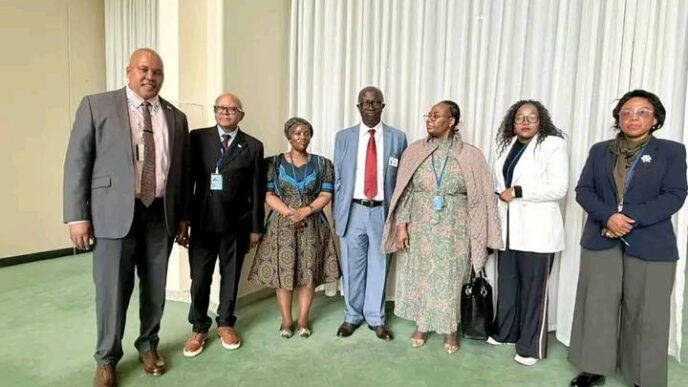
Speaking on behalf of the King, the Queen Mother, government and the people of Eswatini, Prince Lindani welcomed delegates who travelled from across Africa and beyond to participate in the high-level engagements ahead of the 1st Africa-EU Parliamentary Assembly. 
“You have travelled far,” he said. “One may ask why we are here. This brainstorming session is where we sharpen our thinking and come together with solutions.”
Prince Lindani said the session was intended to encourage frank discussions about the continent’s challenges and future direction under the Samoa Agreement framework. “This is a brainstorming session. Let us all come up with the hardest truth,” he said.
He said African countries needed to find common ground and strengthen unity through regional cooperation, particularly through the Southern African Development Community (SADC) and broader continental structures. “Unity can come from SADC. Under Samoa our destiny lies. Let us find common ground,” he said.
Prince Lindani further urged delegates to ensure that the outcomes of the discussions directly respond to the expectations of ordinary citizens across the continent.
“Our people may ask: where are the jobs? Why do we export minerals and remain poor?” he said. “If this brainstorming session does not answer these questions, let us not be surprised if our efforts are in vain.”
He said Africa’s youth were looking to leaders and parliamentarians for tangible solutions capable of improving livelihoods and creating economic opportunities. “We carry the youth. The people of Africa have sent us here with belief in us to come up with solutions,” he said.
Referring to the Samoa Agreement, Prince Lindani noted that the partnership framework had provided six pillars that should guide cooperation between African, Caribbean and Pacific countries and the EU. He said Eswatini was prepared to play a constructive role in helping shape discussions and preserving the values of dialogue and stability within the OACPS bloc.
“Eswatini offers to be custodians,” he said.
Prince Lindani also pointed to Eswatini’s record of political and social stability under the leadership of King Mswati III, saying the country hoped to contribute that experience to the ongoing discussions.
“Under His Majesty, we have enjoyed 40 years of unbroken stability. We offer that in this brainstorming session,” he said.
He described brainstorming as a process of “building and laying foundations”, adding that delegates had a responsibility to shape policies and partnerships that would benefit future generations.
During the Bureau meeting of the OACPS Africa Region Parliamentary Group held earlier on Friday, member states deliberated on a number of issues affecting the organisation, with the Samoa Agreement again taking centre stage. Member states were urged to ratify the agreement, and discussions also focused on how they could support the organisation following King Mswati III’s recent resource mobilisation efforts.
Delegates further explored ways to ensure the organisation remains relevant, including proposals for the OACPS to participate in election observation missions across the region.
Calls for financial independence, stronger reforms and urgent implementation of the Samoa Agreement dominated the broader brainstorming session, with parliamentarians urging African states to prioritise sustainable funding, accountability and unity.
Delegates also raised concerns over rising xenophobic attacks in South Africa and restrictive travel barriers across the continent, saying such challenges undermine Africa’s integration agenda.
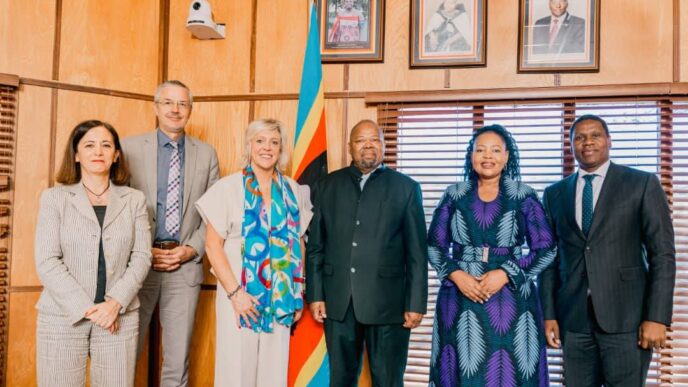
On the sidelines of the session, the EU reaffirmed its Global Gateway Africa-Europe investment drive, which aims to mobilise at least €150 billion for Africa’s socio-economic, green and digital transformation. According to a presentation on the Africa-EU Partnership Prosperity Agenda, the EU had already mobilised about €120 billion by November 2025, putting the programme well on track to exceed its target.
The initiative focuses on five key areas: digital development, climate and energy, transport, education and research, and health, with a focus on sustainable infrastructure, clean energy transition, improved education access, and strengthening health systems and vaccine production.
According to the programme, delegates will take a break on Saturday for a field visit, with deliberations resuming on Monday when EU member states join the gathering.