

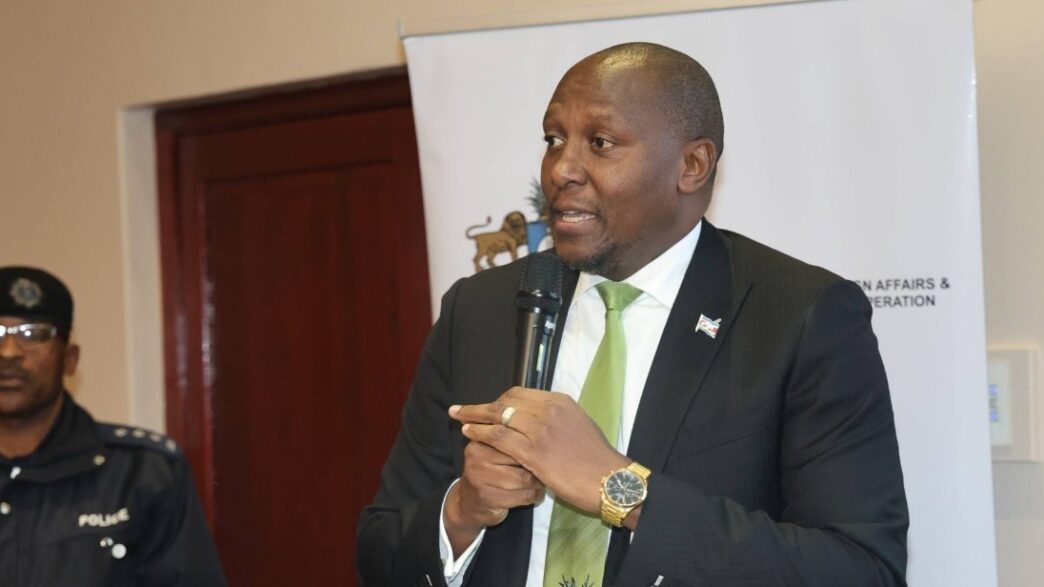
Mbabane – In response to Chief Justice (CJ) Bheki Maphalala’s accusations of political meddling in judicial proceedings and what he termed misleading comments on the Anti-Corruption Commission’s (ACC) conduct recently, Prime Minister Russell Mmiso Dlamini has urged cooperation of all branches of government to combat corruption.
Dlamini said the government remains committed to combating corruption ‘in fulfilment of the mandate entrusted to it by His Majesty King Mswati III and the resolutions of Sibaya’,
“The executive’s determination to strengthen the fight against corruption must not be misconstrued as an attempt to interfere with the constitutional functions of any institution. Rather, it reflects the government’s solemn obligation to protect public resources, uphold integrity in public administration, and ensure that all persons are subject equally to the rule of law,” the PM said in a statement. 
Dlamini said government’s institutions must remain charged with ‘preventing, investigating and prosecuting corruption with the necessary support to enable them to execute their respective statutory mandates independently, professionally, impartially, and without fear, favour or prejudice.’
The government, he said, backs the administering of justice fairly, which will further strengthen public confidence in the judiciary and governance.
Dlamini also highlighted matters of compensation for the 2021 unrest and Maphalala’s suffered losses.
“With regard to the issue of compensation for losses allegedly suffered during the social unrest, the government expresses its sincere sympathy to the Chief Justice, as it does to all individuals, businesses and institutions that sustained losses during that unfortunate period. The government nevertheless clarifies that the assessment, processing and determination of claims for compensation do not fall within the constitutional or statutory mandate of the Office of the Prime Minister,” he said.
The PM advised all people or businesses still pursuing compensation claims to follow the established legal and administrative mechanisms that the government put in place.
He said the compensation procedures apply uniformly and without distinction to all affected persons and entities, consistent with the principles of equality before the law, administrative fairness, and the orderly administration of public affairs.