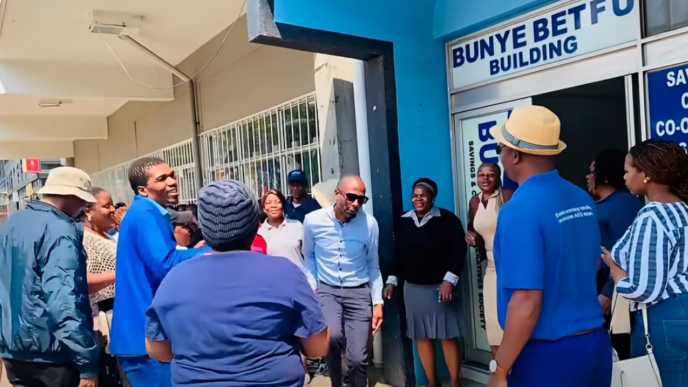



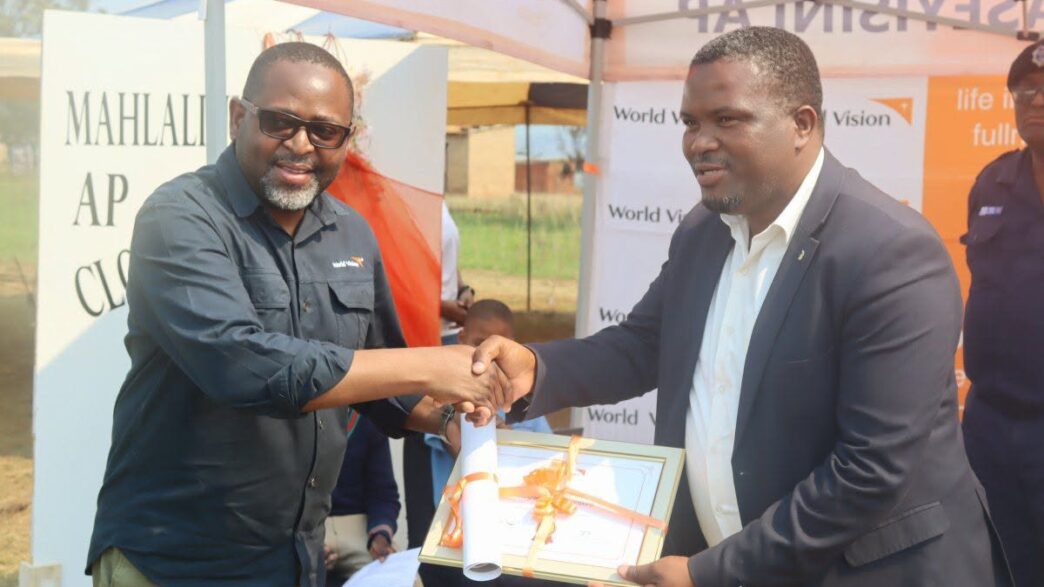
MAHLALINI — Minister of Tinkhundla Administration and Development S’khumbuzo Dlamini has received a structure handed over by World Vision Eswatini as the organisation transitions from direct implementation of development programmes in the Mahlalini area.
The handover forms part of World Vision Eswatini’s long running partnership with communities in the area, where the organisation has operated since 2008.
According to Dlamini, World Vision’s work in Mahlalini has reached more than 26,000 people, including about 5,000 children, through programmes covering water, sanitation and hygiene, livelihoods, health, education, food security, child protection and broader community development. 
The minister said the organisation had invested approximately E175.6 million in its programmes in the area.
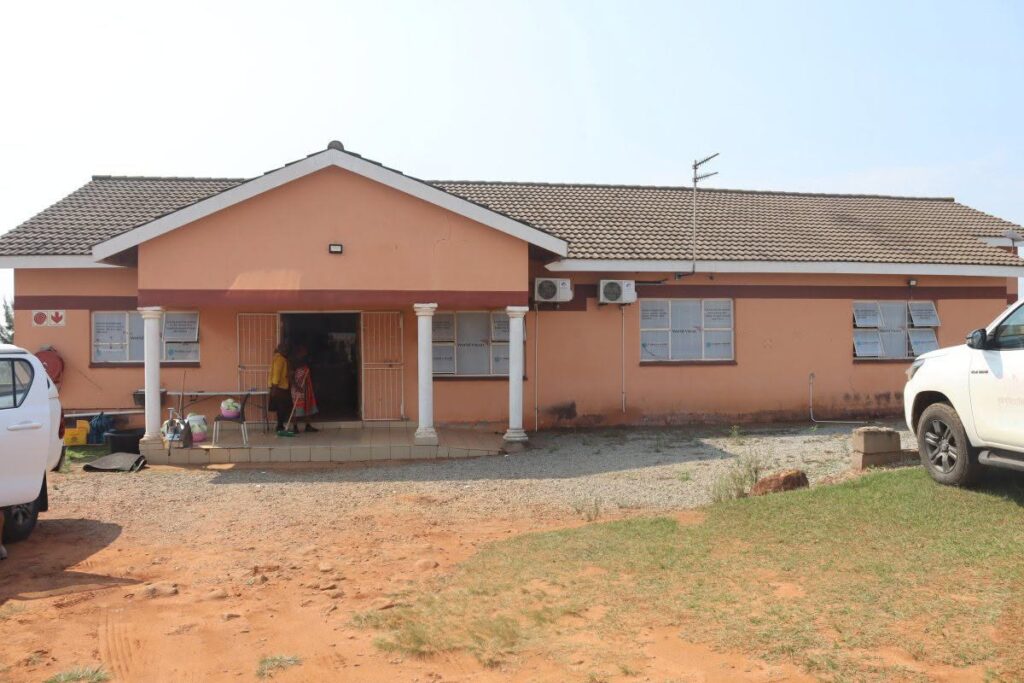
“On behalf of His Majesty’s Government allow me to convey our deepest appreciation to World Vision Eswatini for its steadfast partnership with the people of the Kingdom of Eswatini,” Dlamini said.
He said the government viewed the handover as more than the transfer of a physical structure, describing it as a facility that could support the delivery of services closer to communities and continue creating social and economic value if properly managed.

“As Government of Eswatini, we are not simply receiving a building. We are receiving an instrument of development and a platform from which services can be brought closer to the people. We are also receiving an asset that if properly utilised, can continue generating social and economic value. His Majesty’s Government remains firmly committed to a development approach that places communities at the centre of national transformation,” he said.
World Vision Eswatini National Director Amos Zaindi said the organisation was now looking to government and other development stakeholders to help maintain and expand the gains made through its programmes.
“As World Vision transitions from direct implementation, we request the Ministry, through its development programmes and community development initiatives, to support the scaling up of the areas where gaps remain. Continued investment in livelihoods, food security, climate resilience, youth empowerment, sanitation and hygiene promotion will help consolidate the gains already achieved and accelerate development outcomes for the people of Mahlalini,” Zaindi said.
He said the sustainability of the progress made in Mahlalini would depend on continued cooperation between communities, traditional leaders and development partners.
“The sustainability of these achievements will depend on strong collaboration between communities, traditional leadership, and other development partners. Together we can ensure that the progress achieved does not only endure but continues to grow,” Zaindi said.