



Lusaka – Technology is becoming one of the most important enablers of effective Exchange of Information (EOI), with African countries now developing their own systems rather than relying on costly foreign vendors, the African Tax Administration Forum (ATAF) reported on July 1, 2026.
As more African countries implement Automatic Exchange of Information (AEOI), the focus is increasingly shifting from compliance to practical implementation, developing secure, affordable and sustainable systems that enable tax administrations to make full use of exchanged information.
Responding directly to this need is an African developed AEOI IT System, built jointly by the Zambia Revenue Authority (ZRA), ATAF and the World Bank Group, with technical inputs provided by the Uganda Revenue Authority (URA), Mauritius Revenue Authority, Nigeria Revenue Service (NRS) and the South African Revenue Service (SARS). 
Designed by Africans for African tax administrations, the solution provides a robust, secure and cost effective platform for the reciprocal exchange of financial account information under the Common Reporting Standards, and it is capable of being integrated into the wider tax system.
Beyond supporting compliance with international standards, it enables African countries to benefit from a robust IT system at a significantly reduced cost of technology acquisition while giving them the ability to retain ownership of the system, laying the foundation for long term digital transformation.
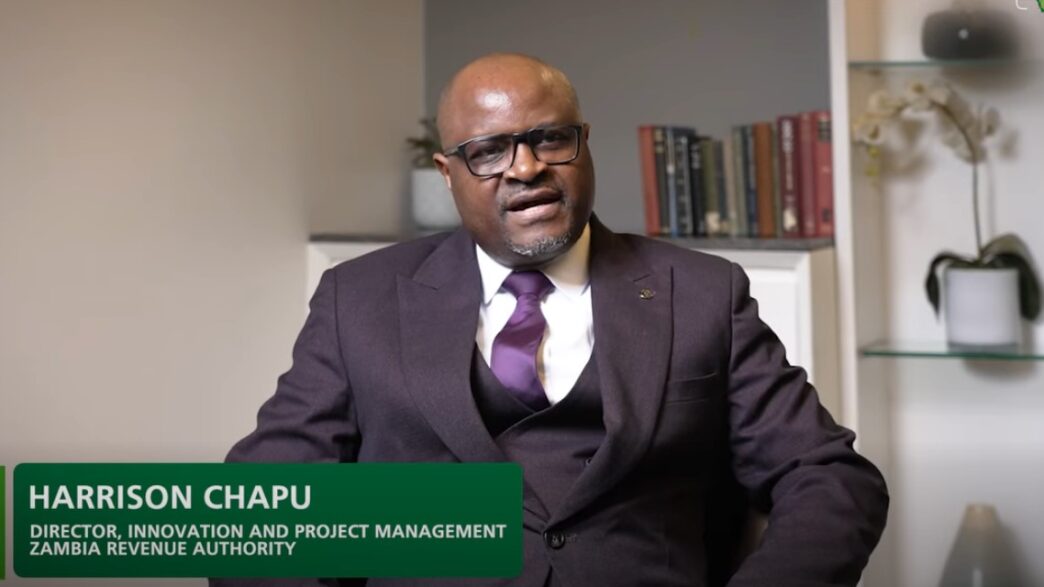
Mr Harrison Chapu, Director of Innovation and Project Management at the ZRA, shared how the pioneering partnership is turning a complex compliance requirement into a practical African solution, driven by the experience of African tax administrations and built to meet the continent’s needs.
“In an increasingly integrated global economy, the fight against illicit flows as well as tax evasion is not just a domestic resolve. It demands seamless collaboration as well as cutting edge technology,” Chapu said.
He described the joint effort as more than a software project. “This initiative is not just about building a software platform. It is about co-creating a sustainable world class solution tailored to the unique needs of African tax administrations.”
Chapu explained that the success of the project lies in the alignment of distinct complementary strengths brought forward by each institution. He said the ZRA brings to the table software development capability, including software developers, business analysts and project officers who translated complex user requirements into a working and functional software code.
On ATAF’s role, he said the organisation “provides critical technical and regulatory frameworks” and, as the voice of African tax administration, “brings deeper expertise in global exchange of information, protocols, international compliance standards, and stringent data security requirements. This ensures that the system is built rigorously around the international standards, around the international benchmarks from day one.”
The World Bank, he said, serves as a complementary quality assurance partner providing essential technical reviews and validations. “Their support assures that the project remains sustainable, informed by practical experiences and aligned with global development objectives. Together, these three organizations turn a complex compliance mandate into a concrete digital reality.”
He added that practical experience and support came from revenue authorities that have previously implemented AEOI, namely the Uganda Revenue Authority, Mauritius Revenue Authority and the Nigeria Revenue Service. “Their input have provided a contextual lens and a needs-driven approach to the design of our system,” he said.
For the ZRA, the benefits are profound. By building the system in house rather than procuring it from vendors, the authority significantly enhances its domestic capacity and ensures the system integrates perfectly with its back office systems.
The vision, however, extends beyond Zambia. “For the other members or member countries, this solution offers a transformative alternative. Instead of paying exorbitant licensing fees, members or member states who actually decide to adopt this particular implementation can actually benefit from implementing this particular system at a more cost effective price and also will get the opportunity to own the source code and be able to manipulate this particular system on their own. Therefore, reducing the total cost of ownership of technology, which is currently the key now,” Chapu said.
He said the partnership proves that with local talent, regional expertise and global development finance coverage, world class public infrastructure can be built on the continent.
“The Zambian Authority, the Africa tax administration forum and the World Bank collaboration isn’t just delivering a system. It is actually charting a new path for sustainable, self-reliant digital transformation in African tax administrations,” he said.