

His Majesty’s Correctional Services (HMCS) has called on communities in Siphofaneni to play a greater role in helping offenders and former inmates rebuild their lives after incarceration.
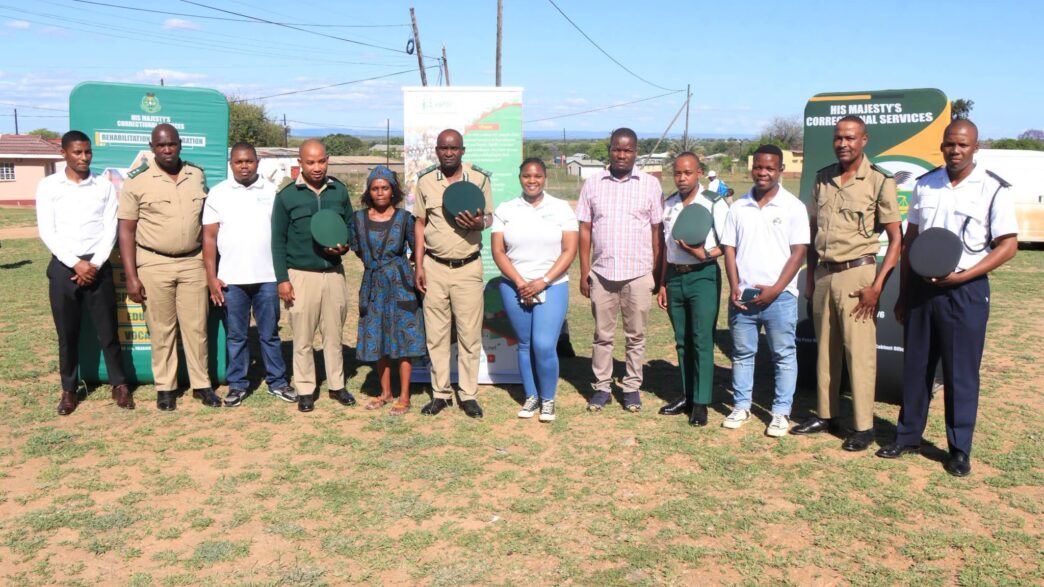
The call was made during the Siphofaneni Inkhundla Community Corrections Empowerment Dialogue held on Friday, where HMCS engaged residents on rehabilitation, reintegration and the role communities can play in creating safer environments.
The HMCS delegation was led by Lubombo Regional Commissioner Sabelo Dlamini, who spoke about the need for stronger links between correctional institutions and the communities from which offenders come and to which they eventually return. 
Siphofaneni Inkhundla consists of seven chiefdoms and has a direct connection with HMCS, with some inmates serving sentences at correctional centres originating from communities within the inkhundla.
HMCS said this makes community participation in rehabilitation important because successful reintegration cannot be achieved by correctional institutions working alone.
The engagement provided an overview of the rehabilitation programmes offered by HMCS to help inmates prepare for responsible life after incarceration.
These programmes include education, vocational skills development, life skills, agriculture, entrepreneurship, psychosocial support, spiritual care and sport, among other constructive activities. The interventions are designed to address factors that may contribute to offending while giving inmates practical and productive skills.
Social Worker Chief Officer Mphumelelo Nhleko said support systems were critical to the rehabilitation and reintegration process.
He said people returning from incarceration need supportive environments where positive behavioural changes can be maintained.
Families, communities and other stakeholders were urged to encourage responsibility, rebuild relationships and provide constructive guidance to people who have completed their sentences.
Lwazi Dube, representing Gentlemen’s Talk, also addressed the gathering on the challenges faced by offenders and ex offenders as they attempt to rebuild their lives.
Dube pointed to social rejection and stigma as some of the major obstacles faced by people after serving their sentences. He said continuing to define individuals by their past mistakes could make it difficult for them to find employment, regain social acceptance, rebuild family relationships and participate meaningfully in community life.
He called for a distinction between holding people accountable for past wrongdoing and giving those who have changed an opportunity to prove themselves.
The dialogue also discussed the importance of pre release programmes, which prepare inmates for life after incarceration.
The programmes cover areas such as employment, entrepreneurship, family relationships, financial responsibility, decision making and adapting to community life.
One of the interventions discussed was Extra Mural Penal Employment (EPE), which allows eligible offenders to perform approved work within communities while remaining under correctional supervision.
HMCS said EPE provides a bridge between incarceration and full reintegration by giving offenders an opportunity to demonstrate responsibility, productivity and commitment to lawful living while making a contribution to society.
The department, however, said the success of EPE depends on trust, accountability and cooperation from communities.
Members of the public were encouraged to support offenders legitimately participating in EPE, while also reporting to HMCS any participant who violates the conditions of their placement, absconds or is suspected of improper conduct.
Such reports should be made through the appropriate correctional channels so that HMCS can verify the circumstances and take the necessary action.
The department also addressed the broader issue of stigma and social rejection, saying rehabilitation requires society to accept that people are capable of changing.
HMCS said forgiveness does not mean ignoring an offence or removing accountability, but rather giving a rehabilitated person an opportunity to demonstrate responsible behaviour and make a positive contribution to society.
Communities were encouraged to support rehabilitation by creating opportunities in employment, entrepreneurship, skills development and other areas of community life.
Employers were also urged to consider the skills and transformation of people who have completed their sentences instead of allowing past mistakes to permanently determine their future prospects.
The engagement further pointed to the connection between rehabilitation and public safety.
HMCS said people who have acquired skills, received family support, secured opportunities to work and are accepted as responsible members of society are better placed to maintain positive behavioural changes.
The department said rehabilitation is therefore a shared responsibility involving correctional institutions, families and communities.
Correctional institutions provide rehabilitation programmes, supervision and preparation, families offer support and encouragement, while communities provide acceptance, opportunities and accountability needed for successful reintegration.