





Over 60 church leaders gathered at The George Hotel today to confront the rising violence against children in Eswatini, calling for a united front from faith-based organisations.
The meeting, facilitated by the Deputy Prime Minister’s Office in collaboration with UNICEF, brought together leaders from Christian denominations, the Muslim community, and the Bahá’í Faith. The half-day engagement focused on practical steps the church can take to ensure the protection and well-being of children.
Makhosi Simelane, Under Secretary in the DPMO, told the gathering that faith leaders carry significant moral weight and are well-placed to influence behaviour within families and communities. He urged them to create safe, supportive environments where children can thrive. “Children only flourish when the family unit is strong,” he said. 
UNICEF Resident Representative Amina Mohammed committed to ongoing support for child protection efforts in the kingdom. She said the agency would not relent until every child is safe.
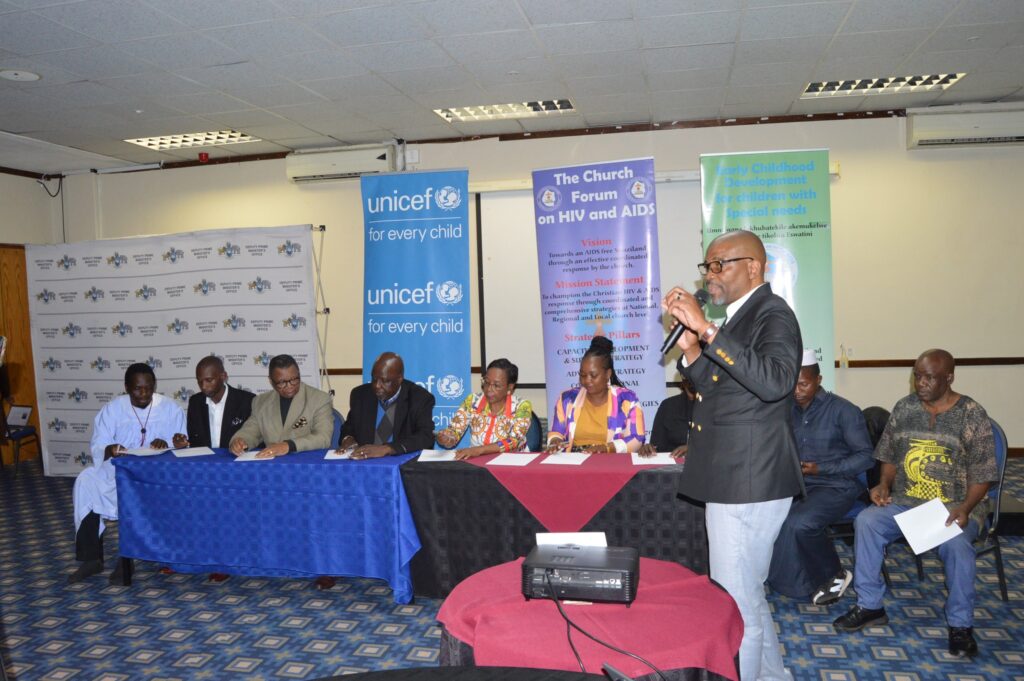
Representatives from various religious groups contributed their perspectives on how the church can respond more effectively. Wandile Dlamini from the Council of Churches suggested churches create open platforms to address social issues, warning that unresolved frustrations often result in violence against the vulnerable. He also said that adults should avoid being left alone with children to prevent potential abuse.
Sitakele Maseko of the League of Churches said violence against children must be confronted head-on before it causes lasting damage. Nelile Maseko from the Bahá’í Faith urged stronger collaboration between religious communities and the public to safeguard children’s rights.
Sphendulile Dlamini from the Conference of Churches warned against excusing harmful conduct just because it occurs within religious settings. A Muslim community representative called for law enforcement agencies to be more active in responding to child abuse cases and encouraged families to embrace positive planning approaches to raise children in safe homes.

