

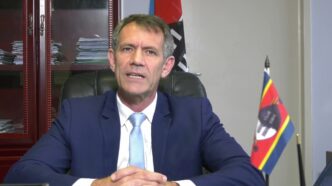
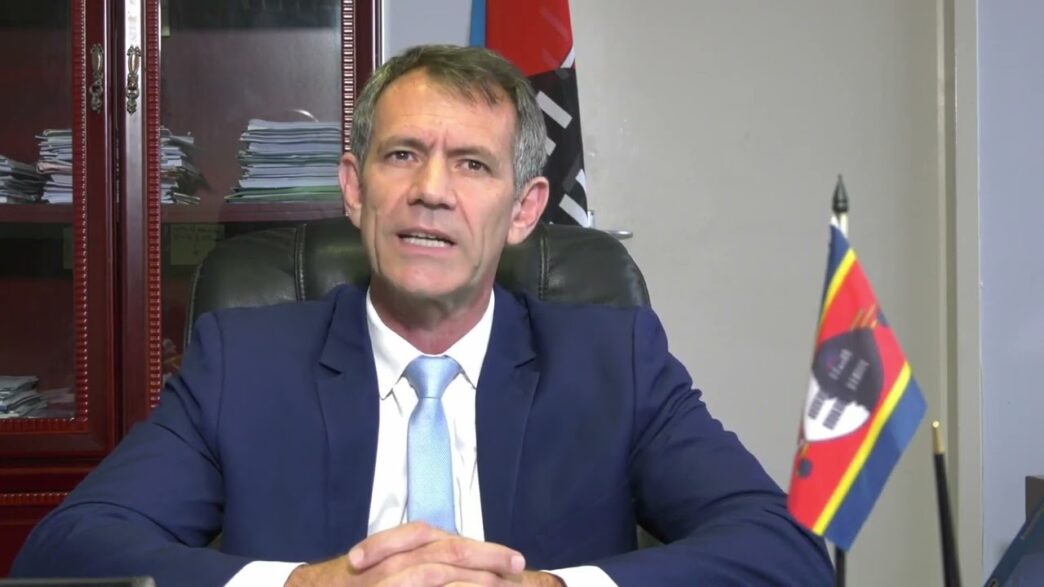
MBABANE – According to reports by the Eswatini Observer, Minister of Finance Neal Rijkenberg has disclosed that the E200 million used to cushion the recent electricity tariff increase for the Eswatini Electricity Company was drawn from an E800 million loan guarantee scheme established under the Public Finance Management framework.
The publication reported that Rijkenberg made the revelation during the recent Finance in Focus engagement, where he outlined government’s response to mounting economic pressures, including rising electricity and fuel prices affecting households and businesses across the country.
“Fortunately, we had the loan guarantee scheme within the Paris State laws, which had about E800 million in it, and E200 million has now been allocated towards supporting EEC,” he said. 
The minister explained that the facility was structured as a loan guarantee scheme, allowing government to create a financial buffer while continuing to design mechanisms that would ease pressure on the power utility without compromising sustainability and accountability.
According to the report, the intervention reduced the scale of the tariff adjustment, though electricity prices remain high due to broader economic challenges and the cost of power supply.
He said the simultaneous increase in electricity and fuel prices posed a serious burden on emaSwati.
“It is really very sad to see the increase in fuel price and the increase in electricity price hit at the same time. The impact on homesteads is going to be very tough,” he said.
Rijkenberg stated that government had engaged regulators and introduced support measures to soften the blow, even though the final tariff adjustment remained substantial.
Addressing concerns about long term sustainability, he said government had to balance financial support with sound fiscal discipline, particularly the user pays principle applied in utilities.
“One cannot keep taxing people and paying someone else’s electricity. The principle of the user pays is critical because those who use electricity must pay for it,” he explained.
The newspaper further reported that government was engaging international concessional lenders to strengthen the country’s financial position. Talks are ongoing with institutions such as the World Bank, the African Development Bank and the OPEC Fund to secure affordable budget support.
“We will be speaking to different concessional funders, including the World Bank, African Development Bank and OPEC Fund, to see what they can do to support us as a country and raise budget support funding,” he said.
He noted that key discussions would take place in Washington DC, where government officials are scheduled to meet international financial institutions to negotiate funding and discuss national economic priorities.
On fuel prices, the minister commended the Minister of Natural Resources and Energy for strengthening the fuel stabilisation fund, which he said had grown from about E300 million to nearly E1 billion through disciplined investment and management.
“Our government is heavily subsidising fuel through the fuel stabilisation fund, which helps reduce the impact of global price shocks on consumers,” he said.