

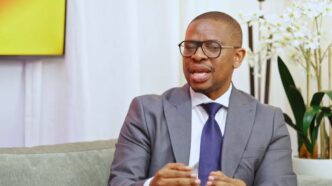

Mbabane – Dr Thokozani Nkambule, Managing Director of Lidwala Insurance, has called on Emaswati to take a more active role in driving economic growth, saying the country has the resources and the land to build a stronger, more self-reliant economy.
Speaking on the Times of Eswatini podcast, Dr Nkambule covered a wide range of topics from insurance literacy and agriculture to education, infrastructure and sports, offering frank assessments of where the Kingdom stands and where it needs to go.
Dr Nkambule grew up in Mbangweni, raised by a single parent after losing his father at the age of two. He attended Hhohho Boys High School before going on to study at the University of Eswatini, where he completed a Bachelor of Commerce degree. He later earned a PhD, driven, he said, by a belief that learning never stops. 
“Knowledge is not confined to a degree. You learn from anyone, at any time, for as long as you have the willingness to improve yourself and become a better person,” he said.
On insurance, Dr Nkambule said many Emaswati take out policies without fully understanding what they are buying, which leads to frustration when claims are not paid out.
He explained that there are two broad categories of insurance: short-term insurance, which covers assets such as vehicles and homes, and life insurance, which provides financial protection for dependants when a policyholder dies. He said the problem often lies not in the product but in how it is sold.
“Sometimes we sell to people who do not understand what they have bought. The detail is not explained to them properly,” he said.
He pointed to funeral policies as a common example, where people pay premiums for years only to find the policy has lapsed because of missed payments.
On agriculture, Dr Nkambule said Eswatini has enough land to become an exporter but that farmers need better guidance on what to grow and where to sell it.
“We must stop being lazy. Let us identify people who are willing to put in the work. Farming is not something that produces results overnight. You need resilience, patience and consistency,” he said.
He urged young people interested in farming to engage with the Ministry of Agriculture and with aggregators who understand international markets and can help them identify what produce is in demand beyond the Kingdom’s borders.
On education, Dr Nkambule said the country’s institutions have largely stuck to the same curriculum for decades and that this has left graduates unable to meet the demands of a changing economy. He called for greater investment in technical centres and practical skills training, and said entrepreneurship should be taught seriously in schools, not just as a module but as a discipline with real business management content.
He raised concern about Emaswati entrepreneurs giving up too quickly when faced with challenges, and said the desire for quick results was undermining long-term business growth.
“We are inconsistent. We do not have discipline. We want quick gains and to be seen enjoying success before we have put in the time,” he said.
On infrastructure, Dr Nkambule acknowledged that large projects such as the dam constructions and road developments visible across the country were positive signs, but said Emaswati were not always given enough opportunity to participate in them. He said government needed to play a more active role in protecting local businesses when foreign-funded contracts came with conditions that effectively excluded Swazi companies.
On financing, he said the country’s commercial banks, most of which are subsidiaries of South African institutions, were structured in ways that made them cautious about funding large capital projects. He suggested that pension funds and long-term savings deposits held locally could be better used to finance development projects, and called on the Ministry of Finance to explore that model more seriously.
On sports, Dr Nkambule said Eswatini had produced great athletes in the past but had not given sport the attention or investment it deserves. He cited the economic value that tournaments and sporting events generate and said the country needed to treat sport as a serious contributor to the economy.
He closed with a message to Emaswati.
“Let us be proud of this country. Let us work hard and not have an entitlement mentality. If we develop the right discipline and consistency, we can advance this country to a first world standard.”
Watch full interview below