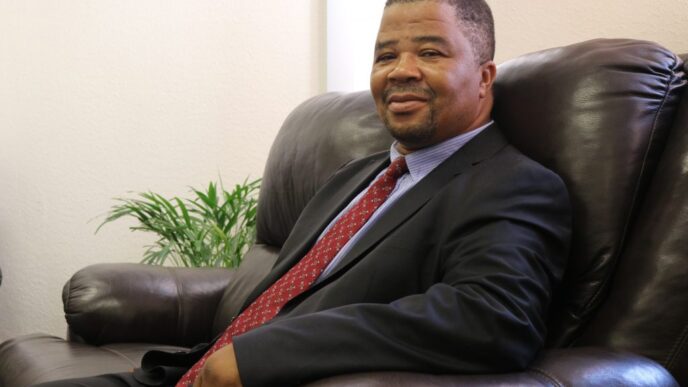




Kwaluseni – UNESWA Vice Chancellor Professor Justice M. Thwala has said science and technology are no longer optional components of development but fundamental drivers of economic growth, industrial competitiveness, health care, environmental sustainability, food security, and social progress.
Professor Thwala began his address by stating that governments that invest in science, technology, engineering, and mathematics education, scientific research, innovation systems, and digital technologies are better positioned to compete globally while also improving the well-being of their population.
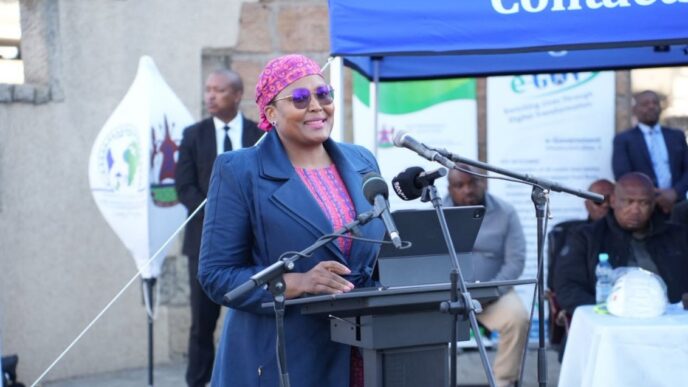
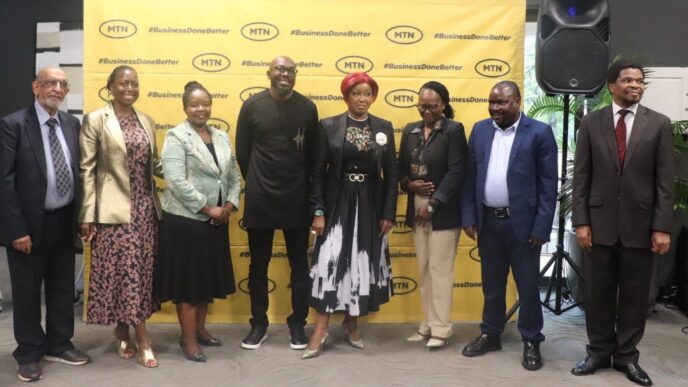
He was speaking today at the launch of the inaugural Eswatini National Science Month as the host of South African Minister of Science, Technology and Innovation Blade Nzimande; Minister of Information, Communications and Technology Savannah Maziya; and stakeholders, together with students from various schools. 
“It is evident that we need to consciously and deliberately take bold decisions to create an innovation ecosystem for us to reap the rewards from science, technology and innovation. It will not come cheap though. Statistics have shown that developed countries are investing as high as 3% of the countries’ GDP in innovation and have seen economic growth as high as 5% with a reduction of poverty to below 10% and unemployment to below 5%,” he said.
The professor said Eswatini needs to take advantage of the demographic dividend, as the country is a youthful nation with more than half of its population under the age of 25.
The youth drive the economy with creativity, energy, and potential. But the country bears the responsibility “to ensure that they are equipped with the knowledge, skills, and opportunities required to succeed in a rapidly evolving world.”
Youth unemployment is one of the most serious challenges, according to Professor Thwala, with thousands of young people who are ready for the labour market failing to find formal employment prospects every year.
“This reality underscores the importance of strengthening STEM education, fostering innovation and entrepreneurship, and preparing young people for emerging sectors of the digital economy. At the same time, Eswatini continues to make encouraging progress in digital transformation. Increased access to information and communication technologies is creating new opportunities for learning, business development, service delivery, and social inclusion,” he said.
Eswatini would need to push a balanced and inclusive digital transformation that does not leave outside rural communities, women, persons with disabilities, and other vulnerable groups, Thwala said, adding that the University of Eswatini proudly plays the role of advancing the STEM agenda.
“As the country’s premier institution of higher learning, we are committed to developing the human capital required to drive national development and economic transformation. With this, through our teaching programmes, research initiatives, innovation activities, and community engagement efforts, we continue to produce graduates, researchers, and innovators who contribute directly to national priorities,” Professor Thwala said.